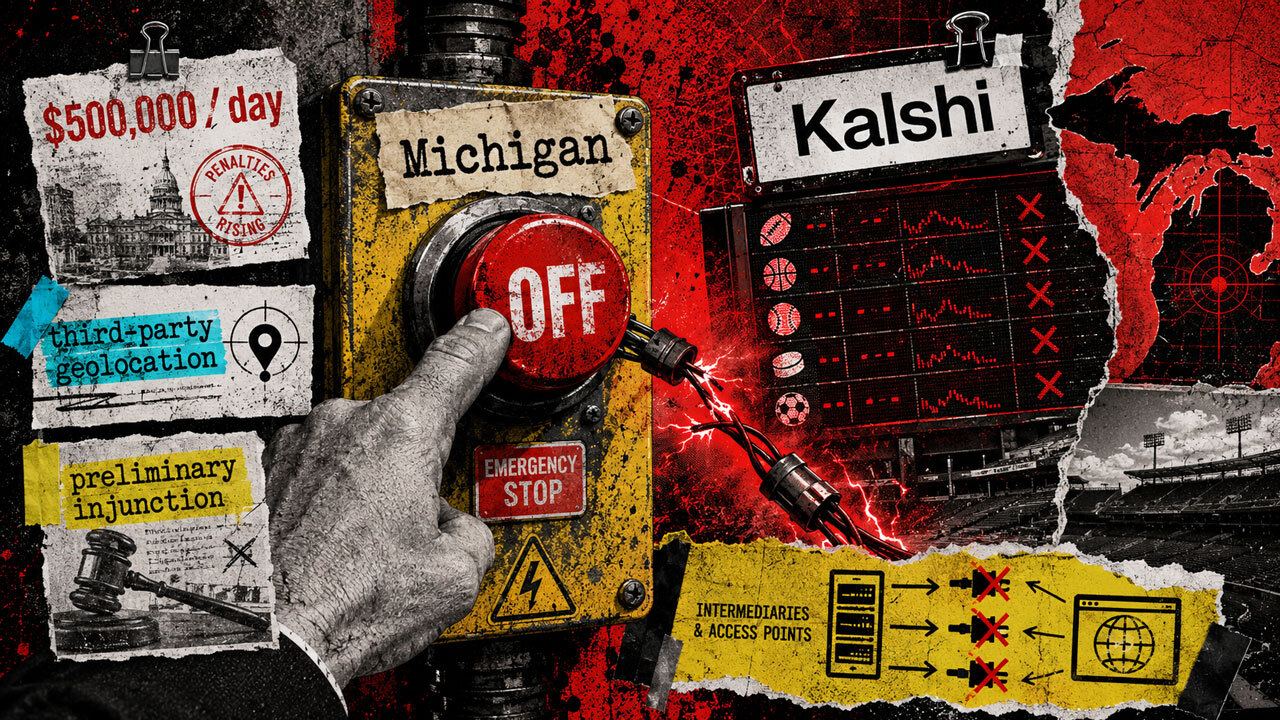
Michigan regulators have forced Kalshi to halt its sports event betting contracts under the threat of $500,000 daily fines. A preliminary injunction has been issued, requiring the prediction market platform to remain offline for these specific contracts until a final court order is reached. This development represents a significant escalation in state-level oversight of prediction markets, which have seen a massive surge in popularity during the current election cycle.
The court's decision adds a specific notice duty for futures brokers, complicating the operational requirements for platforms like Kalshi that bridge the gap between traditional finance and event-based wagering. The injunction arrives during a period of intense legal scrutiny, as different jurisdictions and appellate courts remain split on whether these event contracts constitute illegal gambling or regulated financial derivatives. The $500,000 daily penalty serves as a stark warning of the financial risks platforms face when navigating conflicting state and federal regulations.
This legal battle is part of a broader regulatory tug-of-war in the United States involving the Commodity Futures Trading Commission (CFTC) and various state attorneys general. While Kalshi recently won a major victory at the federal level allowing it to list election-related contracts, state-level actions like Michigan’s demonstrate that the platform still faces significant localized hurdles. The outcome of this case could set a precedent for how other states handle decentralized and centralized prediction markets that offer sports-related outcomes.
Investors and users should closely monitor the upcoming final order in Michigan, as it will likely influence the availability of sports-based prediction products across the U.S. market. Furthermore, the broader impact on the DeFi space is notable, as decentralized competitors like Polymarket continue to operate under different regulatory frameworks. A permanent ban in Michigan could trigger similar aggressive enforcement actions in other states, potentially stifling the growth of the regulated prediction market industry.