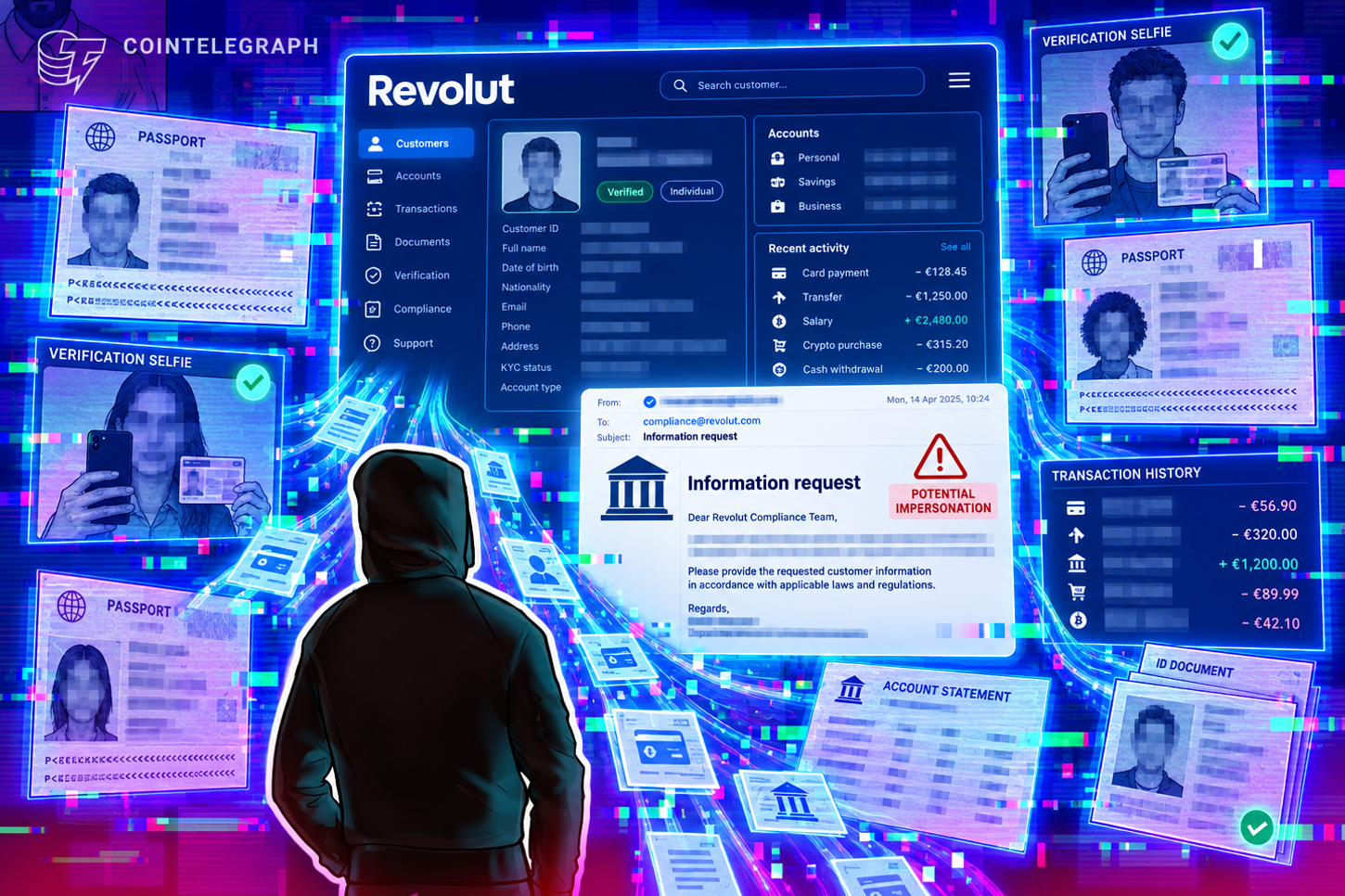
Revolut customers had their sensitive personal data, including passports, selfies, and financial transaction histories, exposed after fraudsters used a spoofed government agency domain to deceive the company's security systems. The breach occurred in early 2026 when an attacker successfully gained access by impersonating a regulatory authority, leading to the exfiltration of Know Your Customer (KYC) documentation. This incident marks a significant failure in the verification protocols that neo-banks rely on to maintain compliance and user security.
The attack targeted the institutional trust layer rather than individual end-users, using a domain that appeared to be an official government source to bypass standard security filters. By harvesting biometric data and transaction records, the fraudsters have obtained enough information to potentially conduct deep-level identity theft or targeted social engineering attacks against the affected users. This specific method of using 'government-grade' spoofing suggests a high level of sophistication in current 2026 cyber-criminal tactics.
From a regulatory perspective, this breach is expected to trigger immediate scrutiny from the Consumer Financial Protection Bureau (CFPB) and other US financial watchdogs. As Revolut acts as a major bridge between traditional fiat and the crypto ecosystem, the loss of KYC data raises questions about the safety of digital-asset gateways. Regulators are likely to demand more robust 'biometric custody' standards and potentially push for decentralized identity solutions to prevent centralized honey-pots of sensitive user data.
Investors and users should watch for Revolut’s upcoming security infrastructure audit and any potential fines levied by data protection authorities. For the broader crypto market, this incident emphasizes the ongoing risks associated with centralized fintech platforms that store massive amounts of personal identification. Users are advised to enable multi-factor authentication and monitor their financial statements for any unauthorized activity following this leak.