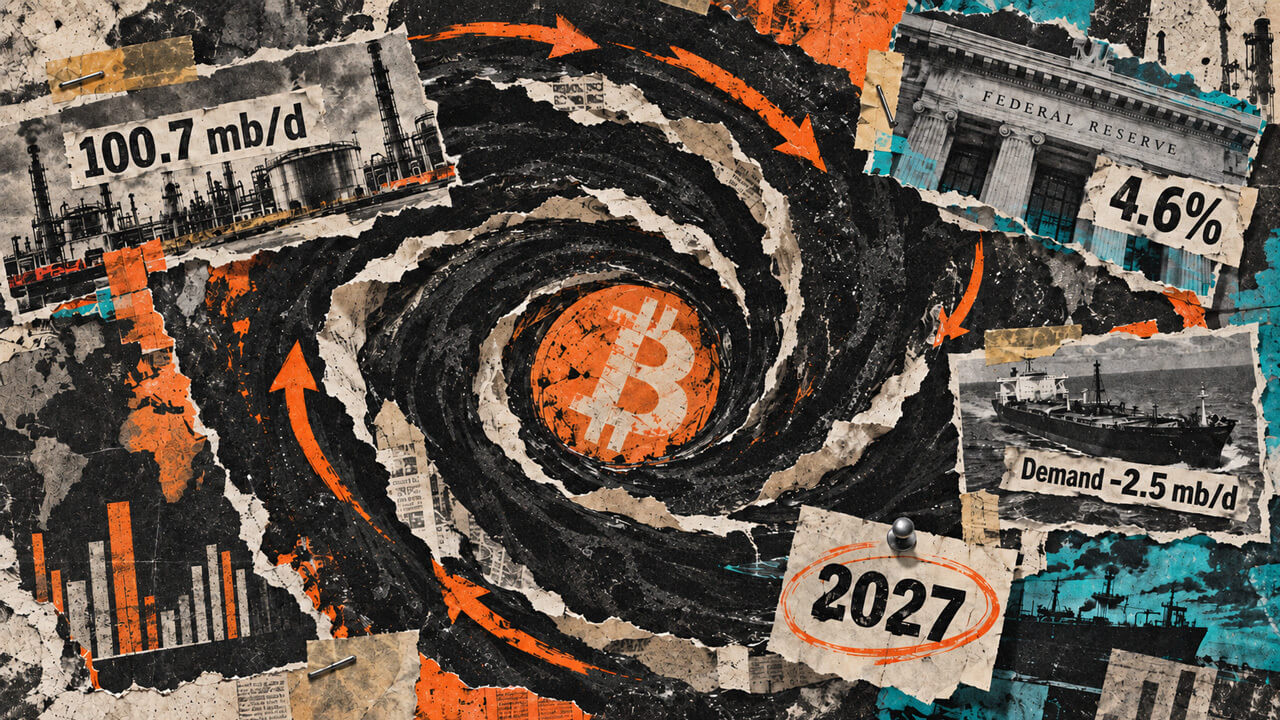
The International Energy Agency's (IEA) latest decision to cut the global oil supply outlook ensures that Bitcoin miners will face significant 'oil risk' and high operational costs until at least 2027. This supply-side tightening offsets the benefits of cooling global demand, meaning electricity prices in fossil-fuel-dependent regions are unlikely to drop. Consequently, mining firms seeking to refinance debt or secure new capital for hardware upgrades may find lenders more hesitant due to the prolonged uncertainty in energy pricing.
This shift in the 2026 energy landscape comes as the IEA warns of persistent production constraints among major exporters, despite a general slowdown in industrial oil consumption. For the crypto sector, the energy market is a primary driver of the 'breakeven' price—the cost required to mine a single Bitcoin. As supply remains tight, that floor price is expected to stay elevated, potentially forcing less efficient miners to disconnect their machines if Bitcoin’s market price does not see a corresponding rise.
From a regulatory and ESG (Environmental, Social, and Governance) perspective, this development adds pressure on U.S.-based mining companies to accelerate their transition toward renewable energy. With oil-linked power costs remaining high through 2027, the competitive advantage is shifting rapidly toward operations that utilize stranded gas, wind, or solar power. Investors are already beginning to favor mining stocks that demonstrate low exposure to traditional energy grid volatility.
Market participants should closely watch the upcoming Q3 and Q4 2026 financial disclosures from major public miners like Riot Platforms and CleanSpark. These reports will reveal how much the current oil supply squeeze is eating into their cash reserves. Furthermore, any further IEA revisions toward the end of the year could signal whether the 'oil risk' will become a permanent fixture of the next Bitcoin halving cycle.