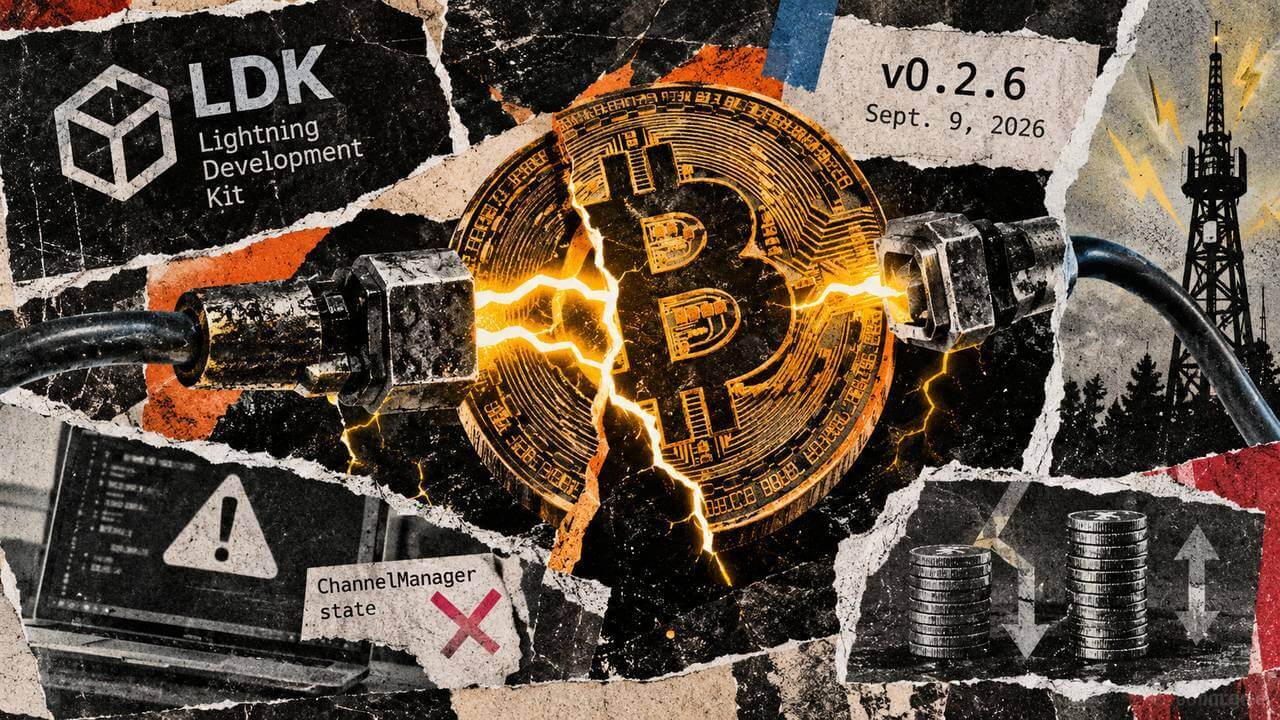
The LDK v0.2.6 release protects Bitcoin Lightning nodes by patching a security flaw in the 'splicing' mechanism that could result in fund loss and correcting a payment-handling bug that prevented channel states from loading correctly. By installing this update, developers and node operators using the Lightning Development Kit (LDK) ensure that their nodes can recover state after a reboot and that funds remain secure during active channel resizing. This fix is particularly critical for the growing number of mobile and non-custodial wallets that rely on the LDK library for Bitcoin scalability.
Technical analysis of the vulnerabilities revealed that the splicing bug allowed for small discrepancies in fund balances, which could be exploited to siphon assets during the process of adding or removing liquidity from a channel. Furthermore, the payment-handling flaw created a critical failure point where the node's saved state became incompatible with the loading process, effectively locking users out of their channels until a manual recovery could be performed. These issues represented a significant hurdle for the reliability of the Lightning Network's user experience in 2026.
From a market perspective, these security patches come at a time when Bitcoin’s Layer 2 infrastructure is under intense scrutiny from both regulators and institutional investors. As the U.S. continues to refine its framework for digital asset custody, the stability of open-source libraries like LDK is paramount. Ensuring that Lightning remains a non-custodial and secure environment helps stave off regulatory arguments that Layer 2 protocols are too risky for mass consumer adoption.
Node operators and developers using LDK-based implementations, such as specialized Bitcoin wallets and merchant payment processors, should upgrade to version 0.2.6 immediately to mitigate these risks. While no massive theft has been reported yet, the disclosure of these vulnerabilities highlights the ongoing technical challenges of scaling Bitcoin. Investors and users should watch for further security audits of Lightning protocols as splicing becomes a more standard feature across the ecosystem.