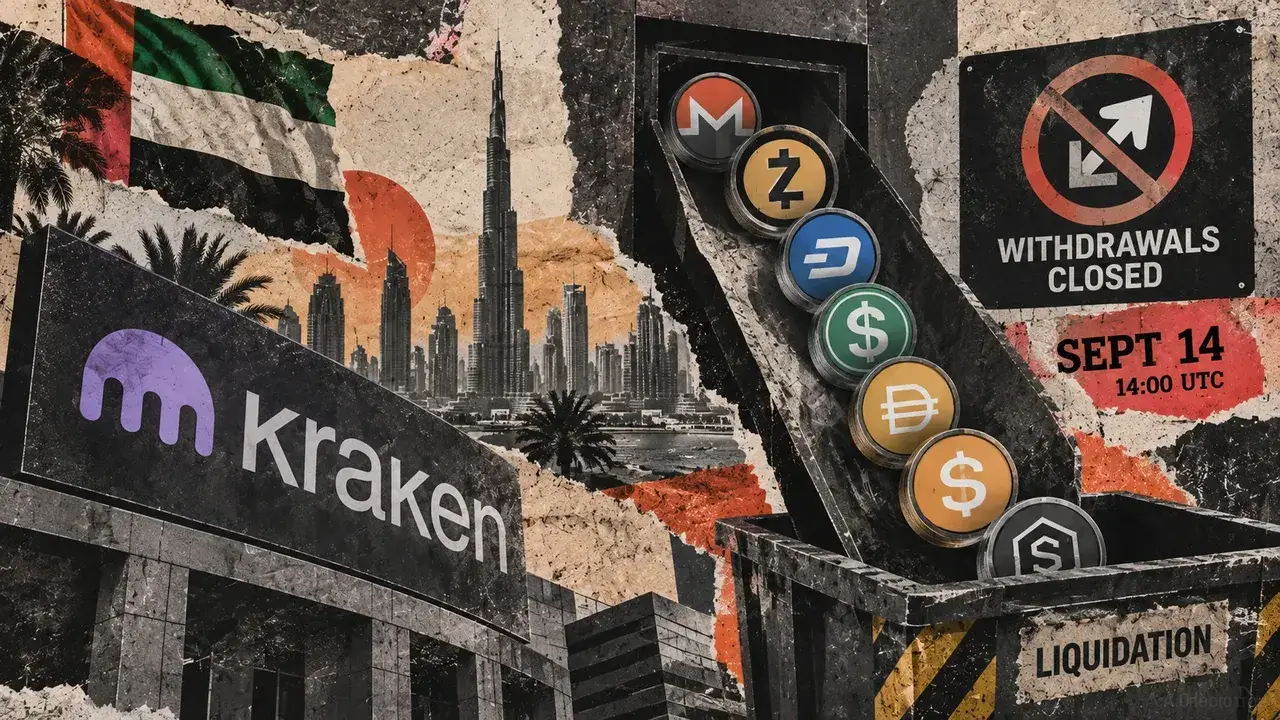
Kraken has established a final withdrawal deadline of September 14, 2026, at 14:00 UTC for seven assets slated for removal from its platform. Investors who fail to move their holdings to external wallets by this time will see their assets enter a mandatory liquidation window between September 15 and September 25. The exchange has explicitly stated that there is no guaranteed proceeds currency, meaning users may receive the value of their liquidated holdings in a stablecoin or fiat currency determined by the platform at the time of sale.
This liquidation event highlights a shifting strategy for US-focused exchanges in 2026, as they move beyond simple trading halts toward full asset removal to streamline custody requirements. For Kraken users, the lack of a guaranteed return currency adds a layer of uncertainty, particularly for those managing specific tax obligations or who prefer to hold proceeds in a particular digital asset. The exchange’s decision to automate the sale of these seven assets suggests a move to clear legacy positions that no longer meet internal listing standards or regulatory compliance benchmarks.
From a regulatory standpoint, this move follows a period of heightened scrutiny regarding the types of assets major exchanges are permitted to custody for US retail clients. By setting a hard liquidation deadline, Kraken is effectively reducing its exposure to these tokens, which may be perceived as high-risk or low-liquidity by federal monitors. This proactive approach aims to prevent the exchange from holding 'stranded' assets that can no longer be legally traded but remain on the balance sheet.
Market participants should watch for potential sell pressure on the affected assets during the September 15–25 liquidation window. While Kraken has not publicly listed the specific seven assets in this brief update, affected account holders should have received direct communication. Investors are advised to initiate withdrawals at least 48 hours before the September 14 deadline to account for potential network congestion or internal processing delays, ensuring they retain control over their exit strategy rather than leaving it to the exchange’s automated liquidation process.