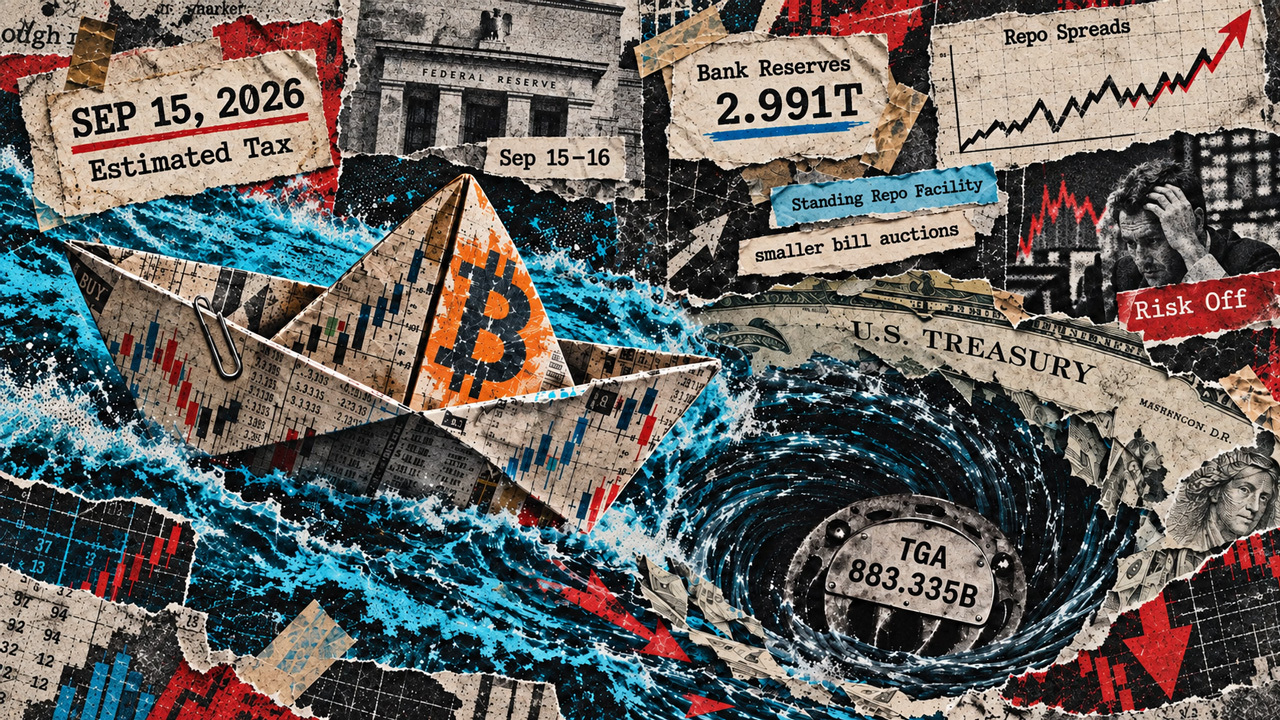
The Tuesday, September 15, 2026, US tax deadline is poised to test Bitcoin’s resilience by temporarily draining bank reserves as corporate and individual payments flow into the Treasury’s General Account (TGA). This seasonal liquidity drain often creates short-term volatility in risk assets, including Bitcoin, as the volume of available cash in the traditional financial system tightens. However, the impact is expected to be managed through strategic Treasury spending and the Federal Reserve’s existing liquidity facilities, which should prevent a broader market disruption ahead of the next FOMC meeting.
This liquidity shift is particularly sensitive because it occurs just as the Federal Reserve prepares for its latest interest rate decision. Investors are closely monitoring whether the drain on bank reserves will force the Fed to adjust its quantitative tightening (QT) pace or provide additional support through its standing repo facility. For Bitcoin, which remains highly sensitive to global USD liquidity and M2 money supply fluctuations, any perceived scarcity in bank reserves typically results in defensive, range-bound trading patterns.
Despite the potential for a temporary 'liquidity cliff,' the US Treasury Department has several mechanisms to stabilize the market. Increased government spending scheduled for the latter half of September can offset the tax-driven drainage by recycling capital back into the private sector. Furthermore, the Fed’s repo tools serve as a critical backstop to ensure that the federal funds rate remains stable, which indirectly supports the crypto market by preventing sudden, sharp spikes in institutional borrowing costs.
For crypto traders in the US, the primary metric to watch is the Treasury General Account balance and its correlation with BTC/USD price action throughout the week. Historically, periods of rapid TGA accumulation—where cash is pulled out of the economy—coincide with stagnant crypto performance, while TGA drawdowns act as a tailwind for Bitcoin and DeFi assets. Investors should monitor for signs of stress in the overnight funding markets on Wednesday morning to gauge if the liquidity test passed or if further volatility is imminent.