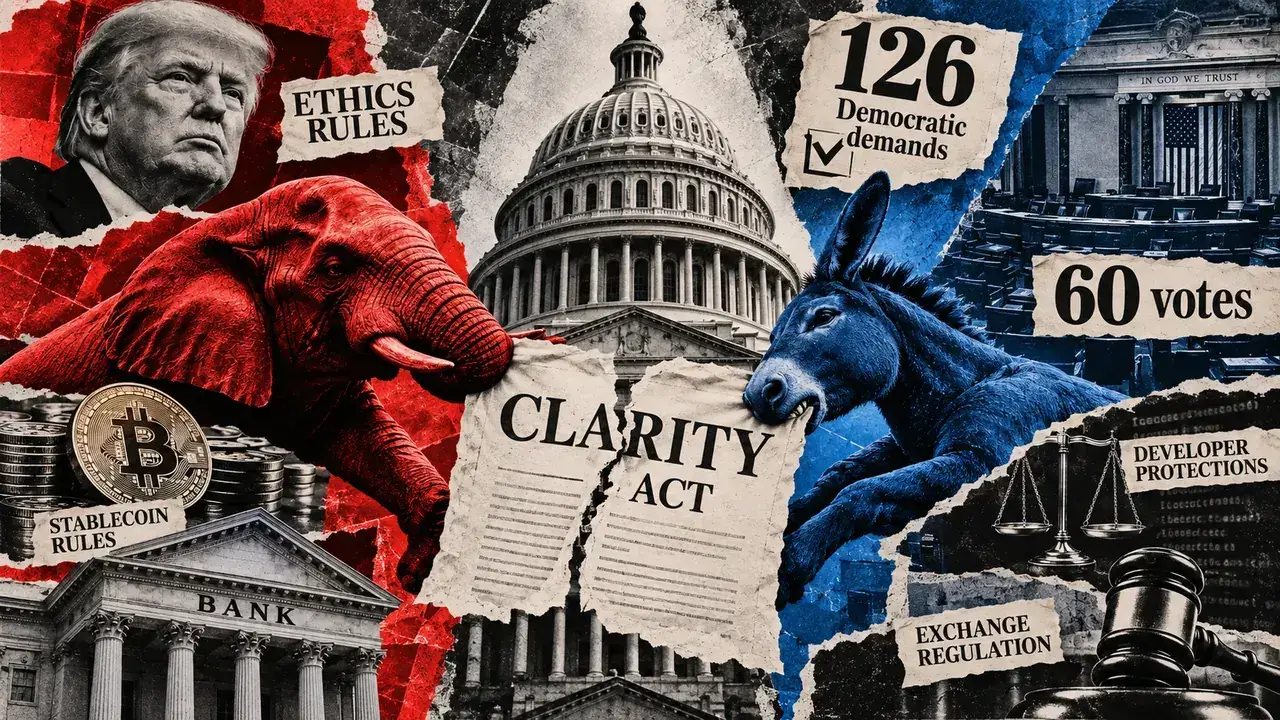
The final text of the Creating Legal Accountability for Regulated Information and Technology (CLARITY) Act includes major revisions designed to secure Democratic support, most notably the integration of 120 specific demands regarding investor protection and financial stability. These updates, released by Senators Cynthia Lummis, Tim Scott, and John Boozman, refine the bill's approach to jurisdictional boundaries between the SEC and CFTC, specifically tightening the rules for stablecoin issuers and increasing disclosure requirements for crypto exchanges operating within the United States.
This push for a bipartisan consensus marks a critical turning point for US crypto policy in 2026. By addressing Democratic concerns over market manipulation and systemic risk, the bill's sponsors are attempting to build a filibuster-proof majority ahead of the scheduled Tuesday Senate vote. The inclusion of these amendments suggests a shift toward a more rigorous, yet defined, regulatory environment that prioritizes national security and the prevention of illicit finance within the digital asset ecosystem.
For the broader market, the successful passage of the CLARITY Act would represent the most significant legislative milestone for crypto in years. Regulatory clarity is expected to decrease the 'regulation by enforcement' approach that has characterized the US market, potentially paving the way for more diverse institutional products and spot ETFs. Geopolitically, this move brings the US closer to the regulatory standards established by the EU’s MiCA, ensuring that American firms can remain competitive without relocating to offshore jurisdictions.
Investors should closely monitor the Senate floor on Tuesday to see if the compromise text successfully flips key Democratic holdouts. If the bill passes the Senate, it will move to the House for final alignment, where it is expected to face similar bipartisan scrutiny. The outcome will likely dictate the pace of institutional crypto adoption for the remainder of 2026 and could provide a definitive legal framework for the distinction between digital securities and commodities.