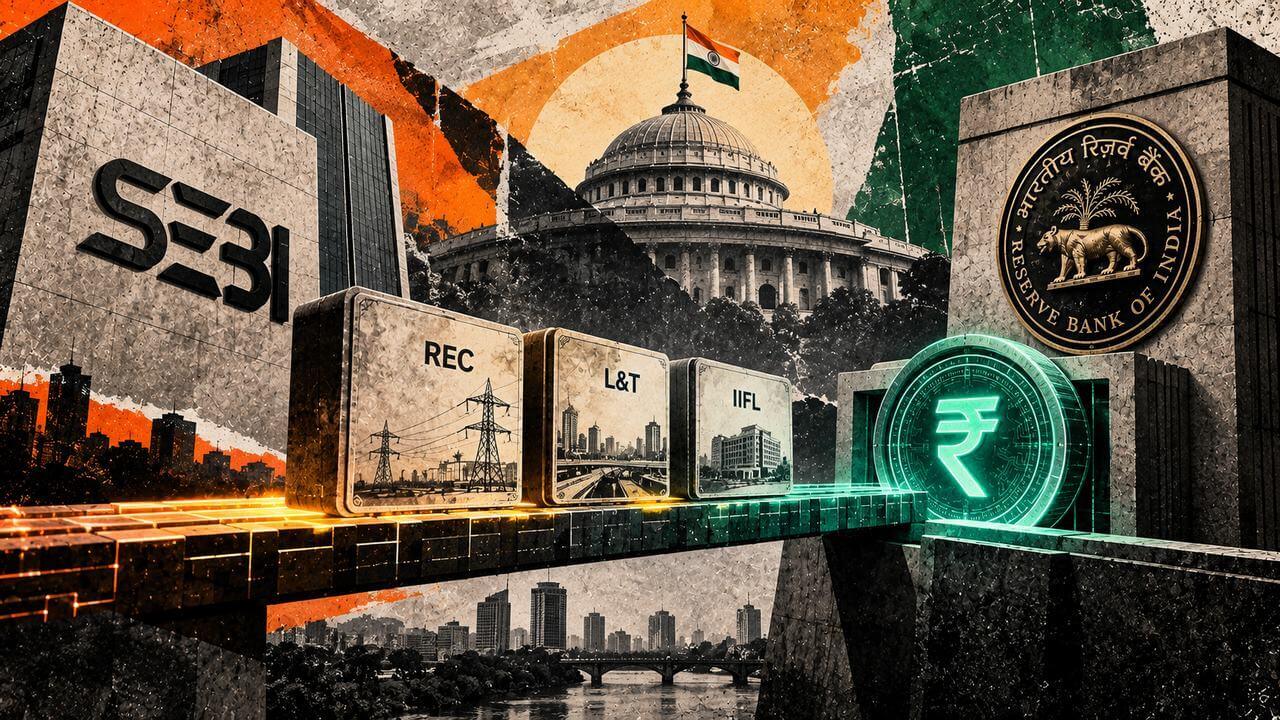
Retail investors in India are expected to gain access to tokenized bond trading during the upcoming Stage II of the country's DLT-based debt pilot. While the initial phase focused exclusively on institutional participants to ensure the stability of atomic settlement processes, regulators have confirmed that the project’s roadmap leads directly to secondary market trading for the general public. This move marks a significant shift in India's approach to Real World Asset (RWA) tokenization, moving beyond private trials into a public-facing financial ecosystem.
The successful completion of Stage I involved three major institutional issuances that utilized distributed ledger technology to execute atomic settlements. Crucially, these tests proved that blockchain infrastructure could handle the transfer of debt instruments without altering the underlying legal rights of bondholders. By eliminating the traditional T+1 or T+2 settlement lag, the pilot demonstrated that tokenization can significantly reduce counterparty risk and free up capital for financial institutions.
From a regulatory perspective, the Reserve Bank of India (RBI) and local market watchdogs are using this phased approach to mitigate systemic risk. By isolating the first tests within a controlled institutional environment, they have established a framework for security and compliance that will be vital when retail users enter the fray. This progression aligns with global geopolitical trends where major economies are competing to build the most efficient, transparent digital capital markets to attract foreign and domestic investment.
For the broader crypto and DeFi market, India’s pilot serves as a massive validation of RWA technology. As the world's most populous nation moves toward on-chain debt, the demand for scalable, compliant blockchain solutions is expected to surge. Investors should watch for the announcement of Stage II’s specific start date, as well as the technical standards India will adopt for secondary market retail wallets, which will likely set a precedent for other emerging markets.
Ultimately, this transition matters because it lowers the entry barrier for Indian citizens to participate in government and corporate debt markets. The efficiency gains from tokenization could lead to higher yields for retail participants and greater liquidity for issuers, potentially making India one of the most advanced digital bond markets by the end of 2026.