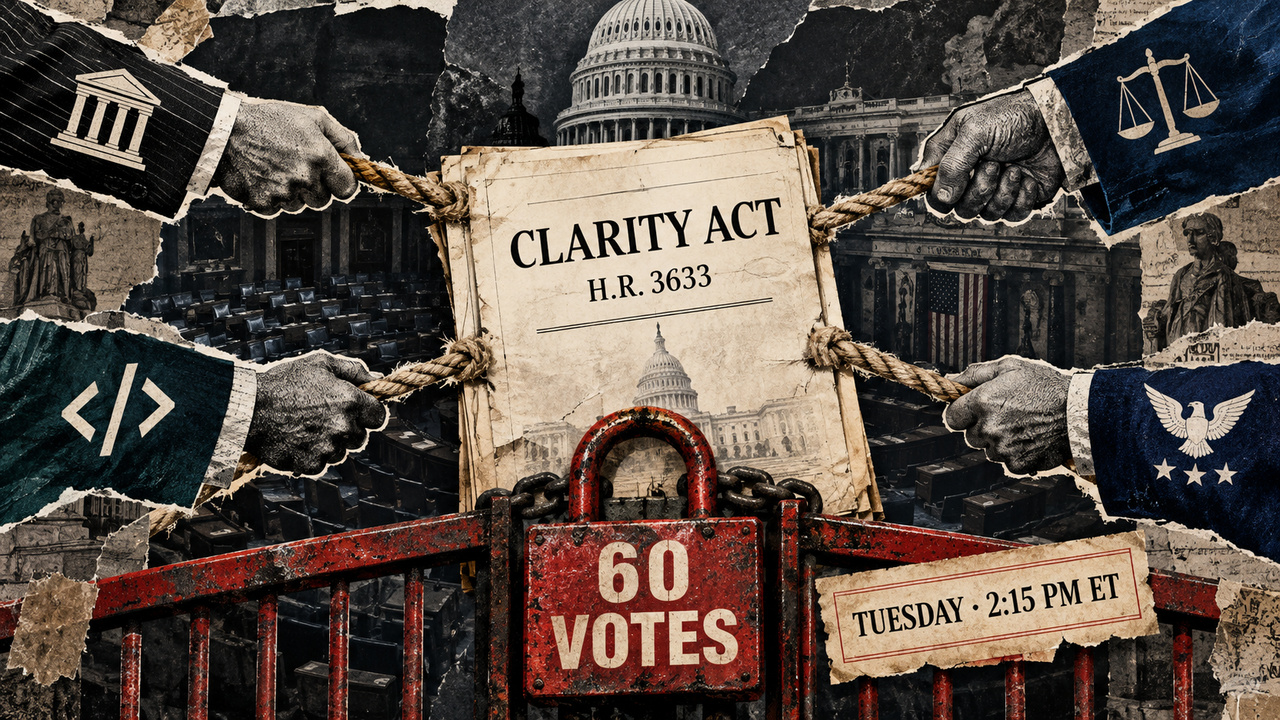
The CLARITY Act is losing momentum because its proposed compromises have failed to reconcile the conflicting demands of federal regulators, state officials, and the banking sector. While Senate Republicans integrated 126 substantive changes requested by Democrats, the 'final' version released on September 14 triggered an immediate backlash from stakeholders who claim the revisions do not go far enough to protect consumers or maintain banking standards. As the Senate prepares for a pivotal vote tomorrow, the widening opposition suggests that the landmark crypto market-structure bill may face a significant defeat or a forced return to the negotiation table.
Opposition to the bill has become surprisingly broad, involving an unusual alliance of traditional financial institutions and developer advocates. State attorneys general have voiced concerns that the act could preempt rigorous state-level consumer protection laws, while Democrats remain skeptical of the regulatory gaps regarding stablecoin oversight. Furthermore, developer advocates argue that the latest version could still impose stifling requirements on decentralized protocols, undermining the bill's stated goal of fostering domestic innovation.
For the US crypto market, this breakdown signals a continuation of the 'regulation by enforcement' era. The CLARITY Act was intended to provide a definitive framework for how digital assets are classified and traded in the United States. If the bill fails to pass tomorrow, the industry will remain in a state of legislative limbo, leaving the SEC and CFTC to dictate policy through litigation rather than clear, congressionally mandated rules.
Investors should closely monitor the Senate floor for a potential delay or a last-minute push for further amendments. The key point of friction remains the balance of power between federal and state regulators; until a consensus is reached on preemption, any major market-structure bill is unlikely to gain the 60 votes required for cloture. If the vote proceeds and fails, expect short-term bearish sentiment as the path to regulatory clarity in 2026 becomes significantly more obscured.