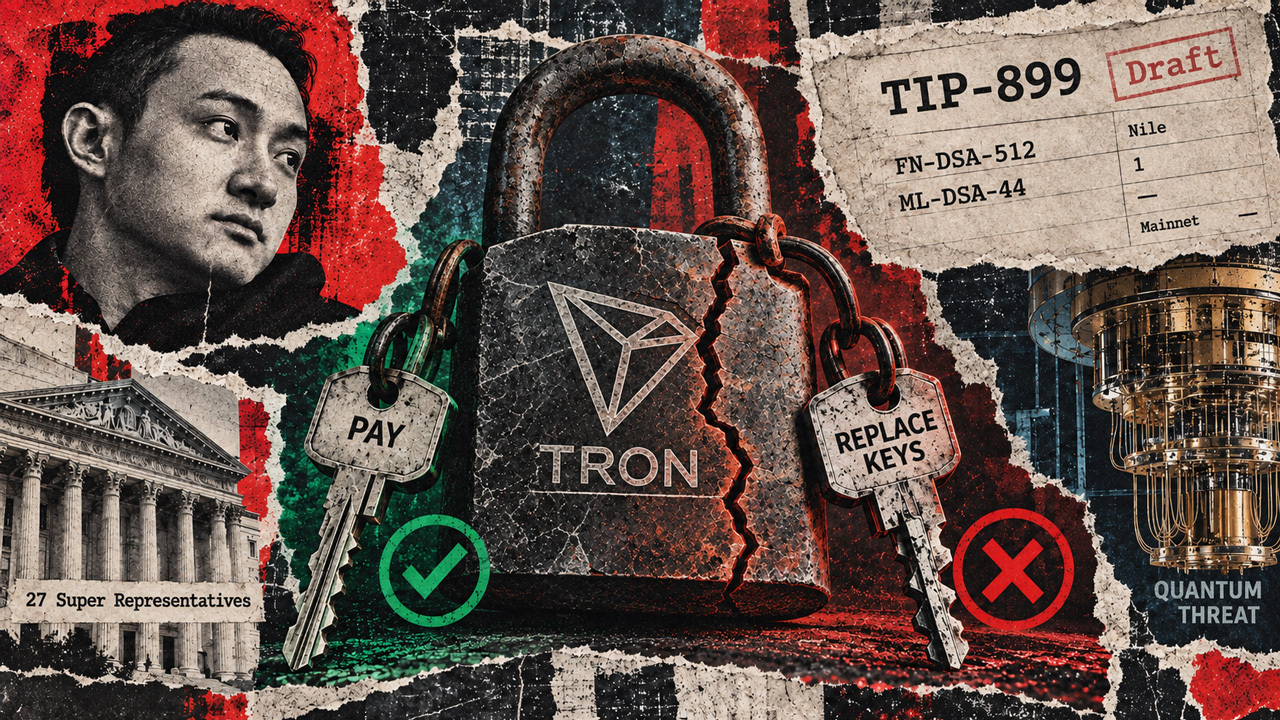
TRON's transition to a quantum-resistant network architecture may leave some users in a technical limbo where they can authorize payments but are unable to replace their security keys. According to the latest design drafts released in early 2026, the recovery path for updating wallet permissions depends heavily on which owner permissions survive when validators disable older, vulnerable signing schemes. If a wallet's primary administrative permission is tied to a deprecated scheme, the user will be unable to sign the transaction required to rotate their keys to a quantum-secure alternative.
The technical issue arises from the TRON DAO's attempt to balance immediate network security against long-term account accessibility. As the threat of quantum decryption grows, validators are under pressure to sunset legacy cryptographic methods. However, if these methods are disabled before a user migrates their account, the 'update' function—which requires a high-level permission signature—becomes unreachable. This effectively makes the account's security settings immutable, preventing users from recovering compromised accounts or updating their security posture.
This development comes at a critical time for TRON as it competes with other Layer-1 networks to provide 'future-proof' infrastructure for institutional assets. For the broader market, this highlights the 'migration risk' inherent in major blockchain upgrades. While the TRX token remains functional for transfers, the potential for locked permissions could lead to a loss of user confidence if institutional custodians find themselves unable to rotate keys in accordance with their internal compliance mandates.
Moving forward, TRON developers and TRX holders should closely monitor upcoming governance proposals regarding the specific timeline for disabling legacy signatures. The community is currently evaluating a 'migration bridge' period that would allow users to transition their permissions before the full quantum-resistant protocols are enforced. Failure to implement a smooth transition could result in a significant portion of the network's legacy wallets becoming permanently unmanageable from a security perspective.