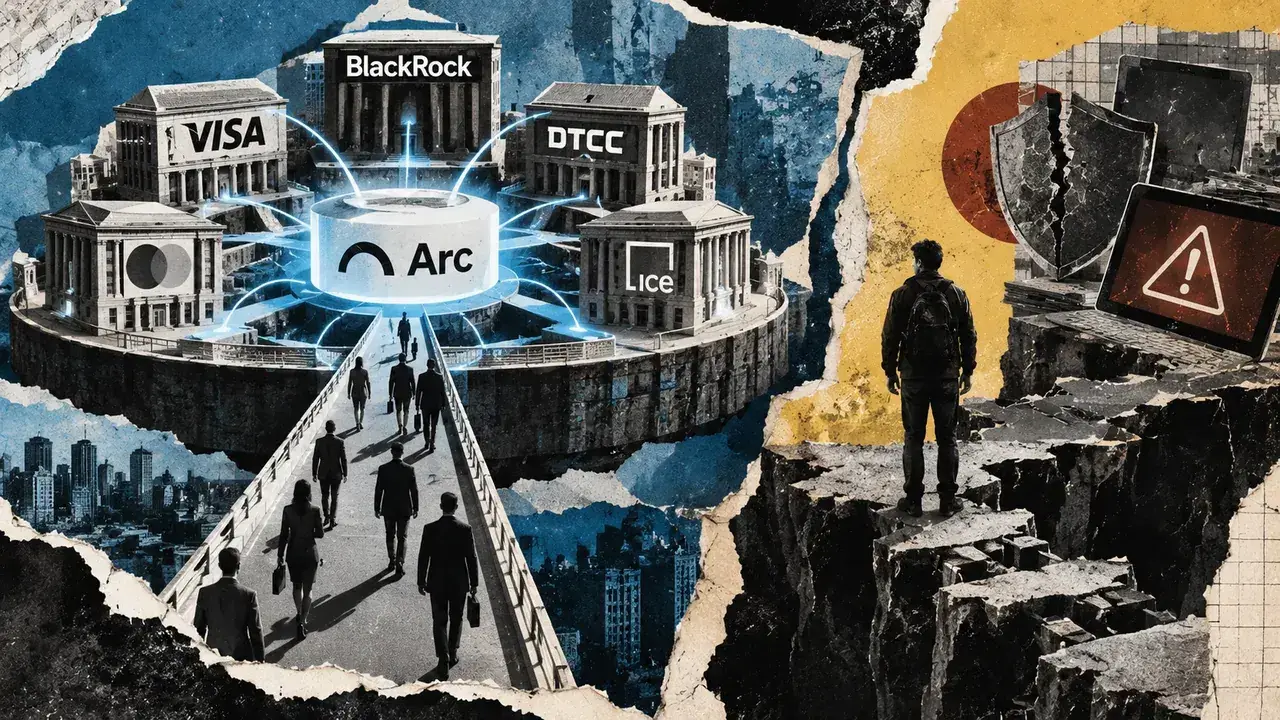
Wall Street firms participating as institutional validators for the Circle Arc network, launching September 16, 2026, provide transaction accountability and ledger integrity without assuming liability for application-level failures or user losses. This specific role means that while these firms verify the technical validity of blocks, they do not offer a blanket guarantee or insurance fund for the decentralized applications (dApps) operating on the network. This distinction is vital for institutional participation, as it separates the act of network validation from the fiduciary risks associated with third-party smart contracts.
The launch represents a strategic evolution in Circle’s efforts to bridge traditional finance with blockchain technology. By involving established financial entities in the validation process, Circle aims to provide a compliant and stable environment for institutional-grade DeFi. However, the legal framework governing Arc ensures that these validators are not held responsible for protocol exploits or market volatility, a necessary condition for banks and investment houses to operate within current U.S. regulatory constraints regarding capital reserves and risk exposure.
For the broader crypto market, this model signals a shift toward professionalized infrastructure where risk is partitioned. By removing the 'safety net' requirement, Circle lowers the barrier to entry for major institutions to provide compute power and security to the network. This could lead to a significant increase in the reliability of tokenized real-world asset (RWA) settlements, even as it places the burden of due diligence for specific applications squarely back on the end-user and protocol developers.
As the September 16 launch date nears, investors and developers should watch for the final list of participating institutions and the specific technical parameters of the validator agreements. The success of this accountability-only model will likely serve as a blueprint for future institutional blockchain deployments in the United States, particularly as the industry seeks to harmonize decentralized innovation with the stringent risk-management protocols of traditional Wall Street firms.