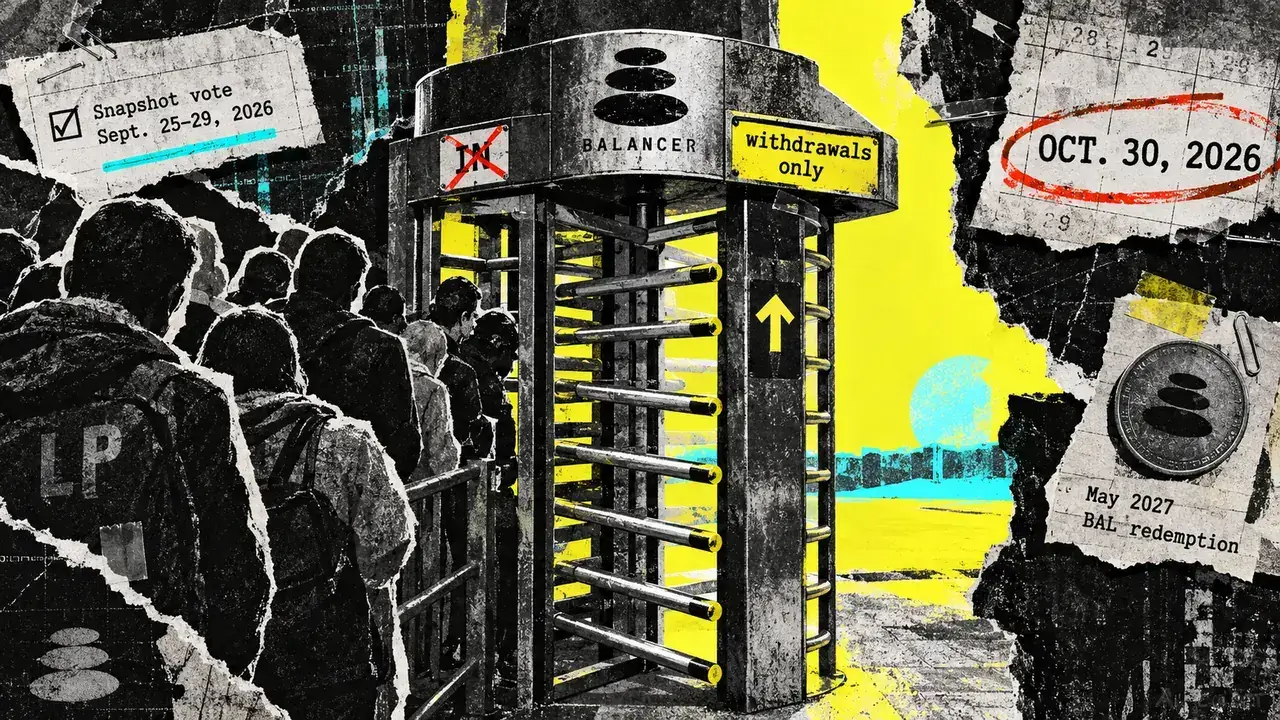
The Balancer protocol, a long-standing pillar of the decentralized finance (DeFi) ecosystem, has officially proposed a complete wind-down of its operations, with a critical community governance vote scheduled for September 25–29, 2026. According to the official proposal, the wind-down would see the protocol cease its primary automated market maker (AMM) functions. Crucially for investors, BAL token holders will face a significant waiting period, as treasury claims are not scheduled to open until May 2027. This timeline is designed to facilitate a legal and audited distribution of the remaining assets to the community.
This decision marks a somber milestone for a project that once sat at the top of the DeFi hierarchy, boasting over $3 billion in Total Value Locked (TVL) during its peak. The move to dissolve follows a year of intense market consolidation in 2026, where legacy protocols have struggled to compete with next-generation liquidity layers and high-efficiency institutional platforms. The transition suggests that even pioneering 'DeFi Summer' projects are finding it difficult to maintain sustainable fee structures and liquidity in a maturing market environment.
From a regulatory standpoint in the United States, Balancer’s structured wind-down appears to be a proactive attempt to navigate the complex legalities surrounding DAO-governed treasuries. By delaying the treasury claim until mid-2027, the project likely aims to ensure full compliance with evolving tax and securities guidelines regarding the distribution of protocol-held assets to decentralized holders. This cautious approach could set a new standard for how legacy crypto projects exit the space without triggering aggressive enforcement actions from US regulators.
Market participants should prepare for significant volatility in the BAL token as the September vote approaches. With treasury claims locked for nearly eight months post-vote, liquidity for BAL may thin out as holders weigh the opportunity cost of waiting until 2027. Investors should also watch for 'vampire attacks' from rival decentralized exchanges looking to capture Balancer’s remaining liquidity pools before the protocol officially shutters its doors.