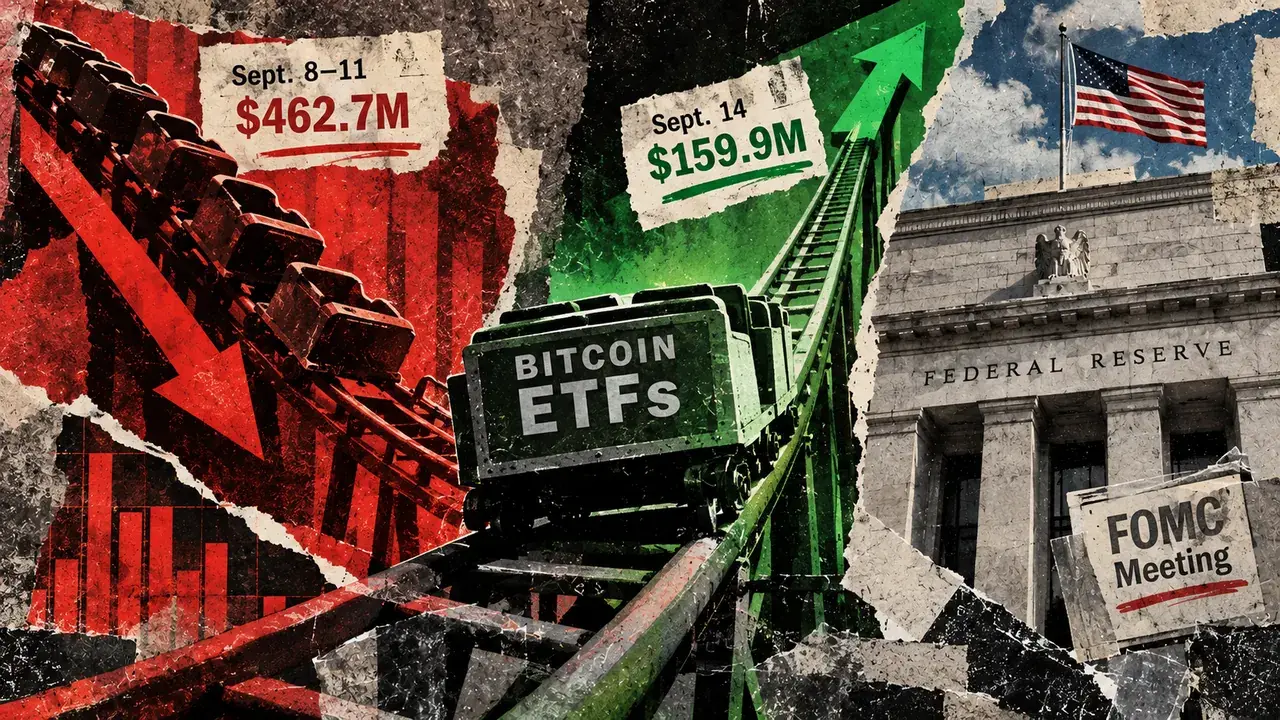
BlackRock’s iShares Bitcoin Trust (IBIT) and Fidelity’s Wise Origin Bitcoin Fund (FBTC) have resumed their roles as the dominant forces in the US spot ETF market, capturing the majority of new capital despite broader market volatility. While these two leaders have successfully attracted fresh inflows, the overall five-session net flow for the sector remains negative, largely due to persistent outflows from ARK 21Shares (ARKB). This indicates a bifurcated market where institutional confidence is concentrating in top-tier providers while secondary funds struggle to maintain momentum.
The timing of this activity is significant as the Federal Reserve prepares for its May 2026 policy meeting. Institutional investors are using IBIT and FBTC as primary vehicles to gain exposure or hedge positions before the Fed provides guidance on interest rates. The market is currently grappling with a high-rate environment, and the ability of BlackRock and Fidelity to attract capital during this period suggests a "flight to quality" within the crypto ETF space, even as total market sentiment remains cautious.
From a regulatory and geopolitical perspective, the resilience of these US-listed ETFs is vital for maintaining Bitcoin's price stability against global economic headwinds. If the Federal Reserve signals a hawkish stance—keeping rates elevated to combat 2026 inflation targets—the current inflow streak for IBIT and FBTC may face a rigorous stress test. Conversely, any indication of a dovish shift could trigger a massive influx of sidelined capital from traditional money market funds into these spot Bitcoin vehicles.
For traders and AllCrypto-Trace readers, the key metric to watch is whether the combined inflows of BlackRock and Fidelity can eventually outweigh the selling pressure from ARKB and other outflows. A reversal to positive total net flows across all 11 ETFs would likely signal a bullish breakout for Bitcoin. However, until the Fed's direction is clear, expect continued consolidation as the market leans heavily on BlackRock to carry the momentum into the second half of 2026.