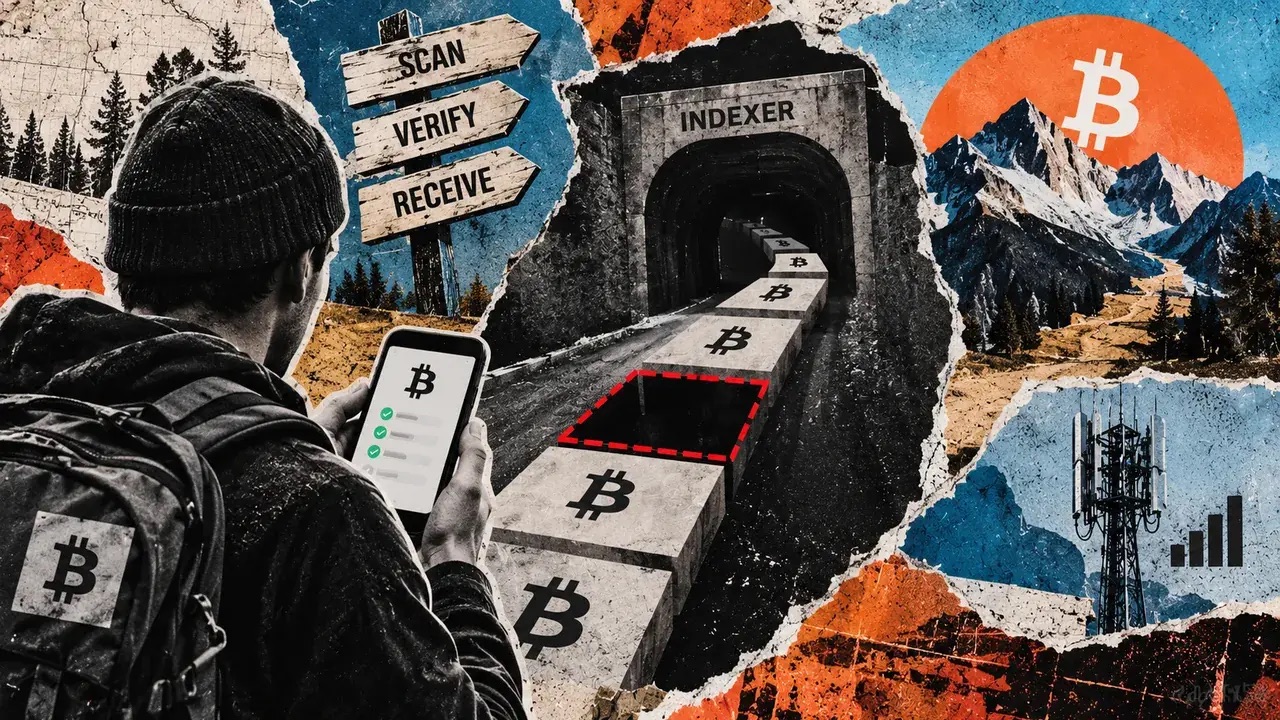
Bitcoin's newest mobile privacy feature achieves transaction invisibility by utilizing advanced client-side filtering that allows mobile wallets to scan for incoming funds without revealing the wallet's addresses to a server. By processing approximately 8 MB of data per day, the feature ensures that incoming money remains undetectable to outside observers, significantly narrowing the gap between mobile ease-of-use and desktop-level privacy. This mechanism allows users to receive funds without broadcasting their financial history to service providers or network observers.
A recent 2026 study spanning 255,434 blocks highlights the efficiency of this scanning mechanism. While previous privacy solutions often required downloading massive amounts of blockchain data or relying on trusted third-party servers, this implementation strikes a balance between resource consumption and security. However, the study notes that the 'completeness' of the scanning remains unproven, suggesting that while the privacy gains are substantial, developers are still fine-tuning the system to ensure no valid transactions are missed during the automated scanning process.
This development comes at a critical time when US regulators are intensifying scrutiny on non-custodial wallets and transaction transparency. By integrating privacy directly into the mobile layer, Bitcoin is positioning itself as a robust alternative to surveillance-heavy financial systems. For US users, this means a significant reduction in the digital footprint associated with everyday peer-to-peer payments, though it may invite further debate regarding Anti-Money Laundering (AML) compliance for mobile software developers.
Moving forward, the crypto community should monitor the adoption rate among major mobile wallet providers to see if this scanning feed becomes a standard protocol. If the 8 MB daily data overhead remains stable or decreases through further optimization, it could lead to a new era of 'invisible' Bitcoin usage. Investors and privacy advocates should watch for potential regulatory pushback in the US, as this feature challenges existing blockchain analytics capabilities used by law enforcement.