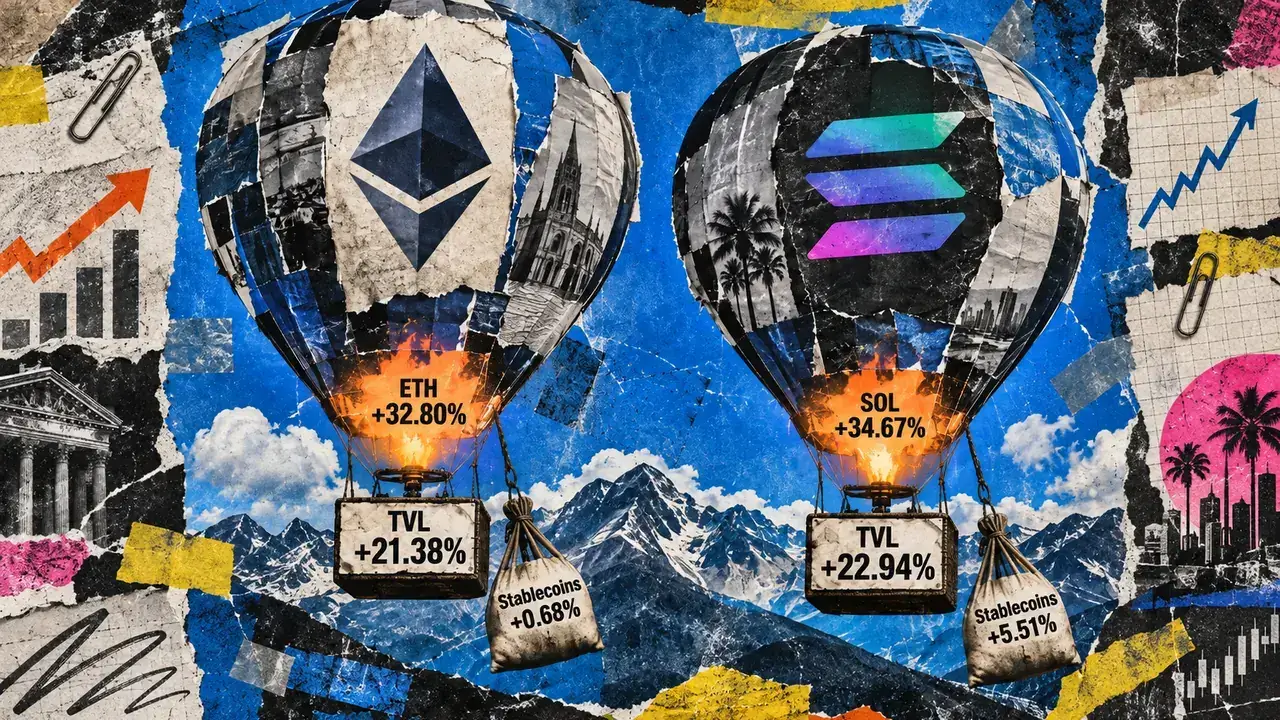
The recent $20 billion increase in decentralized finance (DeFi) Total Value Locked (TVL) is largely the result of asset price inflation rather than a surge in new liquidity. According to recent market data, while primary ecosystem assets like Ethereum (ETH) and Solana (SOL) experienced price gains exceeding 32%, stablecoin growth—the most reliable indicator of fresh capital entering the crypto space—remained stagnant at less than 6%. This discrepancy suggests that the headline-grabbing TVL figures are a byproduct of rising token prices rather than a fundamental expansion of the DeFi user base.
For US-focused investors and analysts, this 'unresolved inflow picture' signifies a potential disconnect between market sentiment and actual liquidity. When TVL rises solely because the underlying assets (like ETH or SOL) become more expensive, the ecosystem becomes more sensitive to price volatility. Without a corresponding rise in stablecoin deposits, there is little 'new' cash sitting on the sidelines to provide a floor during a market correction, making current DeFi valuations appear more fragile than they might seem at first glance.
This trend highlights a shift in market dynamics for 2026, where institutional holders may be holding onto their current positions rather than deploying new funds. The lack of stablecoin movement suggests that despite the bullish price action in major Layer 1 tokens, the broader market is not yet seeing the level of retail or institutional 'on-ramping' typically associated with a sustained bull cycle. This creates a leverage-like effect where the perceived value of the ecosystem is heavily dependent on the spot price of a few major assets.
Moving forward, market participants should closely monitor stablecoin minting rates and exchange reserve balances for USDC and USDT. A true DeFi expansion will require stablecoin growth to bridge the gap with asset price performance. Until then, the $20 billion surge should be viewed as a revaluation of existing holdings rather than a sign of massive new adoption. Watch for upcoming Federal Reserve commentary on digital dollar regulations, as US-based liquidity remains a primary driver for stablecoin demand.