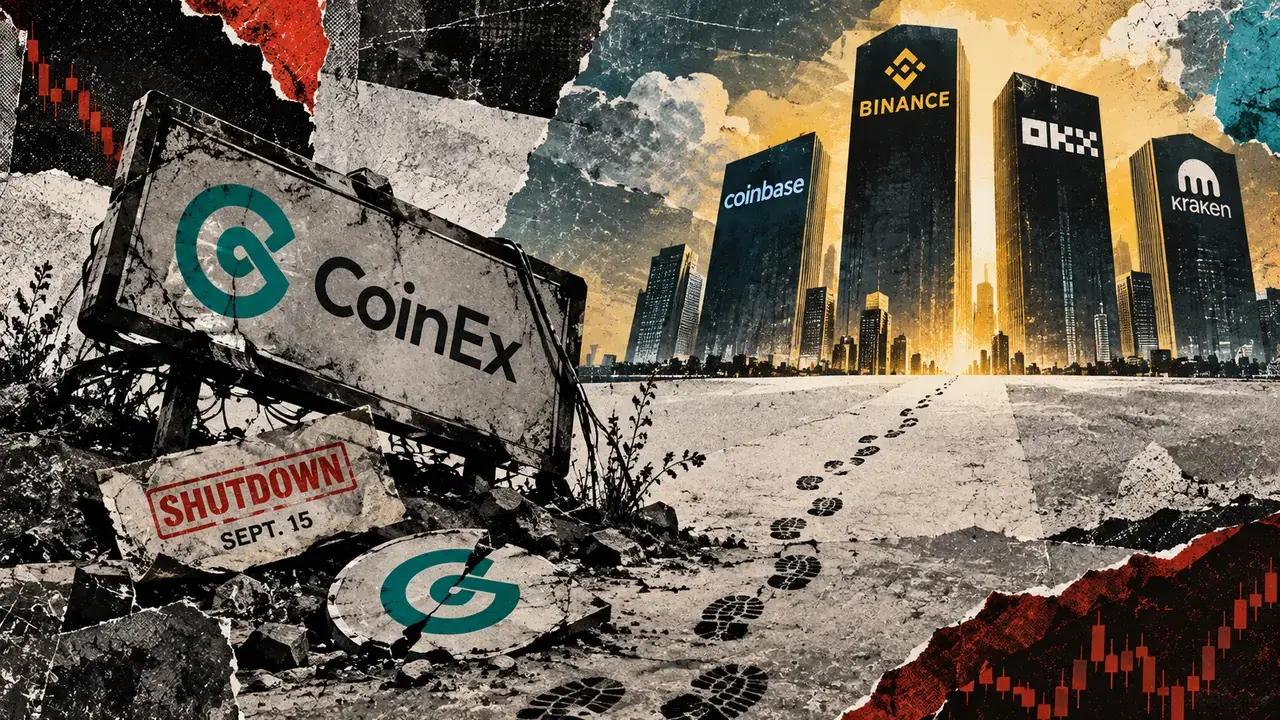
CoinEx decided to exit the cryptocurrency market in August 2026 due to the overwhelming dominance of "mega-exchanges" like Binance and Coinbase. While global trading volumes saw a significant rebound during the month, the vast majority of that activity was captured by the top five global platforms. CoinEx, which had been a staple in the industry since its founding, found that its share of liquidity and user activity had dwindled to levels that no longer supported a sustainable business model in the current high-compliance, high-competition era.
The closure comes at a time when regulatory pressures in major markets, particularly the U.S., have significantly raised the barrier to entry for smaller exchanges. Increased compliance costs and the necessity for deep order books have forced a massive consolidation phase across the industry. In 2026, institutional investors have shown a clear preference for platforms with the highest liquidity and most robust insurance funds, further isolating secondary players like CoinEx that once thrived on niche altcoin pairings.
For the broader market, this concentration of power poses significant risks regarding central points of failure and reduced competition for trading fees. However, it also reflects a "maturation" of the industry where only the most capitalized and compliant entities survive. Retail traders who previously utilized CoinEx are now migrating to decentralized exchanges (DEXs) for privacy and specific assets, or moving their primary holdings to major centralized exchanges (CEXs) to ensure execution speed and security during volatile periods.
Moving forward, investors should watch for further consolidation among other mid-tier exchanges that may be struggling to maintain market share against the industry giants. The focus will likely shift to whether decentralized liquidity providers can effectively capture the volume displaced by exiting platforms like CoinEx. Additionally, market observers should monitor if U.S. regulators view this increasing concentration as a potential monopolistic threat to the stability of the digital asset ecosystem.