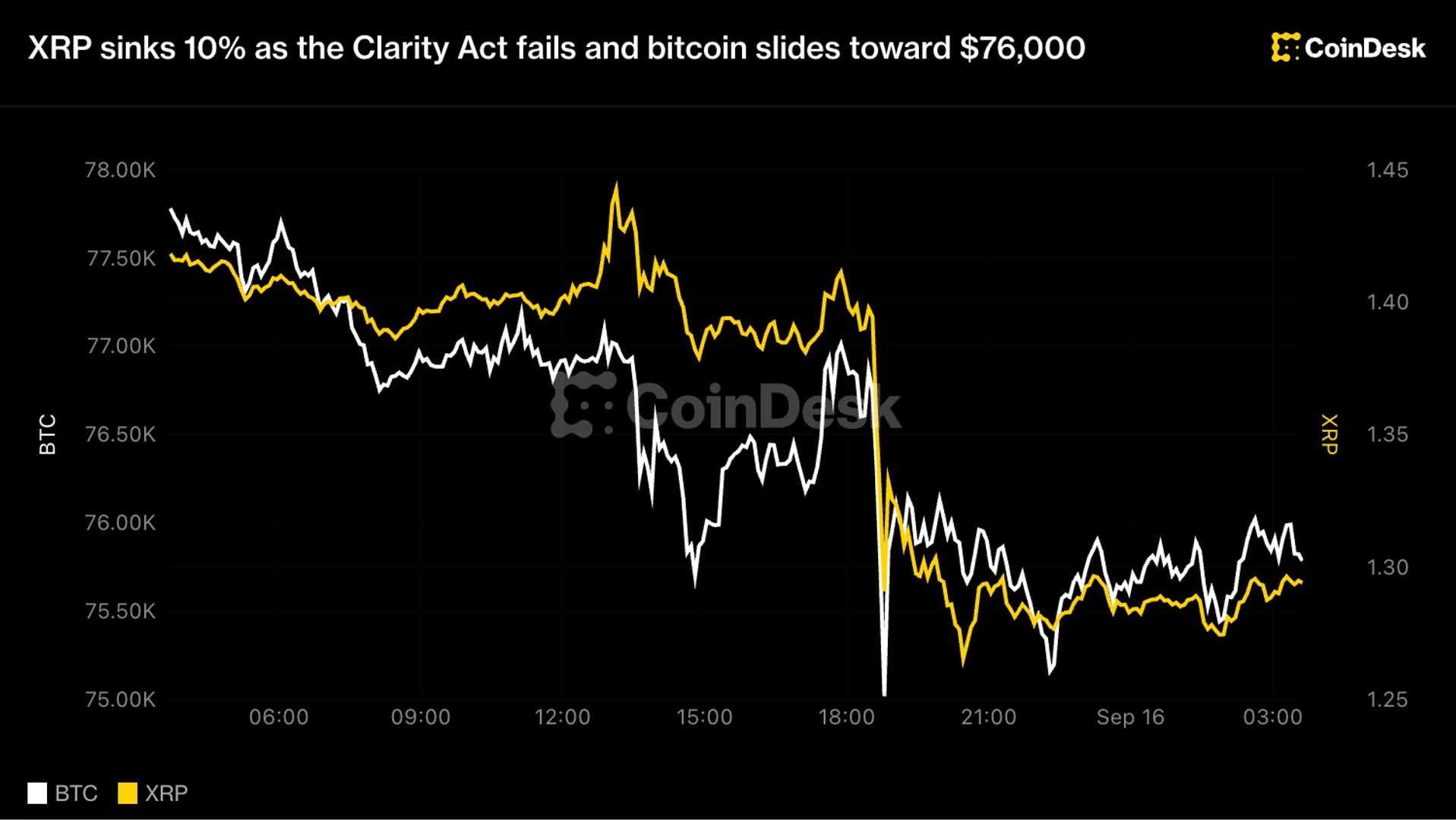
The U.S. Senate’s failure to advance the Clarity Act, a comprehensive crypto market structure bill, directly caused XRP to sink 10% as investors reacted to the loss of a clear legal framework for digital assets. The procedural vote ended 49-50, leaving the legislation 11 votes short of the supermajority needed to bypass a filibuster. This legislative deadlock has reignited fears of continued 'regulation by enforcement' in the United States, disproportionately affecting tokens like XRP that have historically remained at the center of regulatory scrutiny.
The Clarity Act was designed to provide the first definitive set of rules for the digital asset industry, specifically aiming to clarify the jurisdictional boundaries between the SEC and the CFTC. By failing to pass, the bill leaves major exchanges and token issuers in a state of legal limbo. The market's reaction was swift and negative, with every major token in the top 20 losing value within hours of the Senate's announcement.
Beyond XRP's double-digit decline, Bitcoin felt the pressure of the legislative setback, sliding toward the $76,000 support level. The broader market sentiment has shifted from optimism regarding federal oversight to a cautious defensive stance. Analysts suggest that the 49-50 split reflects a deep partisan divide over how much control federal agencies should exert over decentralized finance and stablecoin issuers.
For crypto investors, this development means that the long-awaited institutional 'green light' provided by federal law is once again delayed. Without the Clarity Act, the industry remains subject to the existing, often conflicting, interpretations of legacy securities laws. This lack of progress may drive crypto startups and capital toward more favorable jurisdictions in Europe or Asia, where comprehensive frameworks like MiCA are already operational.
Moving forward, readers should watch for any attempts to attach portions of the market structure bill to upcoming must-pass spending legislation. The $76,000 mark for Bitcoin will be a critical technical level to monitor; a breach below this could signal further downside for the entire altcoin market, including XRP, as the industry braces for a prolonged period without federal legislative clarity.