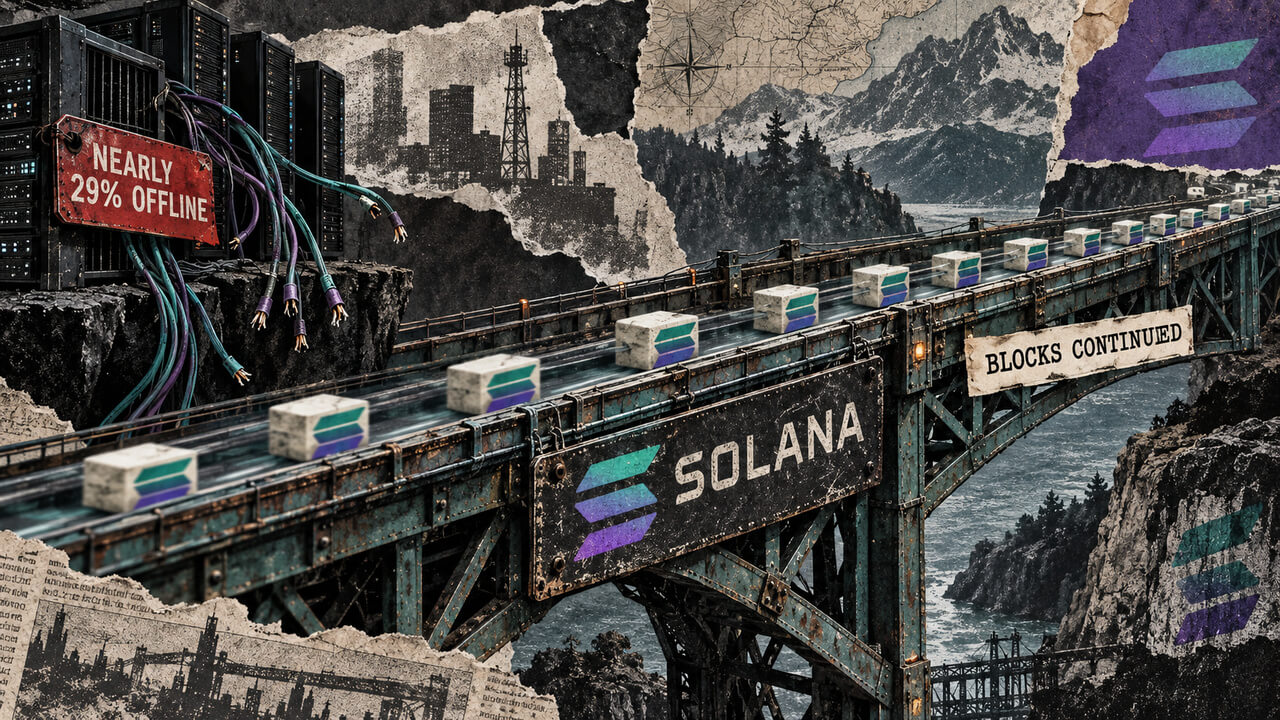
In early 2026, the Solana network narrowly avoided a complete shutdown after a single routing error at Teraswitch, a key internet service provider for many validators, caused 29% of the total network stake to go offline simultaneously. Because the stake loss remained below the critical 33.3% threshold required to halt consensus, Solana continued to produce blocks, though users experienced significant performance degradation and sharply lower transaction throughput throughout the event.
Independent telemetry confirmed that during the outage, the remaining validators faced increased load and difficulty reaching finality. The incident was traced back to a specific Teraswitch failure that affected high-stake validator nodes. This event serves as a stark reminder that even as Solana has improved its uptime since 2022, infrastructure-level centralization remains a vulnerability when large clusters of validators rely on the same hosting or routing providers.
From a regulatory perspective, this incident aligns with 2026 US policy discussions concerning the 'operational resilience' of decentralized networks. Policymakers have recently signaled that networks deemed 'systemically important' may face stricter requirements for geographical and provider-level diversification among validator sets to prevent single-point-of-failure scenarios that could disrupt financial markets.
Market participants are now closely watching the Solana Foundation’s response to see if new incentives will be introduced to encourage validators to move away from concentrated data centers. For SOL investors, while the network’s ability to stay online during a massive stake drop is a technical win, the performance issues highlight the ongoing trade-offs between high speed and true decentralization.