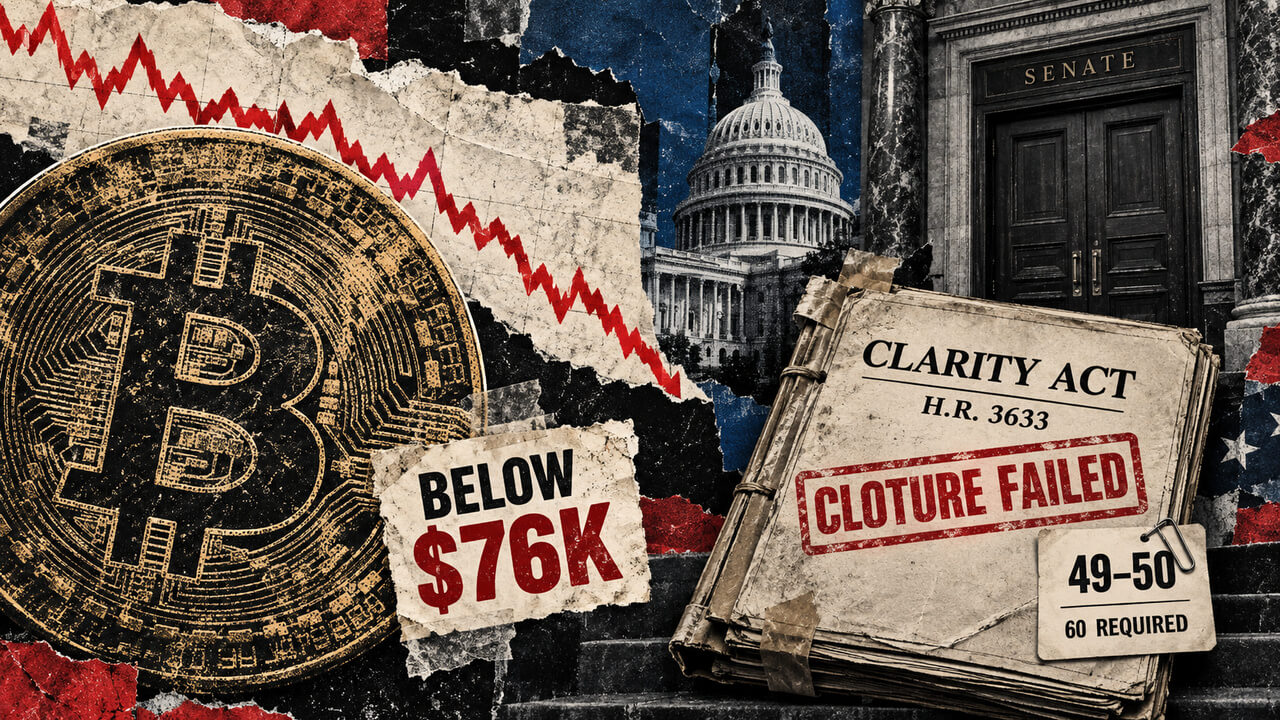
Bitcoin (BTC) retreated below the $76,000 threshold because the U.S. Senate failed to advance the CLARITY Act, a highly anticipated piece of crypto-focused legislation. The 49-50 cloture defeat effectively stalls the bill’s progress, disappointing market participants who had been pricing in a more defined regulatory framework. This rejection signals that the path to comprehensive digital asset oversight in the U.S. remains fraught with political gridlock.
The CLARITY Act was intended to provide much-needed legal definitions and oversight boundaries for the cryptocurrency industry. The narrow defeat in the Senate highlights a persistent divide among lawmakers regarding how to balance financial innovation with consumer protection. While the bill had bipartisan support, the failure to reach the 60-vote threshold for cloture indicates that significant opposition remains, preventing the bill from reaching a final floor vote.
Market reaction was swift, with liquidations beginning even before the official tally was finalized as whispers of the defeat circulated on Capitol Hill. The drop below $76,000 is a significant technical shift, as this level had previously served as a psychological support zone for traders. The resulting selloff suggests that the market is highly sensitive to legislative outcomes that impact the long-term institutional adoption of Bitcoin.
For investors and industry stakeholders, the focus now shifts to whether the bill’s sponsors will attempt to negotiate amendments or if the legislation is dead for the remainder of the 2026 session. Readers should closely watch for statements from key Senate leadership and the SEC, as the absence of a legislative framework may empower regulators to continue their enforcement-led approach. Until a new regulatory catalyst emerges, Bitcoin is likely to face continued volatility driven by political uncertainty.