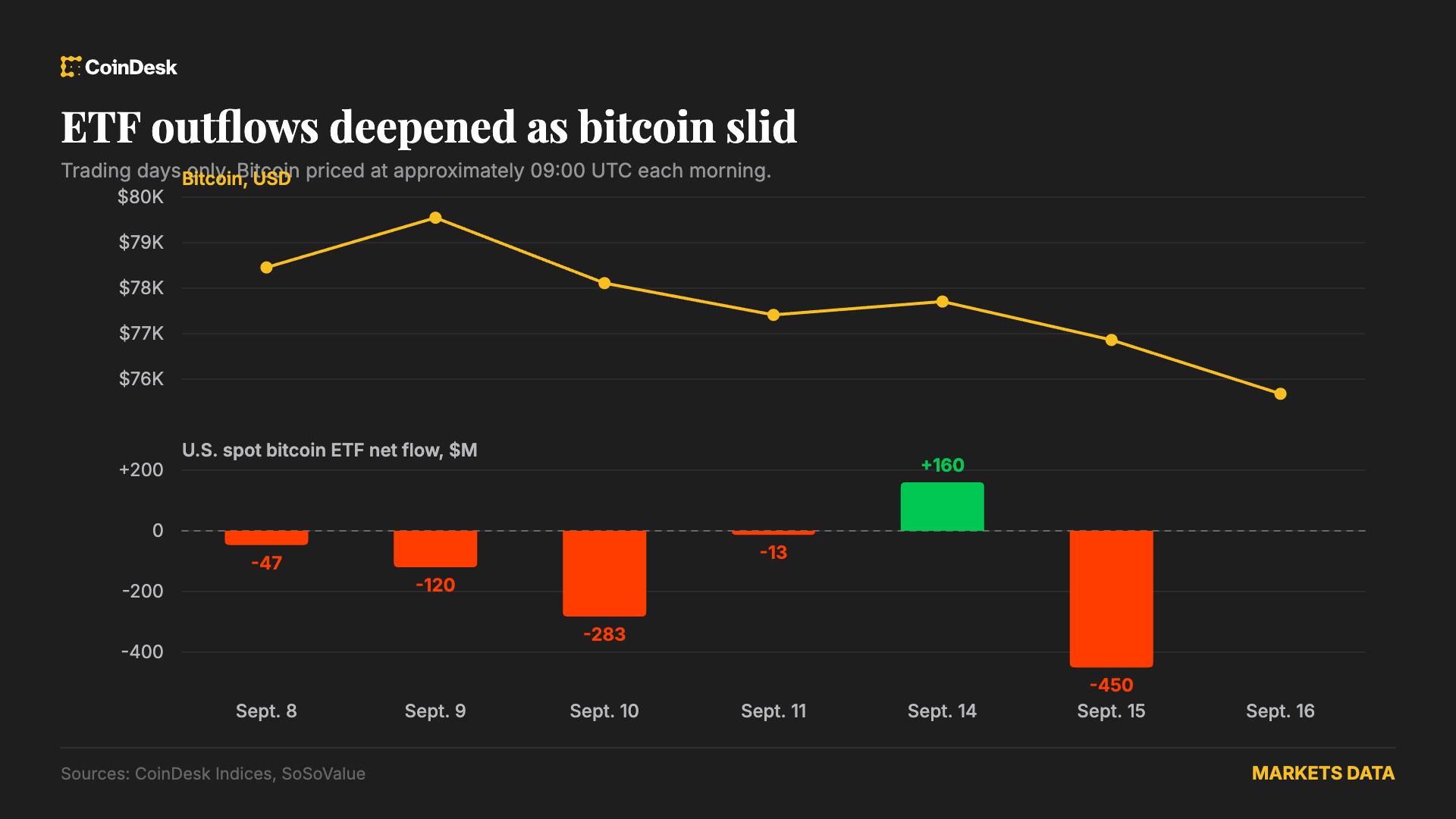
U.S. spot Bitcoin ETFs experienced their largest single-day outflow since June 2026, shedding $450 million as a direct result of the Senate's failure to advance the long-awaited Clarity Act. Institutional investors reacted swiftly to the legislative deadlock, pulling capital out of regulated investment vehicles as the prospect of a unified federal framework for digital assets stalled. The failure to move the bill out of committee has re-introduced the "regulation by enforcement" uncertainty that many market participants hoped the 2026 legislative session would finally resolve.
The Clarity Act was designed to provide a definitive classification for digital tokens and establish clear jurisdictions between the SEC and CFTC. Its sudden stall in the Senate caught markets by surprise, particularly after several bipartisan compromises earlier this year seemed to have paved the way for its passage. This legislative friction specifically targeted tokens previously deemed "regulatory-sensitive," but the broader contagion was most visible in the Bitcoin ETF market, where institutional liquidity is often the first to exit during periods of heightened political risk.
This $450 million outflow marks a significant reversal of the bullish trend observed throughout the first half of 2026. Beyond Bitcoin, the failure of the act led to a sharp sell-off in altcoins that were expected to benefit from the bill's specific disclosure requirements and legal protections. Market analysts suggest that if the Senate does not revisit the legislation before the upcoming winter recess, the market could face a prolonged consolidation phase as capital shifts back toward traditional safe-haven assets.
Moving forward, investors should closely monitor the Senate Banking Committee for any signs of a "mini-bill" or alternative stablecoin legislation that might revive sentiment. The next key data point will be the SEC’s response to upcoming ETF filings for other digital assets, which may now face additional hurdles or delays in the absence of the Clarity Act's statutory guidance. Investors should remain cautious as the lack of legislative progress likely means continued volatility for the remainder of the quarter.