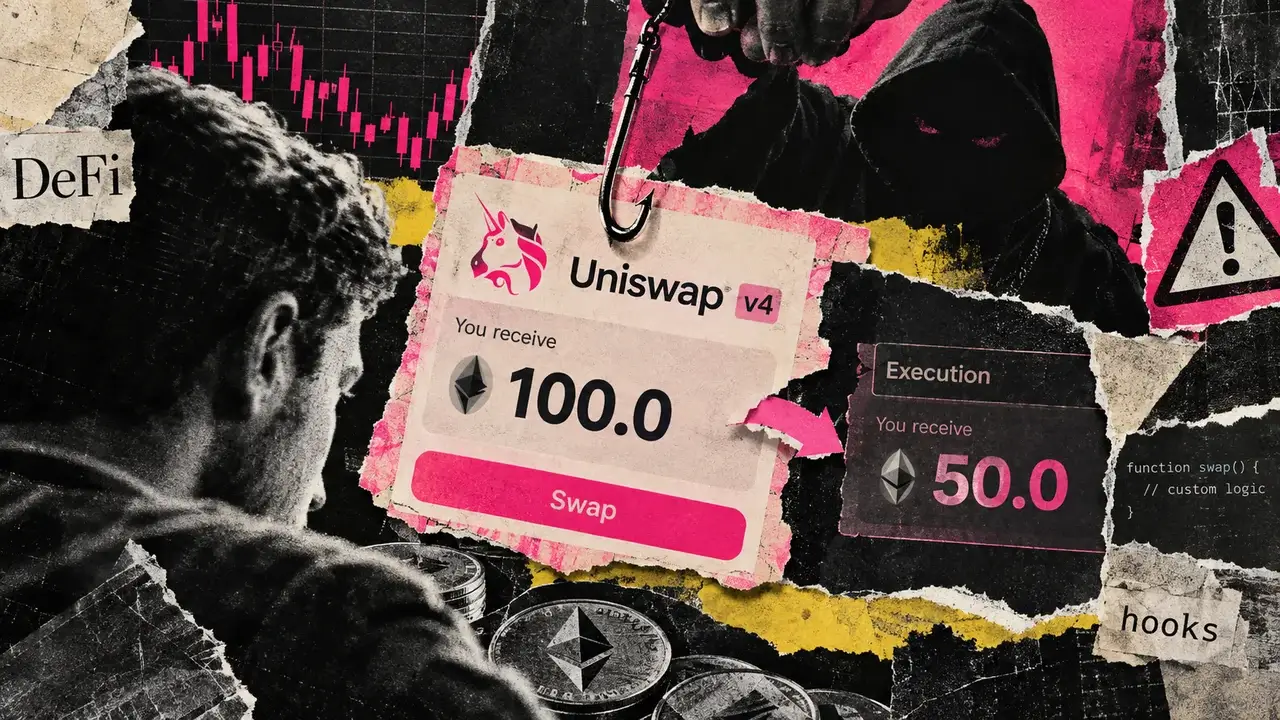
Malicious Uniswap v4 hooks exploit DeFi traders by advertising artificial liquidity and superior exchange rates to attract traffic from decentralized exchange (DEX) aggregators. Once a user’s transaction is routed to the compromised pool and reaches the settlement stage, the hook’s custom logic changes behavior, executing the trade at a significantly worse price or redirecting assets. This vulnerability stems from the flexibility of the Uniswap v4 'hooks' architecture, which allows third-party developers to inject custom code into the lifecycle of a liquidity pool.
In early 2026, security researchers identified that these malicious hooks are specifically designed to bypass the off-chain simulation checks used by most major aggregators. By presenting a 'clean' state during initial price queries but triggering a 'malicious' state during the actual execution (the 'swap' hook), attackers can effectively win the routing auction against legitimate pools. This method allows for a more sophisticated form of Maximum Extractable Value (MEV) exploitation that borders on direct theft, as the final execution price deviates sharply from the quote the user signed.
The regulatory implications of this exploit are significant, as U.S. consumer protection agencies like the FTC and SEC have increasingly focused on the responsibilities of 'front-end' providers and aggregators to protect retail users. If aggregators cannot effectively filter out these poisoned hooks, they may face legal pressure to implement permissioned registries for Uniswap v4 pools. This creates a tension between the permissionless nature of DeFi and the practical need for user safety in a landscape where modular code can be weaponized.
For market participants, this trend suggests a shift in how liquidity is evaluated. Traders should no longer rely solely on the best price shown by an aggregator without verifying the underlying pool's hook safety. Moving forward into mid-2026, the industry is expected to see the rise of 'Hook Auditing' services and automated verification badges. Investors should watch for updates from the Uniswap Foundation regarding potential protocol-level safeguards or community-governed 'white-lists' for verified hooks to restore trust in the v4 architecture.