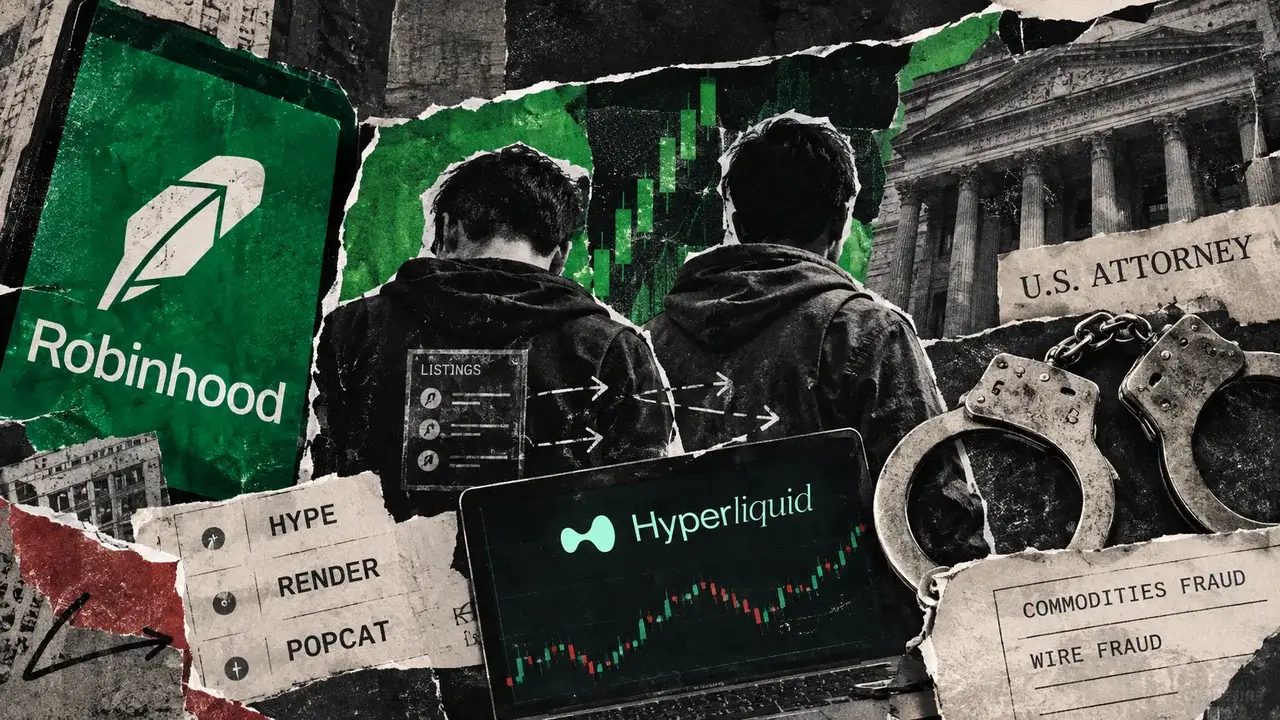
Robinhood engineers are facing potential 30-year prison sentences because the U.S. Department of Justice (DOJ) has charged them with wire fraud and money laundering related to insider trading. The federal indictment alleges that the employees accessed confidential internal schedules regarding upcoming token listings on Robinhood’s retail platform. Instead of trading on the spot market, the individuals reportedly used this non-public information to open leveraged positions in perpetual futures on the Hyperliquid decentralized exchange (DEX), attempting to capitalize on the price volatility that typically follows a major exchange listing.
While the alleged illicit profit of $50,000 is relatively small compared to previous high-profile crypto cases, the severity of the charges reflects a specific 2026 regulatory mandate to curb "listing leaks." The DOJ argues that the engineers intentionally used decentralized platforms to evade traditional corporate oversight and compliance monitoring. By targeting the intersection of centralized exchange (CEX) data and decentralized finance (DeFi) trading, federal prosecutors are signaling that the technical complexity of perpetual futures will not serve as a shield against legacy financial crimes.
This case arrives amid a shifting regulatory landscape in early 2026, where the boundary between DeFi and TradFi is increasingly blurred by enforcement actions. The DOJ's focus on Hyperliquid—a prominent decentralized trading layer—suggests that authorities are now actively monitoring on-chain perps markets for suspicious timing linked to corporate events. This move is part of a broader push to treat DeFi-based insider trading with the same gravity as traditional securities fraud, regardless of the underlying technology or the specific blockchain used.
For the broader crypto market, this development is likely to result in much stricter internal controls and data silos within major U.S. exchanges like Robinhood, Coinbase, and Kraken. Market participants should watch for potential delays in new token listings as firms audit their internal security protocols to prevent similar leaks. Furthermore, this case sets a legal precedent for how "cross-platform" manipulation is prosecuted, potentially leading to more investigations into employees who trade on DEXs using CEX-derived intelligence.