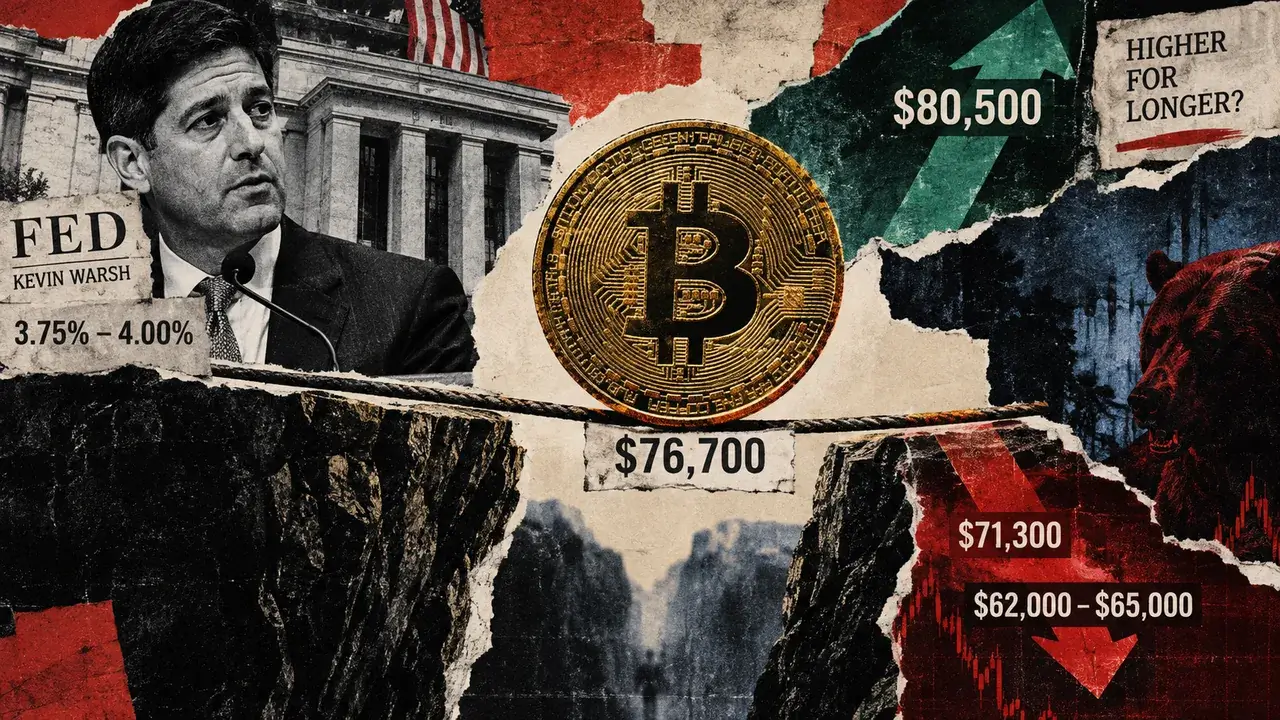
Bitcoin has shown unexpected strength, reclaiming the $76,000 zone following the Federal Reserve’s latest interest rate hike on September 16, 2026. While the S&P 500 and Dow Jones Industrial Average fell by 0.7% and 1.2% respectively in response to Fed Chair Kevin Warsh's hawkish tone, Bitcoin held its ground even as the 2-year Treasury yield surged to 4.734%. This decoupling indicates that the market currently views Bitcoin as a distinct asset class capable of weathering traditional macro volatility better than legacy tech stocks.
The policy landscape under Chair Warsh has been characterized by aggressive tightening to curb persistent inflation, a move that typically drains liquidity from speculative markets. In this 2026 cycle, however, Bitcoin's supply dynamics and increased institutional custody appear to be providing a floor. The fact that BTC recovered from an intraday low of $75,064 quickly after the Fed press conference suggests that dip-buying remains a primary strategy for whales and corporate treasuries.
Despite the price resilience, four critical demand signals are flashing warnings for the near term. Analysts are monitoring a significant slowdown in stablecoin minting, a drop in network transaction volume, cooling spot market buy-pressure, and a plateau in Bitcoin ETF net inflows. These indicators suggest that while existing holders are not selling, there is a lack of fresh retail and institutional capital to drive the price toward the psychological $80,000 barrier.
For US-based traders, the divergence between price stability and weakening on-chain demand warrants a cautious outlook. If the 'Warsh Fed' continues to maintain high rates through the end of the year, the strain on global liquidity could eventually overwhelm Bitcoin's current support levels. Investors should closely watch for a breach of the $75,000 support and monitor the next round of Treasury auctions to see if the flight to safety continues to include digital assets or if it shifts back to high-yield government debt.