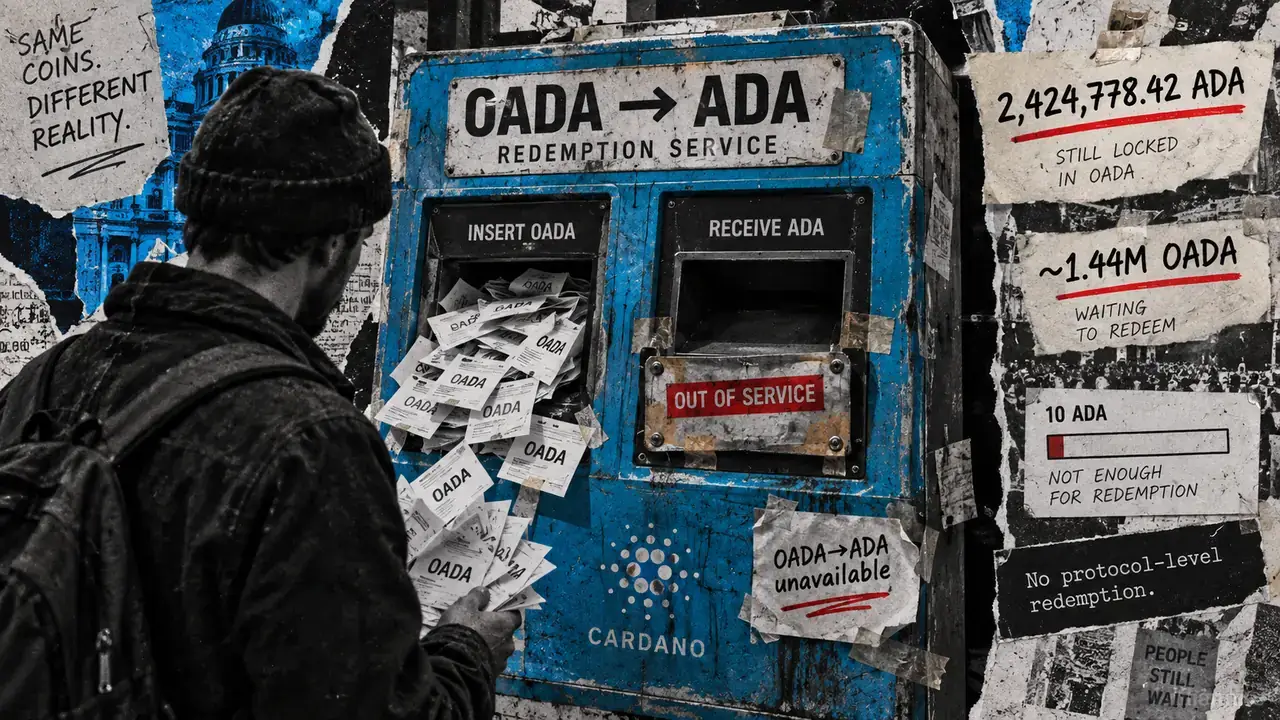
The recent patch released by Cardano’s Splash protocol addresses the security vulnerability used in its latest exploit, but it offers no immediate relief for holders of OADA, the protocol's synthetic ADA variant. Although the exploit is now closed, approximately 2.42 million ADA remains missing from the ecosystem's reserves. This has created a severe 'thin-pool overhang' where the available liquidity is insufficient to facilitate the redemption of OADA back into native ADA, leaving users with depegged or unmarketable assets.
The exploit fundamentally destabilized the mechanism that keeps OADA pegged to ADA. Because the protocol lacks a built-in emergency redemption facility to handle such a significant drain, OADA holders are at the mercy of market makers who have largely retreated from the pools. Without a manual injection of liquidity or a protocol-wide re-collateralization event, the 'fix' serves only to prevent further drainage rather than restoring the functionality of the platform for existing users.
From a regulatory standpoint, this incident may draw the attention of US authorities looking into DeFi consumer protections. The inability of a protocol to honor redemptions following a hack—even after a patch is applied—highlights the 'centralization of risk' often found in decentralized applications. For the broader Cardano ecosystem, this event serves as a cautionary tale regarding the reliance on synthetic assets that lack robust, automated recovery mechanisms during periods of extreme volatility or security breaches.
Market participants should expect localized bearish sentiment for Cardano-based DeFi tokens as trust in synthetic pegs wavers. The immediate impact on ADA’s price may be limited, but the reputational damage to the network’s emerging DeFi sector is notable. Investors are closely watching the Splash governance forums to see if a treasury-funded bailout or a migration plan will be proposed to compensate those holding the depegged OADA.
Moving forward, the primary focus for the community will be the potential recovery of the 2.4 million ADA. If the exploiters are not identified or if the funds are not recovered via on-chain tracking, the loss will likely be socialized among OADA holders. Watch for upcoming security audits of other Cardano DEXs, as users may migrate liquidity to protocols with more transparent reserve backing in the wake of this liquidity trap.