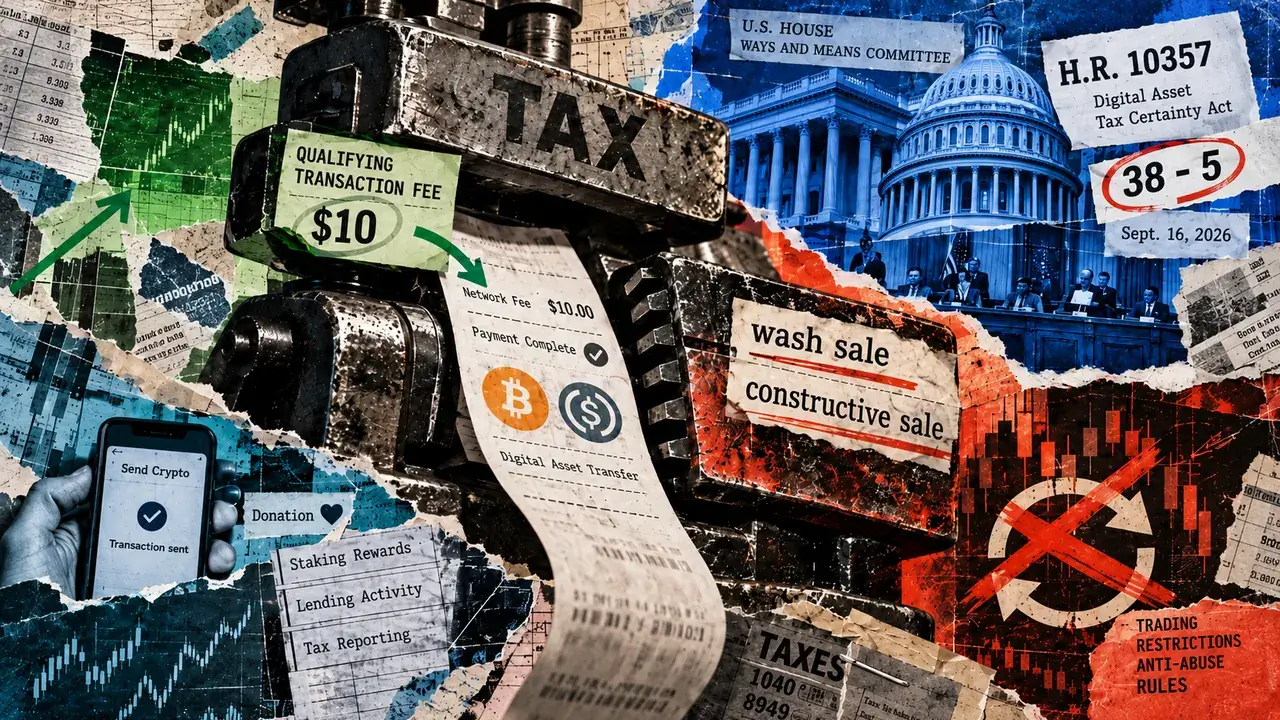
The advancement of H.R. 10357 toward full House consideration marks a pivotal shift in US tax policy by establishing a long-awaited 'de minimis' exemption for small-scale cryptocurrency transactions. If passed, Americans would no longer be required to calculate capital gains on every small purchase, such as a cup of coffee or a subscription paid in stablecoins, provided the transaction falls under the bill's specified dollar threshold. This removes one of the primary hurdles for retail crypto adoption and the practical use of digital assets as currency.
However, the 'catch' for the crypto industry lies in the expanded anti-abuse regulations. To prevent large-scale tax evasion, the bill grants the Treasury more robust authority to monitor and penalize users who attempt to split large transactions into smaller exempt payments. These rules are particularly targeted at professional stakers and DeFi participants who might try to exploit the exemption to avoid reporting significant income. This trade-off suggests that while retail utility is being encouraged, institutional oversight is becoming more sophisticated.
The political context of 2026 shows a bipartisan push to integrate stablecoins into the legacy financial system. By providing targeted fee and stablecoin relief, lawmakers are signaling that they view digital assets as a viable part of the US payments infrastructure. This regulatory clarity is expected to encourage more traditional fintech companies to integrate crypto payment options, knowing their users won't face a tax nightmare for every transaction.
Market-wise, the news is a net positive for stablecoins like USDC and USDT, as well as high-liquidity assets like Bitcoin and Ethereum. By lowering the friction for consumer spending, the velocity of these assets is likely to increase. Investors should watch the upcoming House vote closely, as any amendments regarding the specific 'de minimis' dollar amount or the definitions of 'anti-abuse' could significantly alter the bill's impact on decentralized finance protocols.