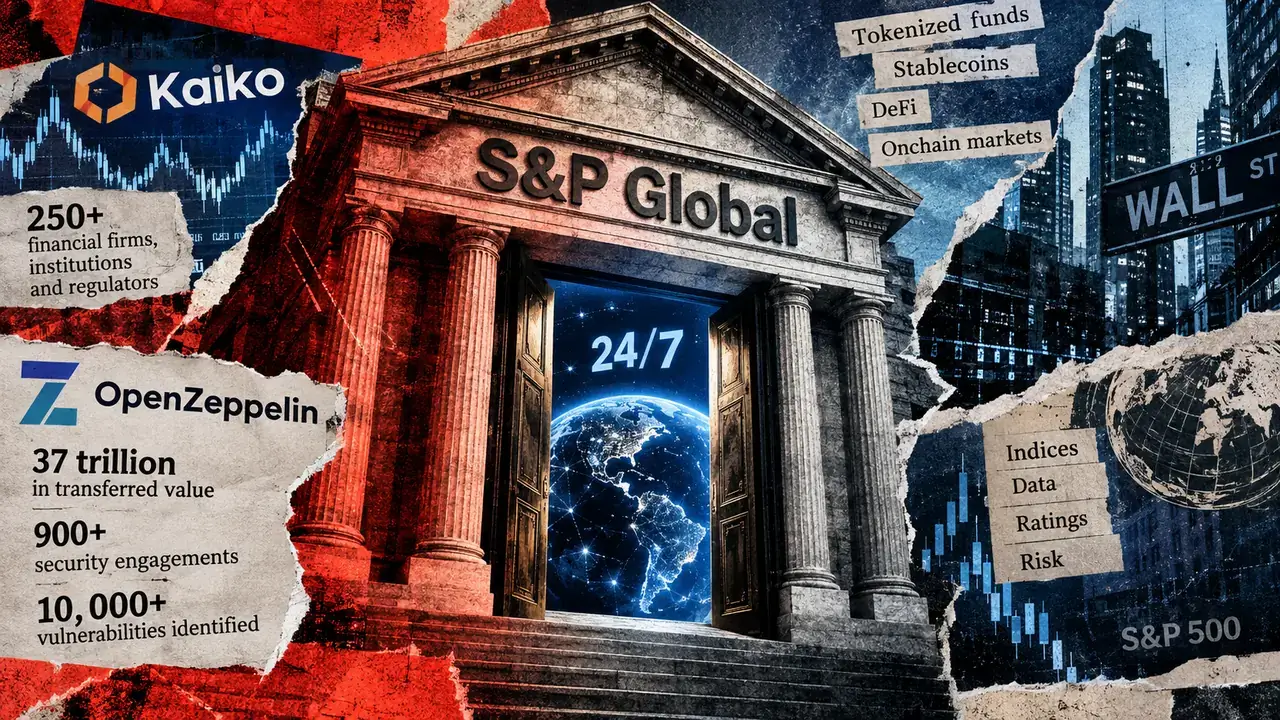
S&P Global’s acquisition of OpenZeppelin, finalized in September 2026, directly impacts the institutional Real-World Asset (RWA) tokenization space by providing the infrastructure needed for secure, 24/7 financial markets. By absorbing one of the most prominent smart contract security firms, S&P Global is moving beyond simple data ratings and into the technical verification of the code that powers modern finance. This acquisition allows S&P to offer a complete stack for institutional tokenization, combining its legacy credibility with OpenZeppelin’s expertise in preventing vulnerabilities in decentralized protocols.
Following its earlier integration of crypto-data provider Kaiko, S&P Global is positioning itself as a primary gatekeeper for the shift toward tokenized securities and private credit. OpenZeppelin will continue to operate as a separate business unit under CEO Demian Brener, a move designed to preserve its reputation for neutral security auditing while utilizing S&P’s global resources to scale operations. This indicates that S&P views the 'security-as-a-service' model as a critical component of its business strategy for the next decade of digital finance.
From a regulatory and geopolitical perspective, this acquisition signals that major U.S. financial entities are preparing for a landscape where smart contracts are the legal and technical backbone of global trade. As the U.S. continues to refine its framework for tokenized assets, the entry of a 'Big Three' ratings agency into the code-security layer suggests that smart contract audits may soon become a mandatory standard for any institution wishing to issue on-chain products. This effectively bridges the gap between the experimental nature of DeFi and the strict compliance requirements of traditional markets.
For the broader market, the implications are heavily focused on the Ethereum ecosystem and EVM-compatible chains, where OpenZeppelin’s code libraries are already the industry standard. Traders and analysts should watch for S&P Global to launch new RWA-specific security ratings, which could serve as a catalyst for a massive influx of institutional capital into tokenized bond and credit markets. The move underscores a growing consensus that the future of finance lies in blockchain infrastructure that never closes, requiring a new class of custodians and auditors to ensure systemic stability.