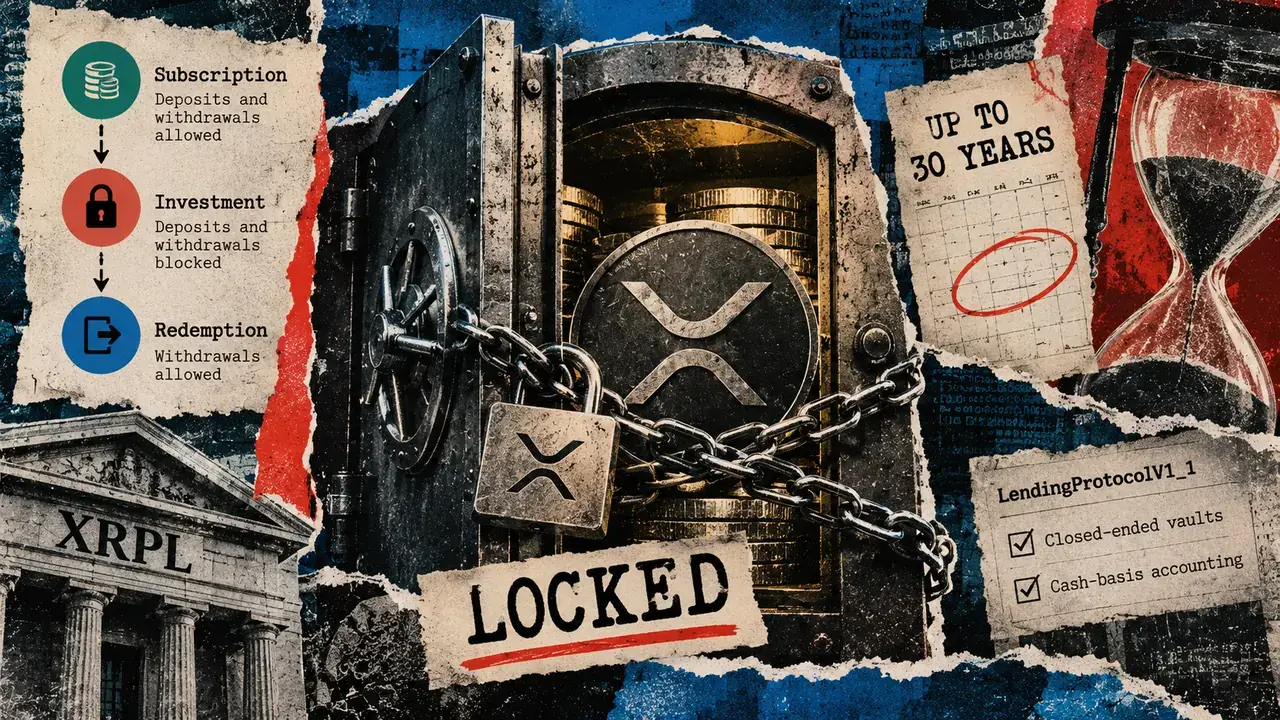
The introduction of closed-ended vaults on the XRP Ledger (XRPL) significantly changes how users interact with their assets by barring all withdrawals during a fixed investment term. Under this new lending protocol, XRP holders can commit their tokens to these vaults for durations that range from a few minutes to multiple decades. Interest is only calculated and distributed once the payment is finalized at the end of the term, creating a rigid structure compared to traditional flexible-access DeFi protocols. For US-based investors, this means that once XRP is committed to a vault, it is legally and technically inaccessible until the maturity date is reached.
This development comes as the XRPL ecosystem attempts to mature its DeFi offerings in 2026, shifting toward more institutional-grade financial products. By enforcing these lock-ups, the protocol aims to provide stable liquidity for borrowers while offering lenders predictable returns. However, the lack of an early exit mechanism introduces significant liquidity risk, as participants cannot liquidate their positions during flash crashes or sudden regulatory shifts. The tool's success remains speculative, as the community is still evaluating whether the XRP-denominated yield justifies the total loss of moveability.
From a regulatory standpoint, these closed-ended vaults may face scrutiny regarding disclosure requirements for long-term retail lock-ups. As US crypto policy continues to evolve in 2026, fixed-term lending products on decentralized ledgers are being watched closely for their resemblance to traditional certificates of deposit (CDs). Market analysts suggest that while the tool could reduce the circulating supply of XRP and potentially stabilize price action, the actual demand for XRP-denominated lending remains unproven compared to stablecoin-based alternatives.
Investors and XRPL participants should monitor the initial activation phase and the total value locked (TVL) metrics over the coming months. The key indicator of success will be whether institutional liquidity providers adopt these vaults for long-term treasury management. Readers should also watch for any secondary market developments, such as the creation of liquid staking or lending tokens that might eventually allow for the trading of these locked positions, which would mitigate the current withdrawal restrictions.