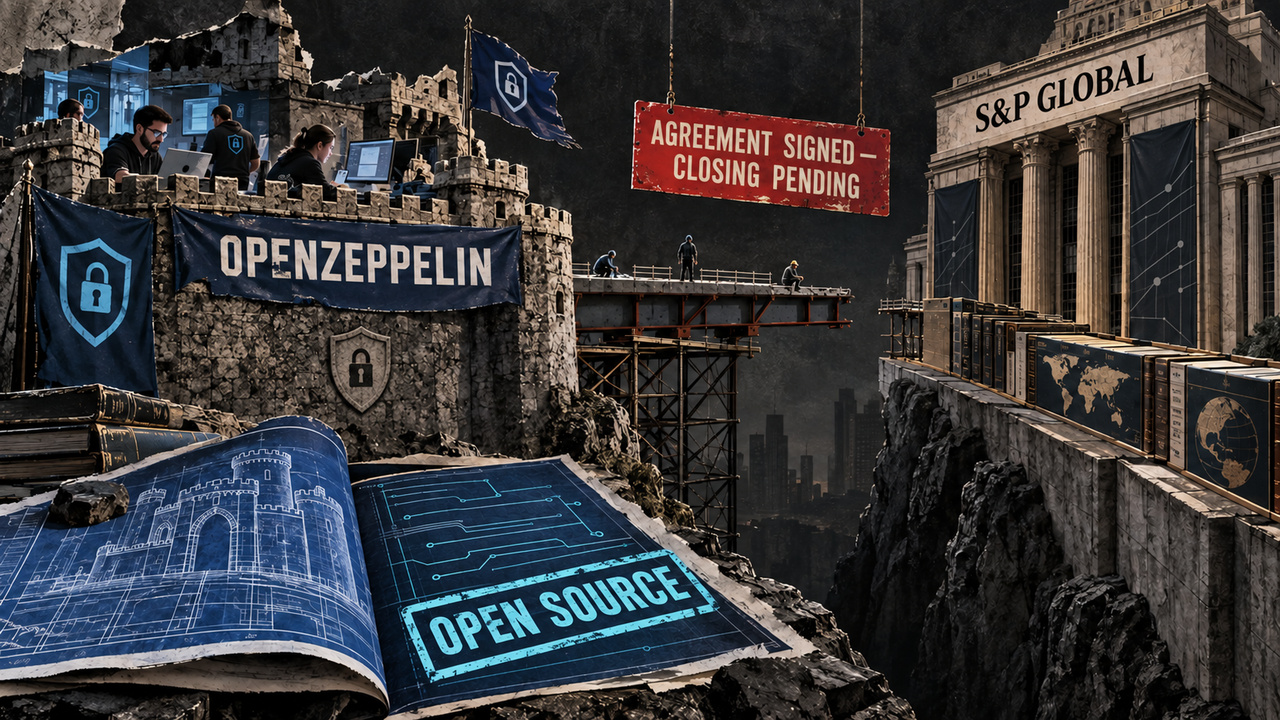
S&P Global’s acquisition of OpenZeppelin directly integrates battle-tested Web3 security protocols into the world of traditional credit ratings and financial data. By absorbing the firm responsible for the industry-standard OpenZeppelin Contracts, S&P Global is positioning itself as a primary auditor and risk assessor for the decentralized economy. This ensures that institutional investors now have a direct bridge between traditional risk management frameworks and the technical complexities of smart contract security, providing a level of oversight previously unavailable to Wall Street.
The acquisition allows OpenZeppelin to continue its core mission of providing security tools and audits while gaining the massive institutional reach and research capabilities of S&P Global. For the broader market, this represents a significant shift where the safety layer of Web3 is now under the umbrella of a regulated global ratings agency. OpenZeppelin’s libraries, which power a significant portion of the Ethereum and DeFi ecosystem, will now benefit from standardized reporting that aligns with traditional financial expectations, potentially solving the trust gap that has hindered large-scale capital entry.
This development is particularly significant for the institutional adoption of DeFi and tokenized assets in 2026. As major banks and asset managers explore on-chain finance, the lack of standardized security benchmarks has been a primary hurdle. With S&P Global owning a premier security firm, they are likely to launch new crypto-native credit ratings and security indices. This could drive more capital into protocols that meet S&P’s new 'institutional grade' security requirements, while potentially sidelining less transparent projects that fail to meet these rigorous standards.
Moving forward, the market should watch for the release of new S&P-branded security data products and how this might influence future SEC guidelines regarding smart contract audits. If S&P Global successfully integrates OpenZeppelin’s real-time monitoring tools into its global research platform, it could set a new precedent for how 'safe' a DeFi protocol must be to attract traditional institutional liquidity. Investors should monitor the performance of major smart contract platforms, as their underlying security frameworks are now under the direct influence of a TradFi giant.