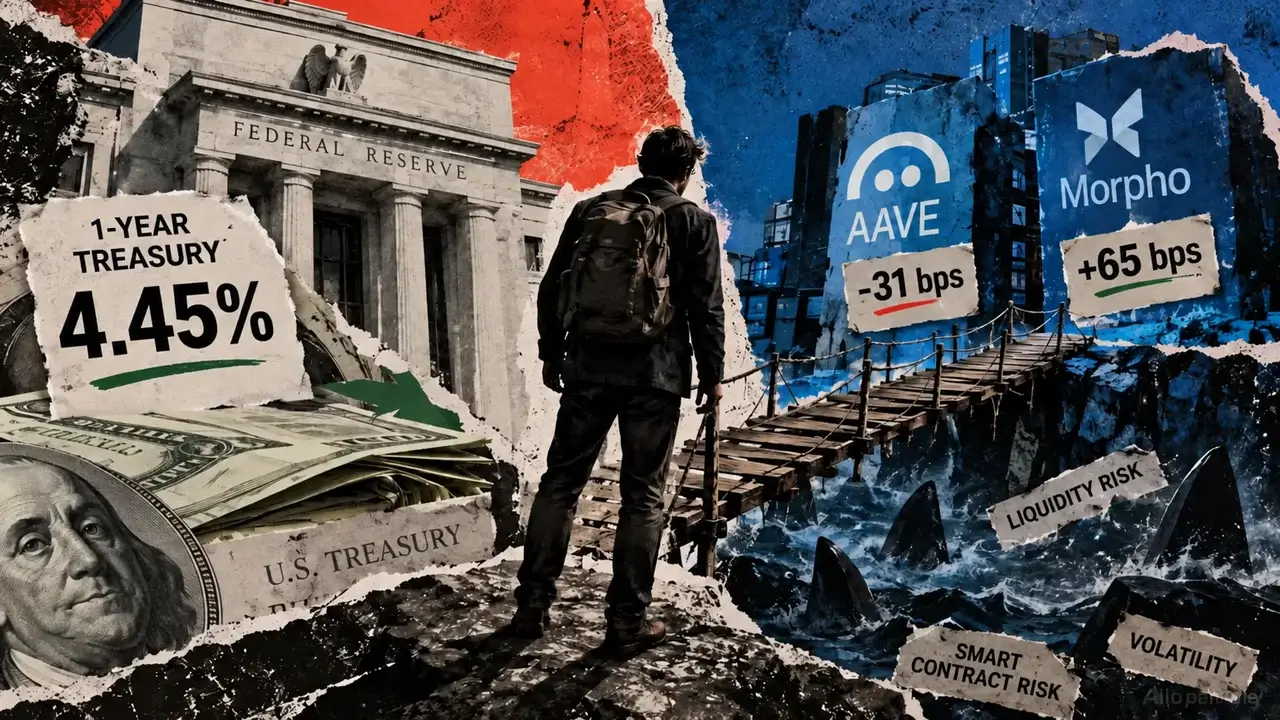
The recent surge in one-year U.S. Treasury yields to 4.45%, following the Federal Reserve's September 16, 2026, rate hike, establishes a new risk-free benchmark that currently outperforms many decentralized finance (DeFi) lending platforms. For investors, the guaranteed return of government debt now makes the technical risks associated with DeFi—such as smart contract exploits, oracle failures, and protocol hacks—significantly less attractive. This development is triggering a migration of capital from stablecoin lending pools into tokenized Treasuries and traditional fiat instruments as the risk-adjusted return for crypto lending diminishes.
The Federal Reserve's decision to raise the target range to 3.75%-4.00% reflects a persistent effort to stabilize the 2026 economy against inflationary pressures. This aggressive monetary tightening creates a "yield floor" that the crypto market must now exceed to justify its inherent volatility. As the cost of capital rises, the spread between "safe" government yields and "risky" DeFi yields has narrowed to its tightest margin in years, putting immense pressure on liquidity providers who previously relied on DeFi for superior returns.
This yield inversion matters because it tests the fundamental value proposition of DeFi in a high-interest-rate environment. In previous low-rate cycles, a 5% DeFi yield was considered exceptional; however, with Treasuries offering 4.45%, the "DeFi premium" has effectively evaporated for many institutional participants. Consequently, we are seeing an accelerated push toward Real World Asset (RWA) integration, as protocols attempt to bring these high-yielding government obligations on-chain to retain their user base.
Moving forward, investors should closely monitor the Total Value Locked (TVL) in major lending protocols like Aave and Compound. If these platforms cannot adjust their interest rate models to provide a significant spread over the 4.45% Treasury benchmark, the market may face a prolonged period of deleveraging. Additionally, watch for a shift in stablecoin demand, as capital may move toward yield-bearing stablecoins that are directly backed by the very Treasuries currently pressuring the market.