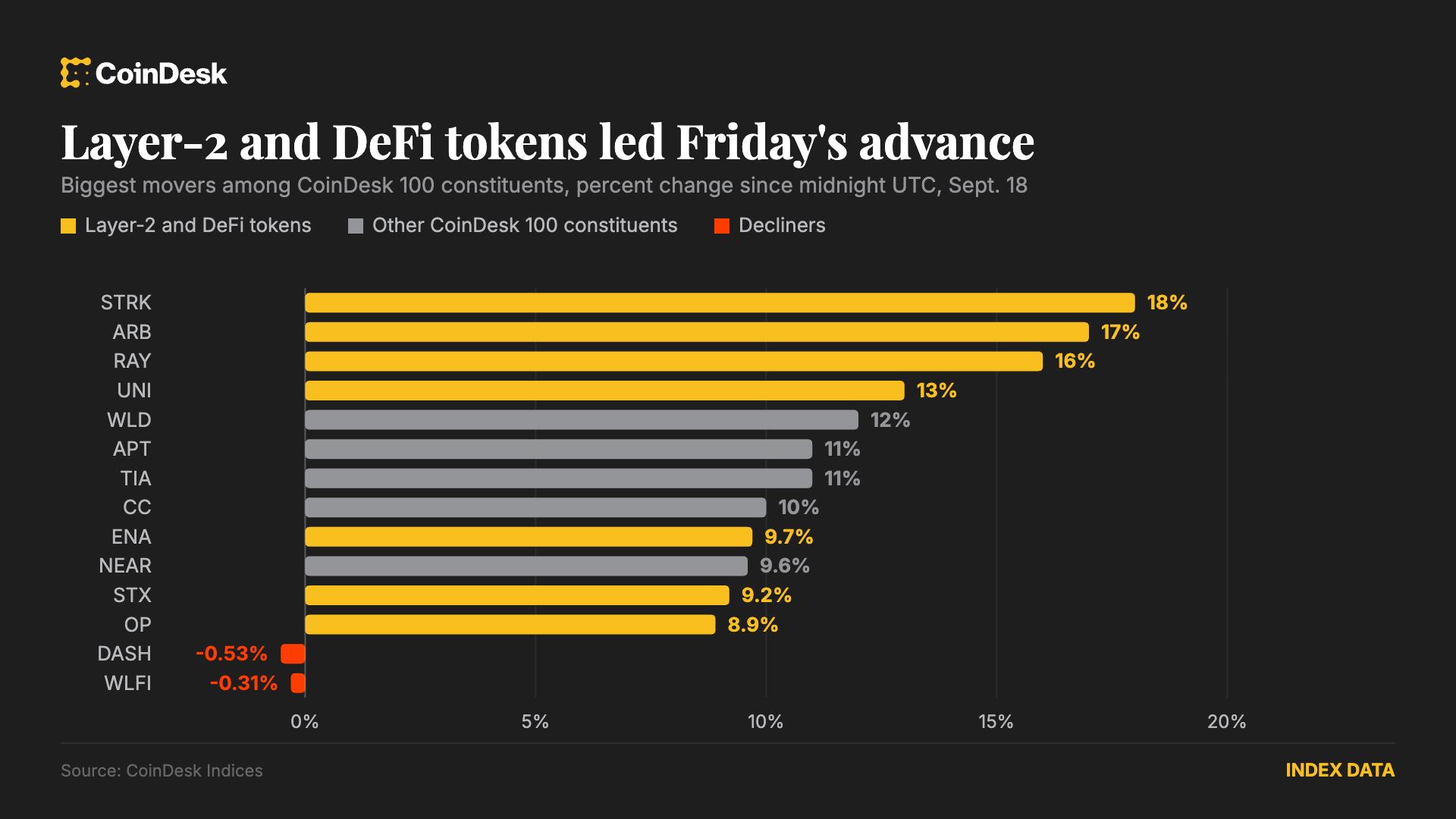
Starknet and Arbitrum saw double-digit gains exceeding 17% in early 2026 due to a sudden decline in the 10-year Treasury yield below 5%, which signaled a temporary peak in borrowing costs. As the broader market recovered, 98 of the top 100 cryptocurrencies by market cap advanced, but Layer-2 scaling solutions emerged as the clear leaders in this risk-on rotation. The movement suggests that liquidity is flowing away from safe-haven assets and back into high-beta crypto assets.
The rally comes on the heels of the Federal Reserve's most recent rate decision, which initially sparked fears of prolonged economic tightening. However, as bond yields softened and nerves regarding the Fed’s aggressive stance faded, investors re-entered the DeFi sector. Markets are increasingly betting that Ethereum scaling protocols like Starknet and Arbitrum will capture the majority of network activity and TVL growth during the next liquidity cycle.
This price action highlights the extreme sensitivity of Ethereum-linked infrastructure to US macroeconomic indicators. While Bitcoin remains a primary store of value for institutional portfolios, the aggressive recovery in STRK and ARB suggests that market participants are once again prioritizing functional infrastructure that supports decentralized finance. The broad nature of the advance, affecting nearly all major tokens, indicates a systemic relief rally across the entire digital asset class.
Moving forward, investors should closely monitor upcoming US inflation data releases and further Fed commentary to determine if this yield drop is a permanent trend or a temporary correction. Continued cooling of the 10-year yield could provide the necessary tailwinds for Layer-2 tokens to reach new yearly highs. Conversely, any rebound of the Treasury yield above the 5% mark may trigger a swift retracement across the volatile DeFi and L2 sectors.