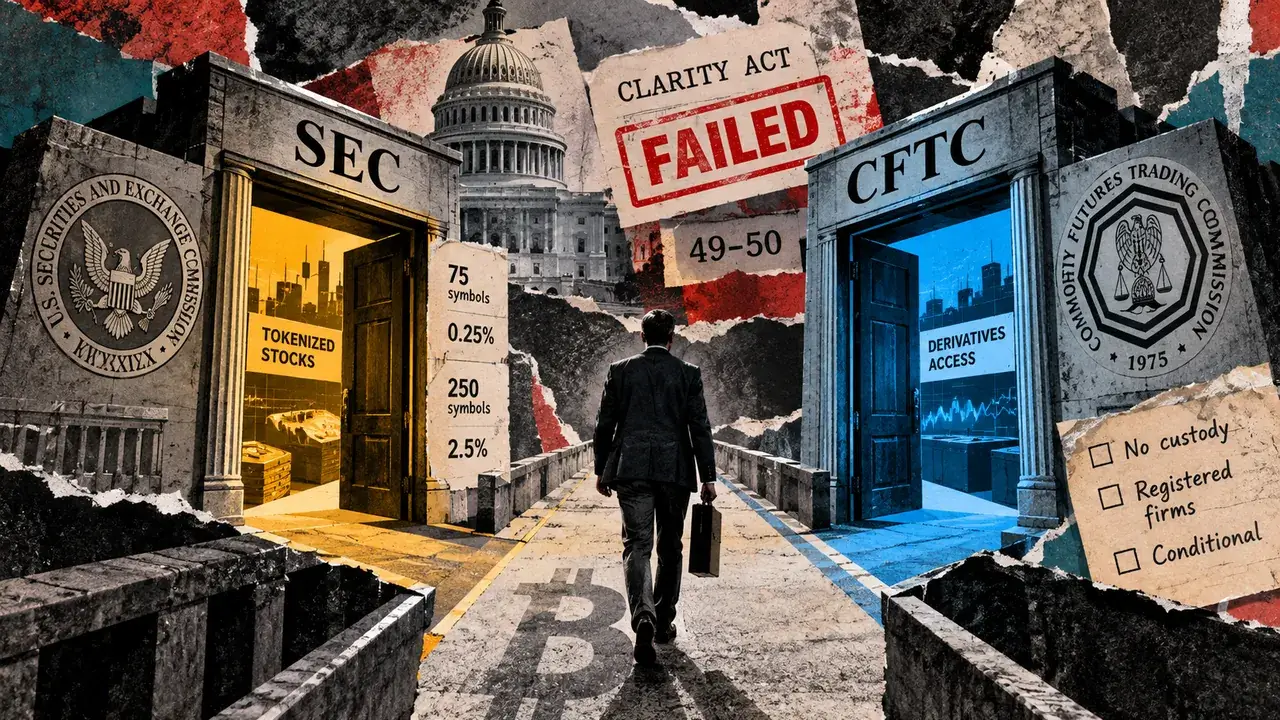
Following the legislative collapse of the CLARITY Act in early 2026, the SEC and CFTC have bypassed Congress to provide administrative relief for tokenized stocks and wallet-linked derivatives. This move allows financial institutions to offer traditional equities on-chain and enables decentralized finance (DeFi) platforms to integrate derivative products directly with user wallets. By issuing this relief, the agencies are prioritizing market innovation and retail access over the legal finality that a full congressional bill would have provided.
The shift comes after months of gridlock in Washington over the CLARITY Act, which was intended to define the specific jurisdictions of the SEC and CFTC. For the first time, US-based retail investors can interact with tokenized versions of major S&P 500 stocks without leaving the blockchain ecosystem, provided the platforms adhere to the specific wallet-linking requirements outlined in the joint agency memo. This bypass effectively turns the regulatory focus toward technical compliance rather than waiting for a new legislative session to resolve definitions of 'security' versus 'commodity.'
This development is particularly significant for the DeFi sector and institutional 'real-world asset' (RWA) protocols. Market participants expect a surge in liquidity as traditional assets migrate to public and private ledgers under these new guidelines. However, the 'catch' remains substantial: the relief does not clarify whether these tokens grant the same legal standing as traditional share certificates in a bankruptcy scenario. This creates a 'buyer beware' environment for high-net-worth individuals and institutional treasuries who require absolute legal certainty for large-scale deployments.
Moving forward, the market should watch for the first wave of approved 'wallet-linked' products from major issuers. Additionally, because this relief is administrative rather than statutory, it remains vulnerable to future court challenges or changes in agency leadership. Investors should monitor ongoing litigation regarding 'durable rights,' as the US court system may ultimately decide if the SEC and CFTC exceeded their authority in bypassing the failed legislative process to regulate these hybrid assets.