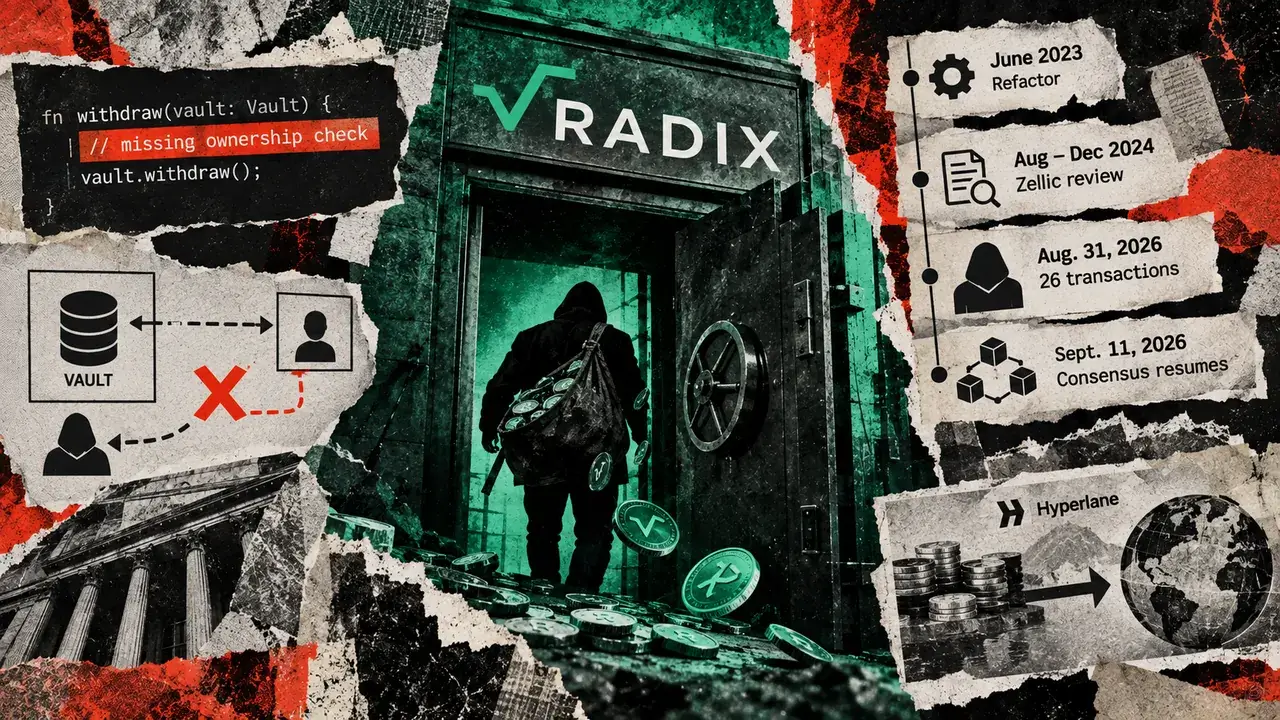
A 3-year-old security flaw was the root cause of a $1.3 million exploit and a subsequent 10-day network halt that began on August 31, 2026. The vulnerability allowed attackers to disrupt the consensus mechanism, forcing validators to stop finalising transactions to prevent further unauthorized withdrawals. Despite the protocol undergoing a rigorous security review in 2024, the specific logic error in the legacy code remained undetected until it was weaponized in late August.
The technical failure stemmed from an inconsistency in how the blockchain handles state transitions during periods of high network congestion. By exploiting this dormant bug, the attackers were able to bypass standard validation checks, leading to a loss of $1.3 million in user funds. Validators were forced to coordinate an emergency shutdown, which lasted ten days while developers worked on a patch and a comprehensive manual audit of the core codebase to ensure no other legacy vulnerabilities remained.
From a regulatory perspective, this incident is likely to intensify the US SEC's focus on protocol resilience and the liability of auditing firms. As crypto market structure bills continue to evolve in 2026, lawmakers are increasingly looking at whether decentralized networks should be mandated to have standardized 'circuit breaker' protocols. The fact that a 2024 audit missed a critical flaw raises serious questions about the current efficacy of third-party security certifications in the industry.
For investors, the 10-day halt represents a significant liquidity risk and a blow to the project's reputation for stability. Market participants should expect heightened volatility as the network resumes operations and monitors for potential follow-on exploits. Moving forward, the industry should watch for a shift toward 'formal verification' methods over traditional audits as a way to identify these deeply embedded logic flaws before they can be exploited.