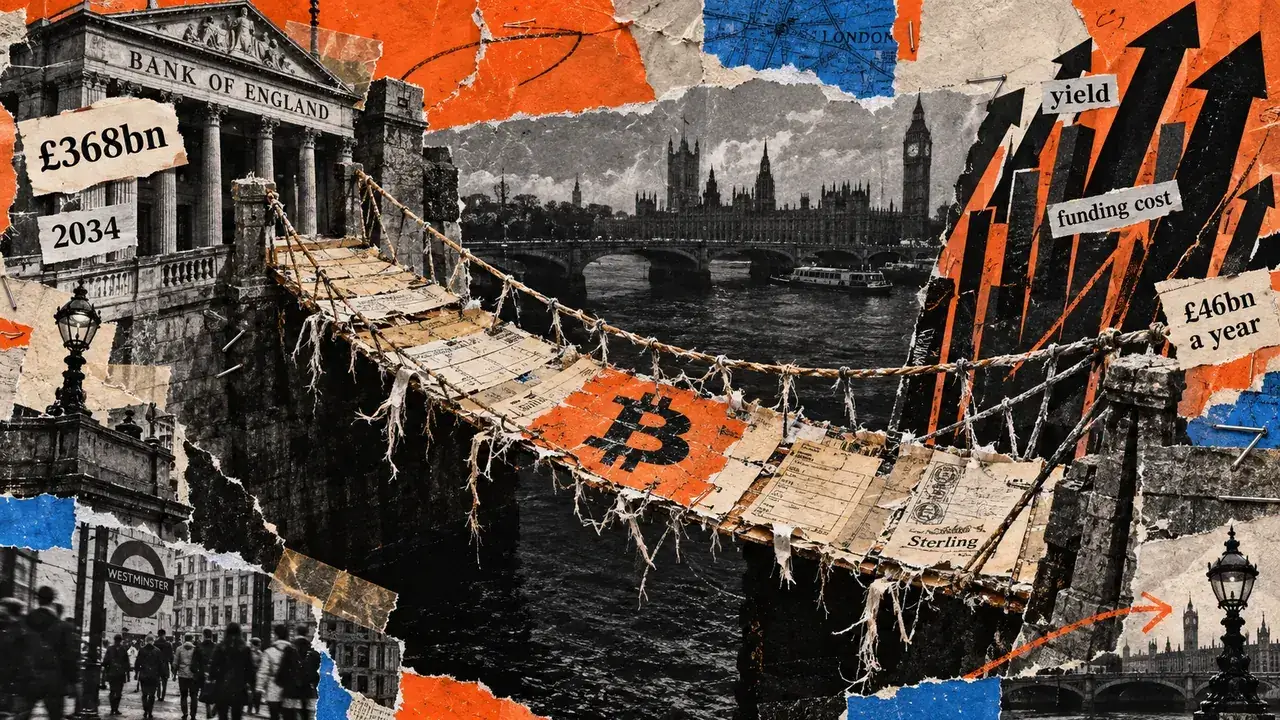
The Bank of England’s ongoing effort to unwind £368 billion from its gilt portfolio is exerting downward pressure on Bitcoin by draining liquidity from the global financial system. As the central bank reduces its balance sheet, the move acts as a stealth tightening mechanism, effectively testing Bitcoin’s resilience against high-interest-rate environments. Even with a temporary pause in active auctions that saw gilt yields retreat, the overarching reduction in the BOE’s holdings signals a restrictive monetary phase that historically limits the capital inflow into speculative assets.
This 'eight-year rates test' refers to the projected timeline for the BOE to fully normalize its balance sheet, a process that has entered a critical stage in 2026. The shift from quantitative easing to quantitative tightening (QT) means that the 'easy money' that fueled previous crypto bull runs is being systematically withdrawn. For Bitcoin, which has increasingly correlated with global liquidity cycles, this persistent drainage of British pound liquidity contributes to a broader trend of central bank contraction across the G7 nations.
From a regulatory and geopolitical standpoint, the BOE’s actions are closely watched by US investors as a bellwether for how the Federal Reserve might handle its own balance sheet reduction. The persistent risk is that any sudden spike in yields caused by the unwind could trigger a flight to safety, moving capital out of BTC and into government bonds. This creates a challenging environment for crypto traders who are navigating a market where macro-economic stability is prioritized over speculative growth.
Investors should closely monitor the Bank of England’s quarterly statements and the performance of the 10-year gilt yields. If the BOE accelerates the pace of the unwind or if inflation remains sticky in late 2026, the resulting interest rate pressure could cap Bitcoin’s potential for a breakout. Conversely, any pivot toward a more dovish stance due to economic cooling would be the primary catalyst needed for Bitcoin to decouple from these rate-driven risks.