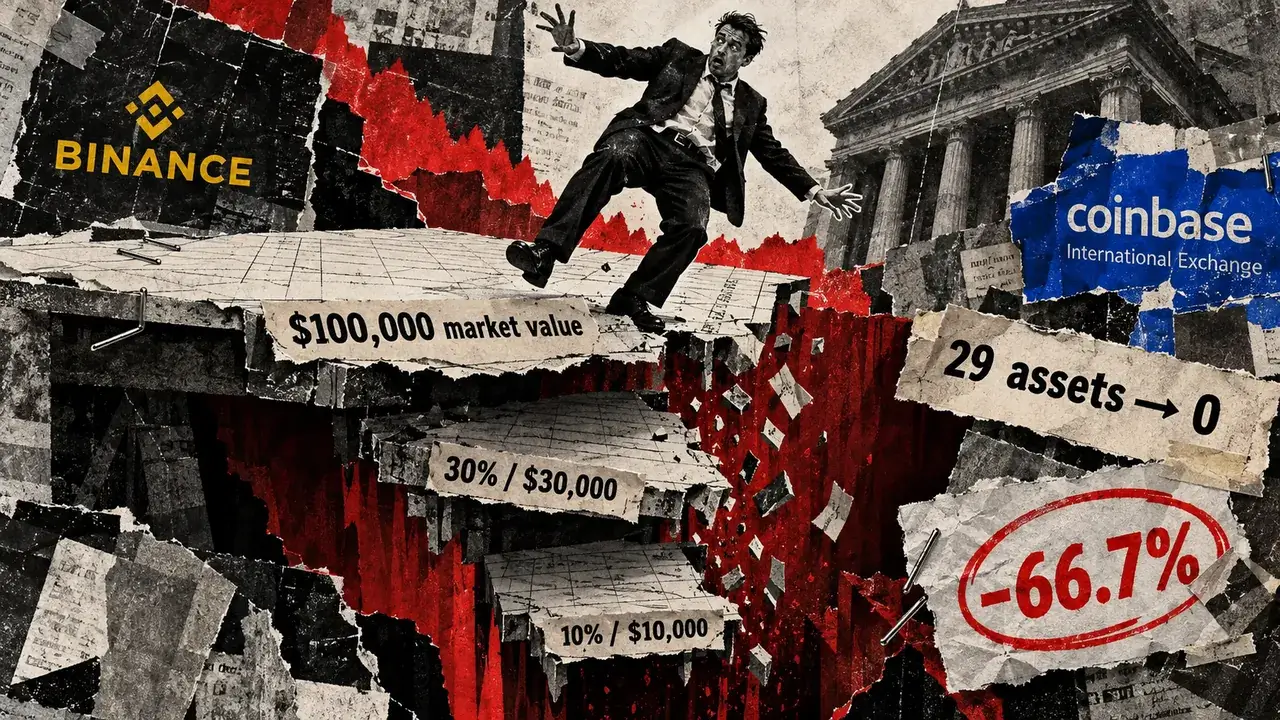
In early 2026, major cryptocurrency exchanges have begun lowering 'token risk values,' a move that directly reduces the amount of leverage a trader can maintain against their collateral. Even if the market price of a token remains steady, a reduction in its risk value means the exchange recognizes less of that asset's worth for margin purposes. Consequently, traders are finding their maintenance margin requirements tightening, leaving significantly less breathing room before hitting automated liquidation thresholds.
This trend follows a series of volatility spikes in the first half of 2026 that prompted platforms to re-evaluate their exposure to mid-cap altcoins. By applying steeper 'haircuts'—the difference between a token's market value and the value the exchange accepts as collateral—platforms are insulating their own balance sheets from sudden price collapses. While this protects the exchange’s solvency, it shifts the burden of risk entirely onto the user, who may suddenly find their positions undercollateralized without any negative movement in the underlying asset's ticker price.
Market analysts suggest this shift is also a preemptive response to updated 2026 SEC guidelines regarding digital asset margin lending and risk-weighting. Regulators have been pushing for more conservative treatment of non-BTC/ETH assets used as collateral for debt. As a result, tokens that were once considered high-utility collateral are now being treated with more skepticism, forcing institutional desks and retail whales to either deposit more capital or deleverage their positions manually to avoid forced exits.
Moving forward, traders must move beyond simply watching price charts and start closely monitoring 'Collateral Weight' tables provided by their respective exchanges. Watch for further adjustments from major platforms like Binance, Coinbase, and Kraken, as these changes often signal a broader market deleveraging. If this trend continues, we may see a significant migration of liquidity toward 'blue-chip' assets, as the cost and risk of maintaining leverage on altcoins become increasingly prohibitive for the average trader.