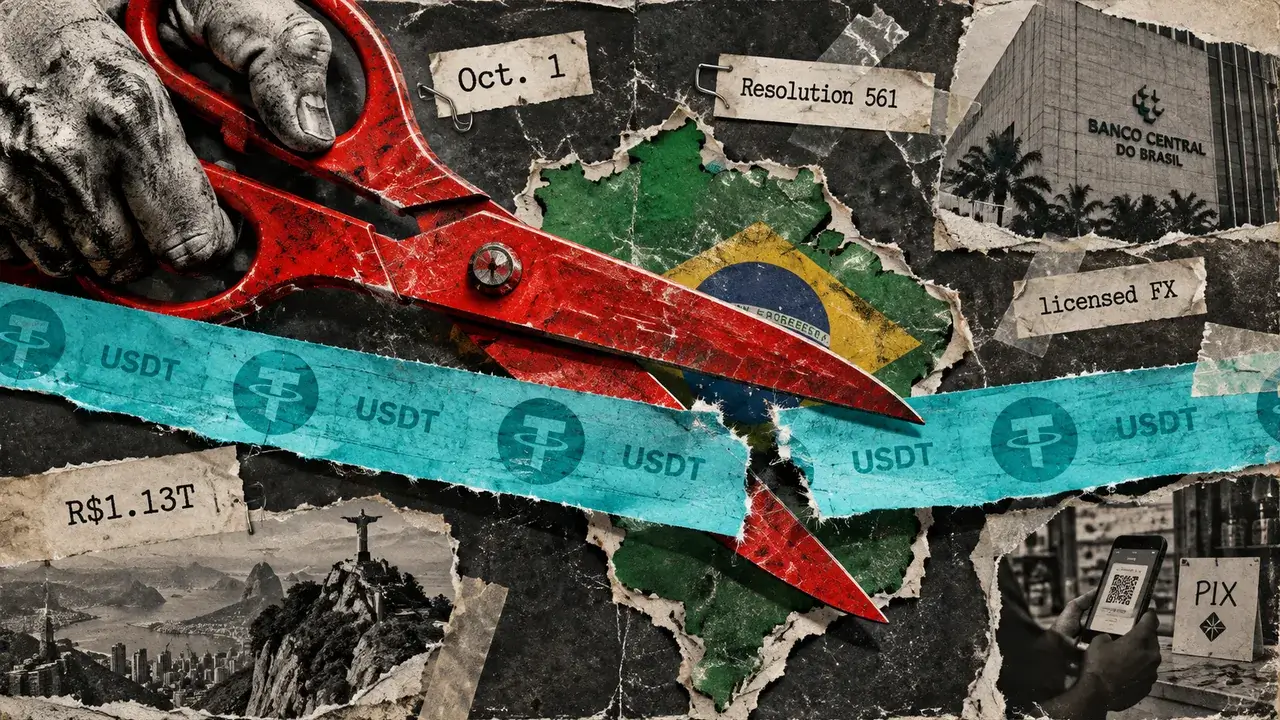
Brazil’s Central Bank (BCB) is set to implement Resolution 561 on October 1, 2026, a move that effectively bars stablecoins and other virtual assets from being used in specific international payment flows. The regulation targets the critical settlement leg that connects regulated foreign-exchange providers in Brazil with their counterparties abroad. By requiring this leg to run exclusively through licensed FX transactions or qualifying non-resident real accounts, the BCB is moving to isolate the traditional financial system from the growing $1.1 trillion stablecoin market.
This policy change is a direct response to the rapid rise of stablecoins as a friction-less bridge for B2B cross-border transfers in Latin America. While individual peer-to-peer transfers may occupy a different legal status, the BCB’s focus is on the institutional plumbing. By mandating that settlement occurs via traditional fiat channels, the regulator aims to tighten its grip on capital flows, ensure comprehensive Anti-Money Laundering (AML) compliance, and prevent the bypass of standard central bank reporting requirements.
For the broader crypto market, this represents a significant structural headwind in one of the world's most active digital asset hubs. Fintech companies and payment startups that have built their value proposition on the speed and low cost of stablecoin rails will now face increased operational costs and the slower processing times of the legacy banking system. This could dampen the utility of digital assets as a tool for corporate liquidity management and international trade in the region.
Investors and market participants should watch how this regulation affects the volume of stablecoin transactions originating from Brazil and whether other nations in the region follow suit. Additionally, the move may be a strategic precursor to the wider rollout of Drex, Brazil's own Central Bank Digital Currency (CBDC). As the BCB restricts private stablecoins, it may be clearing the path for its own regulated digital infrastructure to dominate the future of Brazilian cross-border finance.