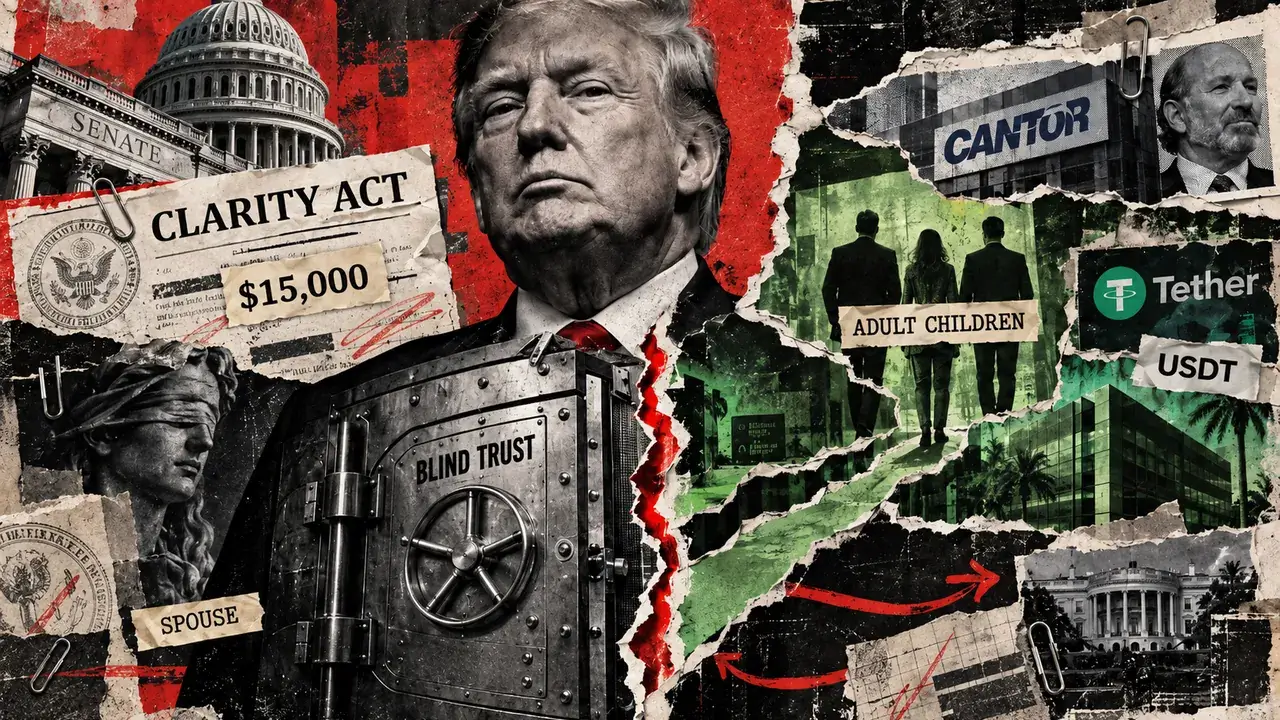
The Senate’s final draft of the CLARITY Act mandates that senior federal officials holding more than $15,000 in equity in businesses that issue or sponsor digital assets must sell that interest to avoid conflicts of interest. However, the rule's specific wording regarding 'certain businesses' effectively creates a loophole for private, family-owned entities. Because the legislation focuses on specific types of corporate structures and equity thresholds, it stops short of requiring a full divestment from ventures directly tied to a federal official’s immediate family or private holdings that do not meet the public issuance criteria.
This legislative development comes as the U.S. government grapples with the growing intersection of private crypto ventures and public office. The CLARITY Act was intended to bring transparency to the executive branch, yet the inclusion of the $15,000 floor and the exemption of specific family-led projects has drawn scrutiny from ethics watchdogs. President Trump’s support for the bill is seen as a strategic move to standardize industry ethics while preserving his family's stake in the evolving digital asset ecosystem, specifically the World Liberty Financial platform.
Politically, the bill represents a compromise between strict anti-corruption advocates and pro-crypto legislators who want to encourage innovation without forcing officials to liquidate all private tech interests. The geopolitical implication is significant, as it signals to international markets that the U.S. is formalizing its crypto ethics framework, albeit with significant domestic political concessions. For the broader market, this provides a clearer regulatory roadmap but leaves the door open for targeted criticism regarding executive branch transparency.
Investors and policy analysts should watch for potential amendments to the CLARITY Act as it moves toward a final vote in 2026. Specifically, keep an eye on whether the House version attempts to close the family business loophole or lower the $15,000 divestment threshold. Any tightening of these rules could lead to forced liquidations of private crypto equity by high-level officials, potentially impacting the valuation of private platforms associated with political figures.