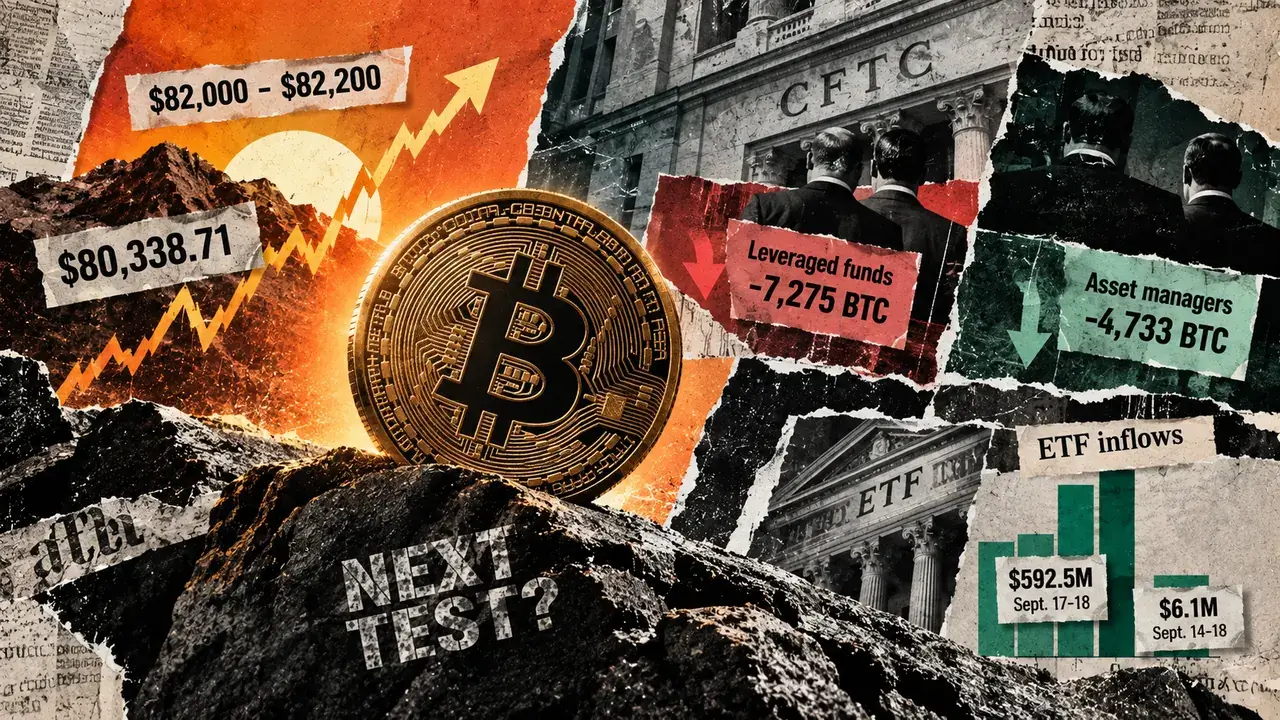
Bitcoin’s recent rally above the $80,000 threshold appears to be built on shaky ground as institutional conviction fails to keep pace with the price action. Data from the first quarter of 2026 shows that asset managers have significantly reduced their long positions, while demand for Bitcoin ETFs has barely remained in positive territory. This indicates that the current upward momentum is largely fueled by leveraged funds reducing their net short positions—essentially a technical short squeeze—rather than a broad-based vote of confidence from long-term institutional holders.
The specifics of the market shift are stark: leveraged funds became 7,275 BTC-equivalent less net short, a move that often precedes a cooling-off period when not accompanied by fresh buying. Simultaneously, the cooling interest from asset managers suggests that professional investors are taking profits or hedging against potential volatility at these record highs. For US-based investors, this signal is crucial, as it suggests the aggressive ETF accumulation seen in previous years may be reaching a point of saturation or temporary exhaustion.
From a regulatory standpoint in 2026, institutions appear to be waiting for clearer guidance on cross-border crypto settlement rules before committing further capital at these elevated price levels. While the $80,000 level is a major psychological milestone, the broader macro environment—marked by shifting Federal Reserve policies and geopolitical tensions—has made institutional players more cautious about chasing the rally without fundamental catalysts.
Looking ahead, market participants should closely monitor weekly ETF net flows and the Commitment of Traders (COT) reports for a shift in sentiment. If asset managers continue to trim their exposure and ETF inflows turn negative, Bitcoin could face a significant retracement to test support levels near $72,000. Conversely, a reversal in institutional long positioning would be necessary to turn this technical rally into a sustained bull run toward the $100,000 mark.