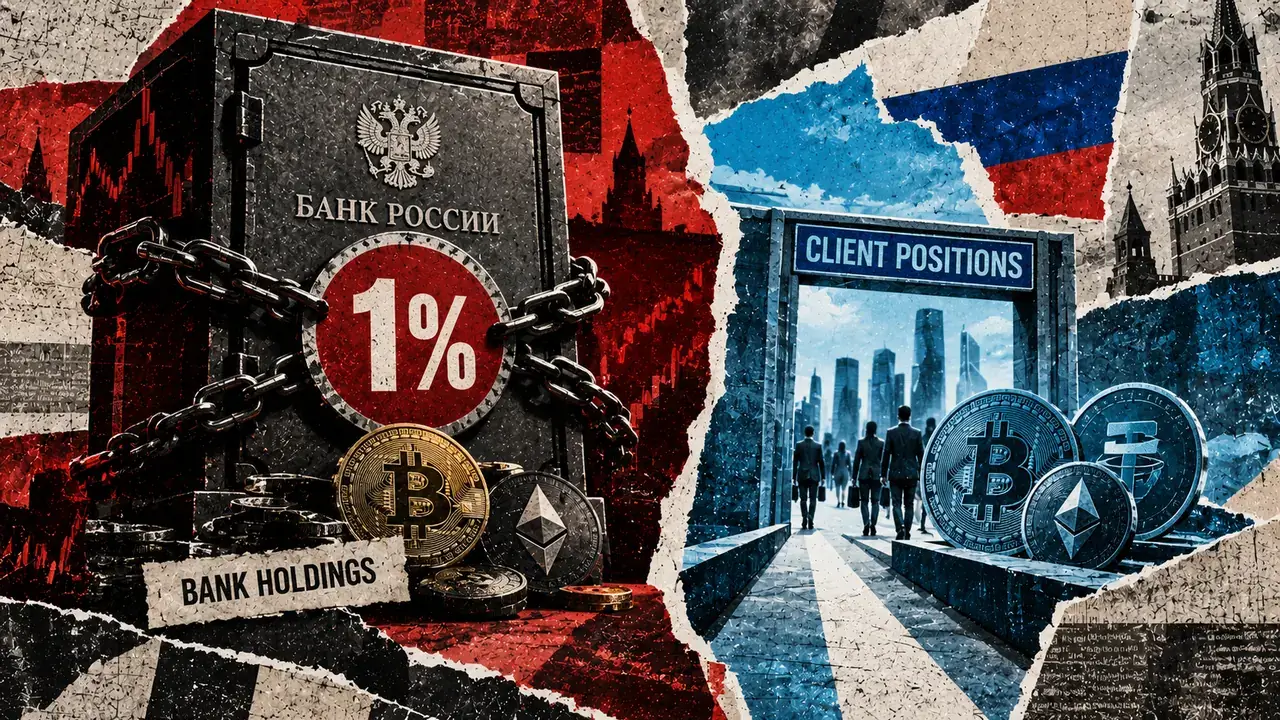
The Bank of Russia's 2026 regulatory framework protects retail customer assets by distinguishing between a bank’s proprietary holdings and the digital assets they hold in custody for clients. Under the new draft, banks are restricted from using more than 1% of their own capital to purchase or invest in crypto-linked instruments. However, customer-owned assets are conditionally excluded from this cap, meaning banks can continue to offer custody and brokerage services without the 1% limit stifling the growth of retail crypto adoption.
This move is designed to prevent systemic financial instability. By counting a bank's own crypto holdings against its capital adequacy ratios, the regulator ensures that a sudden market crash would not wipe out a bank's reserves. By excluding customer assets from these calculations, the Russian government is effectively creating a 'firewall' that allows the crypto sector to grow within the banking system while insulating the broader economy from the volatility of individual tokens.
From a geopolitical perspective, Russia is walking a tightrope between utilizing crypto for cross-border settlements and maintaining strict control over domestic financial institutions. Following the 2026 update to the digital asset law, this 1% cap represents a compromise that allows banks to facilitate international trade via crypto while preventing them from becoming 'over-leveraged' on their own balance sheets. For US investors and analysts, this signals a shift toward a more structured, albeit restrictive, regulated crypto environment in Eurasia.
Market implications suggest that large Russian financial institutions will likely pivot toward fee-based custody models rather than direct investment. This provides a safer environment for retail users who want exposure to digital assets through traditional banking channels without fearing that their bank is gambling with its own solvency. However, the 'conditional' nature of the exclusion means banks must meet strict reporting standards to keep customer assets off their capital hit-lists.
Moving forward, market participants should watch for the specific technical conditions the Bank of Russia sets for these exclusions. If the requirements for 'segregated accounts' become too burdensome, the actual availability of crypto services at major banks could remain low despite the theoretical protection of customer assets. Analysts will also be monitoring whether other BRICS nations adopt similar 1% capital caps as a blueprint for their own banking regulations in late 2026.