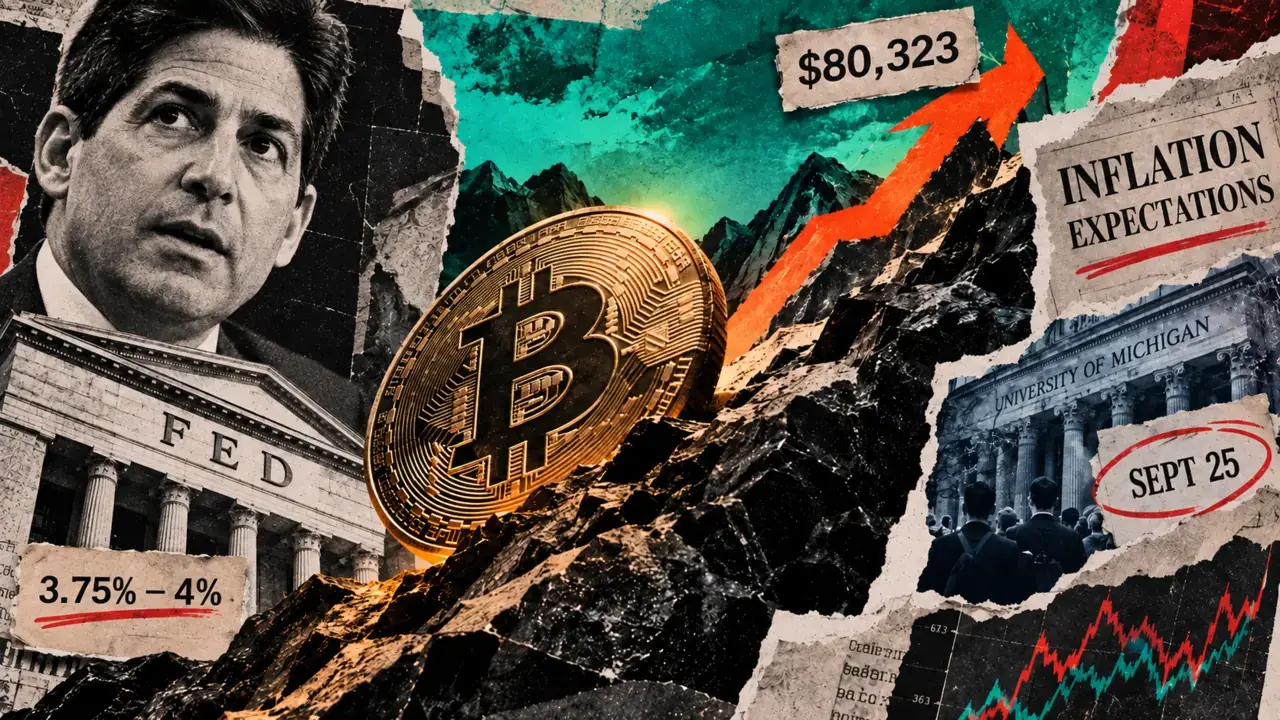
Bitcoin's trajectory toward a $95,000 price target faces immediate pressure from the University of Michigan’s Consumer Sentiment survey and the Bank of Japan’s (BoJ) interest rate implementation. While quantitative models suggest a rally to $95,000 is the next logical step in the current cycle, these two economic indicators serve as critical checkpoints that could either validate the bullish momentum or trigger a retracement below the $80,000 support level. The interplay between U.S. inflation expectations and global liquidity is currently the primary driver for BTC price action.
The Michigan survey is a vital pulse-check for U.S. consumer inflation expectations, which directly influences Federal Reserve policy. In the current economic climate of late 2026, a higher-than-expected sentiment reading suggests persistent consumer spending power, which may embolden the Fed to maintain a restrictive stance. Simultaneously, Japan’s decision regarding rate hikes is narrowing the 'yen carry trade,' a move that historically drains liquidity from high-risk assets like Bitcoin as investors shift capital back into the yen.
Offsetting these macroeconomic threats is the sustained demand for Bitcoin Spot ETFs in the U.S. institutional market. Data for the week of September 21–27 indicates that despite global uncertainty, institutional accumulation remains the primary force keeping BTC above key psychological levels. Analysts note that as long as ETF inflows remain net-positive, the $95,000 target predicted by long-term price models remains mathematically viable, even if the Michigan report introduces temporary friction.
Investors should closely monitor the BoJ's official statements and the Michigan survey's inflation expectation component for signs of a hawkish shift. A combination of rising Japanese rates and 'sticky' U.S. inflation could force a liquidation of leveraged long positions. Conversely, if consumer sentiment remains stable and ETF demand persists, Bitcoin is well-positioned to confirm its breakout above the $80,000 resistance zone by the end of the month.