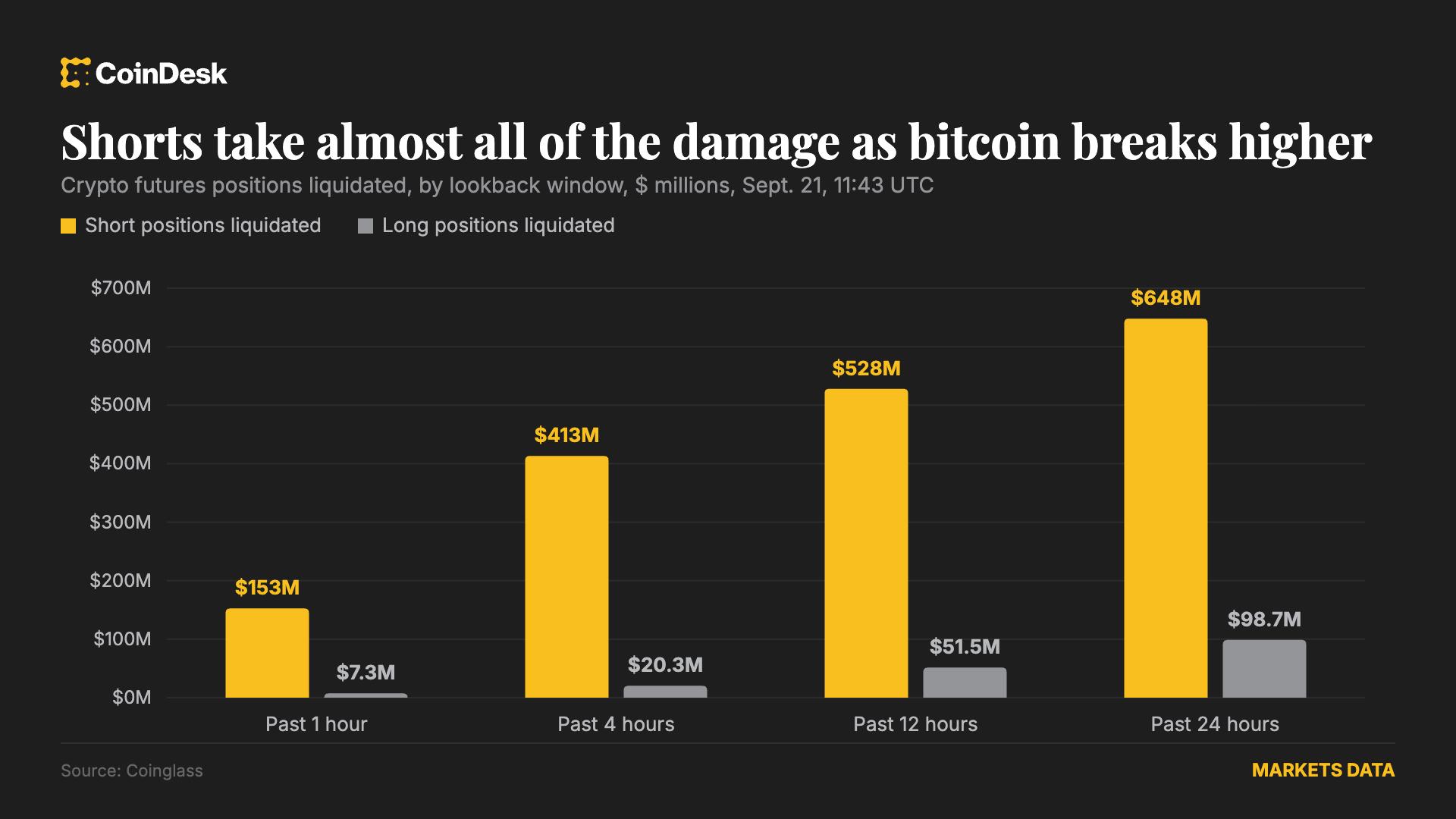
Bitcoin successfully breached the $85,000 price milestone in late 2026, driven by a violent short squeeze that forced $648 million of bearish bets to close out. The price surge was not merely a brief spike but was accompanied by a significant 7.59% rise in open interest, which now sits at a record $156 billion. This data suggests that the market is currently in a 'chase' phase, where traders are opening new long positions to capture the upward momentum rather than taking profits at these historic highs.
The liquidation of $648 million in short positions created a classic feedback loop: as Bitcoin’s price hit critical resistance levels, short sellers were forced to buy back the asset to cover their losses, which in turn pushed the price even higher. This mechanical buying pressure cleared the path for Bitcoin to establish $85,000 as a new psychological support zone. The sheer scale of the liquidations highlights a significant miscalculation by bears regarding the strength of the current market cycle.
From a market structure perspective, the rise in open interest to $156 billion is a double-edged sword. While it signals high conviction and liquidity, it also increases the risk of a 'long squeeze' if the price faces a sudden rejection. US-based institutional desks are reporting that the influx of capital appears to be a mix of retail FOMO and systematic trend-following funds that are programmatically increasing exposure as Bitcoin breaks into price discovery.
Investors should closely monitor the $156 billion open interest level; if this figure remains elevated while price stalls, it could signal an overheated market. However, for the immediate term, the flushing out of $648 million in bearish leverage has removed a significant layer of overhead resistance. The next major watchpoint will be how the US spot ETFs handle the increased volatility and whether the $85,000 level can hold through the upcoming weekly close.