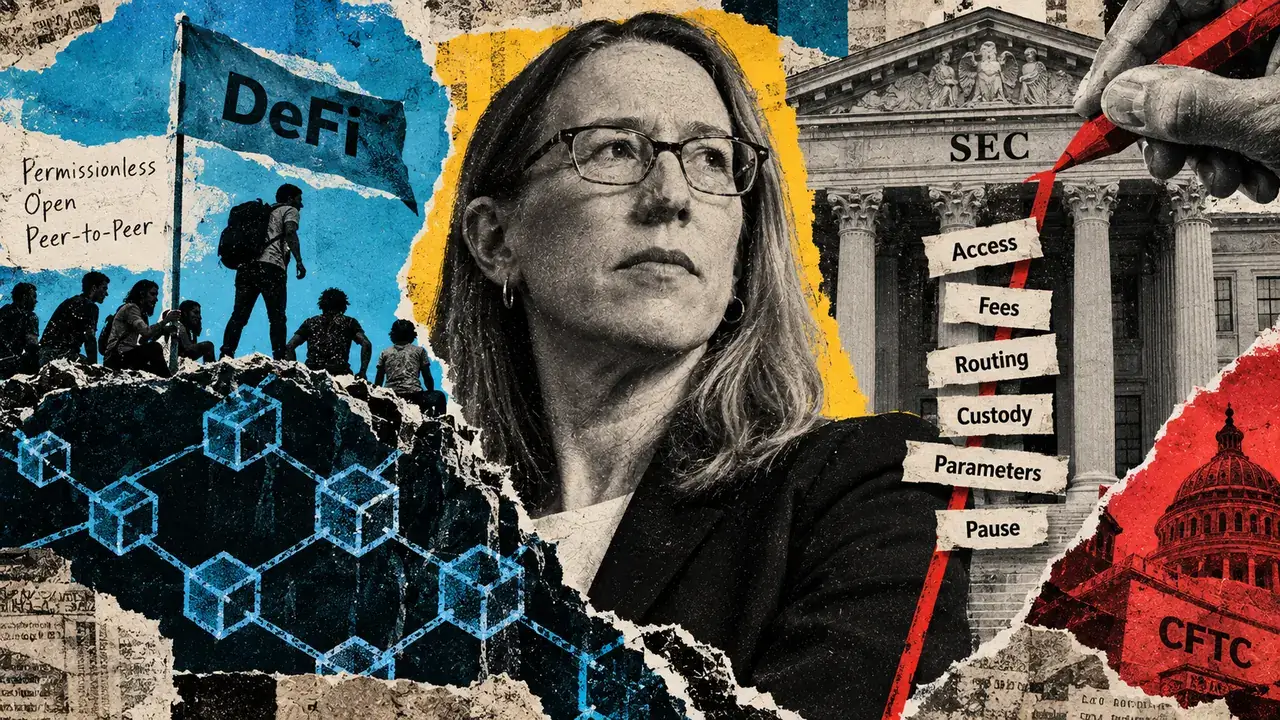
In 2026, SEC Commissioner Hester Peirce clarified a pivotal stance on the future of decentralized finance, arguing that 'truly decentralized' protocols do not need specific legal exemptions to operate within the United States. According to Peirce, existing SEC and CFTC frameworks are specifically built to regulate human-led activities such as asset custody, order routing, fee collection, and intervention powers. Because a purely autonomous protocol lacks these centralized points of control, it does not fit the legal definition of a regulated entity, making the debate over exemptions largely irrelevant for software-only systems.
This perspective comes as a response to ongoing 2026 enforcement actions that have targeted 'DeFi in name only' (DINO) projects. Peirce notes that regulatory scrutiny typically intensifies when a protocol maintains 'intervention powers'—the ability of a central team to freeze funds or alter smart contracts at will. By contrast, she suggests that if a protocol is sufficiently decentralized, there is no intermediary to regulate, effectively creating a 'safe harbor' through engineering rather than through legislative carve-outs.
For the broader crypto market, this highlights a critical divide between centralized service providers and neutral infrastructure. While the SEC continues to monitor access and routing within the DeFi space, Peirce’s comments suggest that the path to regulatory peace involves removing human administrative controls entirely. This shift emphasizes the importance of 'immutable' code as a primary defense against being classified as an unregistered broker or exchange.
Investors and developers should watch for how this functional approach influences upcoming SEC guidance on automated market makers and liquidity pools. If the Commission adopts Peirce’s view that technology devoid of human intermediaries is outside its jurisdiction, it could trigger a massive influx of institutional capital into permissionless protocols that have successfully eliminated centralized governance risk.
In the coming months, the focus will likely shift to the legal definitions of 'intervention powers' and what specific technical hurdles a project must clear to be considered truly decentralized. Stakeholders should monitor legislative sessions in the US Senate that may formalize these distinctions, potentially codifying the 'software vs. service' divide into federal law before the end of the 2026 fiscal year.