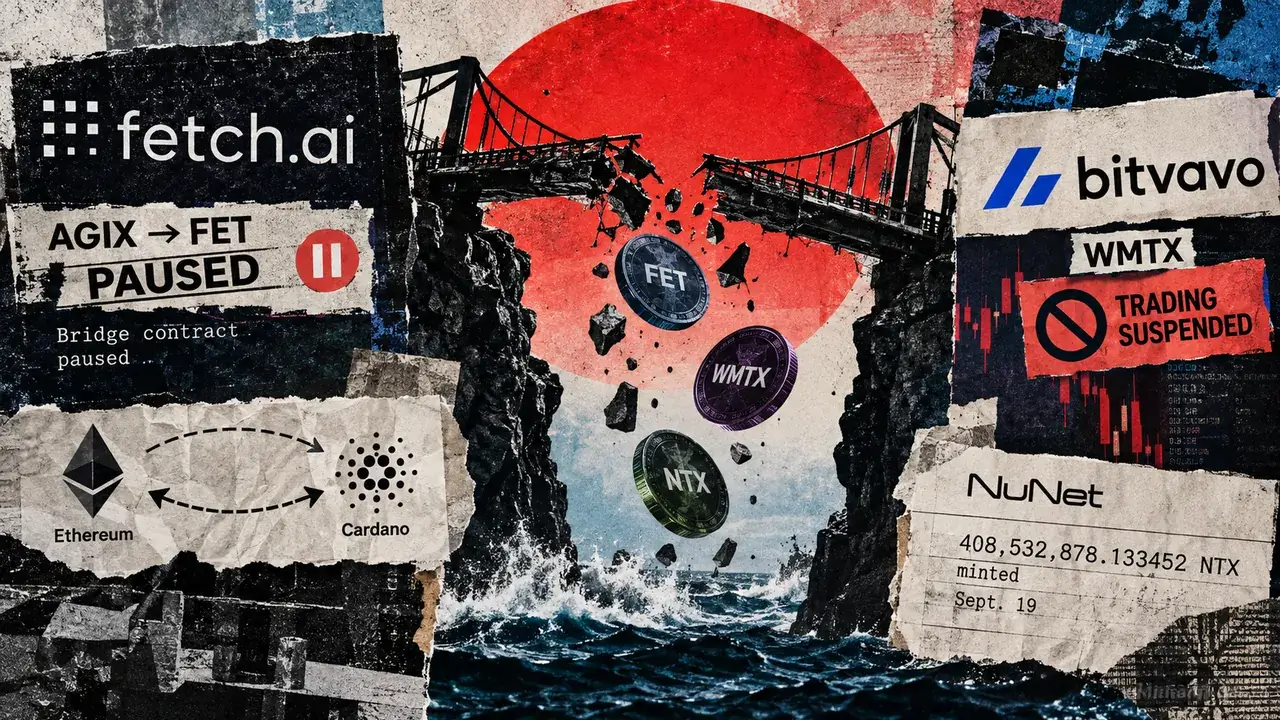
The $1.55 million theft from Fetch.ai is directly linked to a massive minting of 408.5 million NTX tokens through an exploit targeting shared bridge routes used by both protocols. On-chain investigators identified a single wallet address that coordinated the drain of FET assets and the subsequent inflationary minting of NTX. This suggests that the attacker did not compromise individual project smart contracts but instead exploited a weakness in the interoperability layer that connects these two distinct ecosystems.
Fetch.ai (FET) representatives were quick to clarify that their own core smart contracts were unaffected by the breach. The root cause appears to be a vulnerability within the cross-chain bridge routes that facilitate token transfers between networks. This specific vector allowed the actor to manipulate supply mechanics, resulting in the sudden appearance of over 400 million new NTX tokens, which significantly threatens the token's circulating supply integrity and market stability.
This security breach comes at a time when U.S. regulators are increasingly focused on the systemic risks posed by decentralized finance (DeFi) bridges. The exploit serves as a stark reminder that even if a project’s primary code is audited and secure, dependencies on third-party bridge infrastructure can create unforeseen entry points for malicious actors. For the broader market, this incident reinforces the 'bridge risk' premium that investors often apply to multi-chain assets.
Moving forward, investors should closely monitor Fetch.ai’s official channels for updates on bridge migration and potential recovery efforts. It is also vital to watch for any emergency governance proposals from the NuNet (NTX) team regarding the unauthorized supply. Security firms are currently tracing the movement of the stolen $1.55 million, and any attempts to wash these funds through centralized exchanges could lead to further disclosures regarding the attacker's identity.