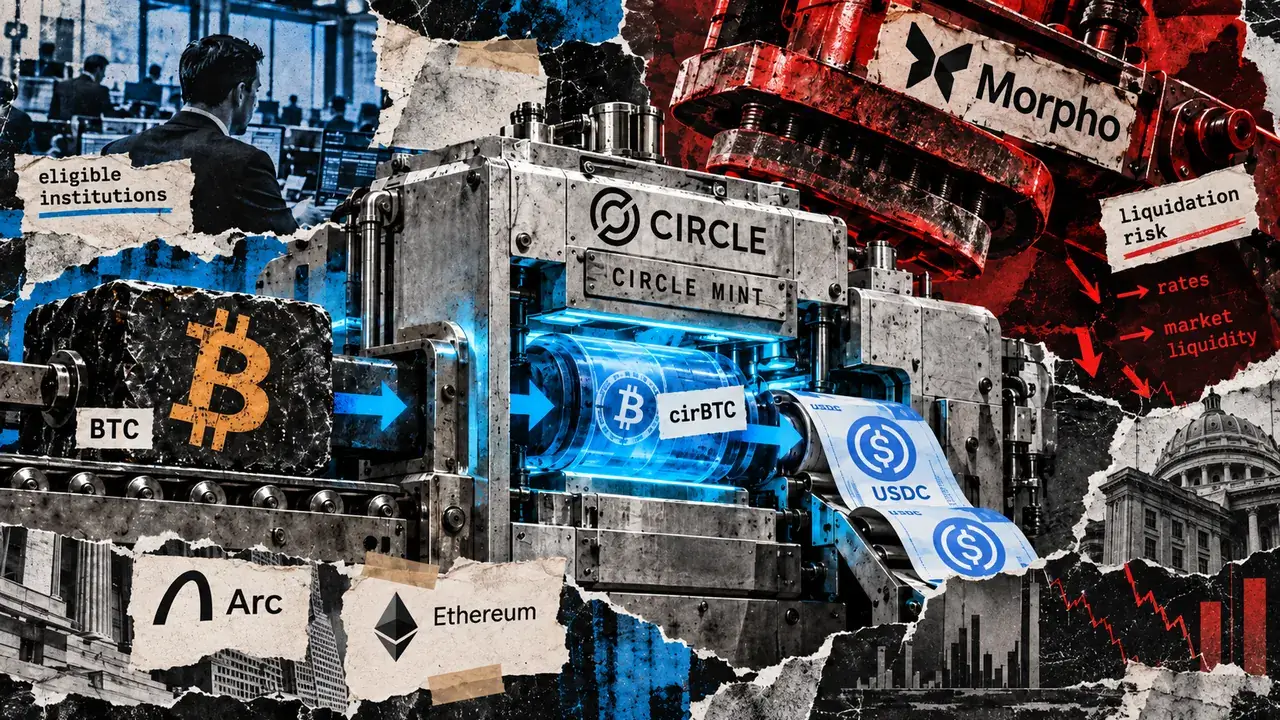
Circle’s new Bitcoin-backed borrowing feature allows users to access USDC liquidity by leveraging their BTC holdings through a direct integration with the Morpho protocol. This 'Mint' workflow significantly reduces the operational friction typically associated with decentralized lending by automating the steps between collateralization and stablecoin issuance. However, a critical aspect of this launch is that Circle does not assume the credit risk; instead, all liquidation mechanisms and interest rate fluctuations remain governed by Morpho’s smart contracts.
This partnership represents a strategic shift in how US-based stablecoin issuers interact with the DeFi ecosystem in 2026. By utilizing Morpho as a third-party engine, Circle can offer sophisticated financial products without bringing the underlying market volatility of Bitcoin onto its own balance sheet. This modular approach allows Circle to focus on its role as a regulated issuer while relying on battle-tested DeFi protocols to handle the complexities of peer-to-peer lending and risk management.
From a regulatory perspective, this move aligns with the current US emphasis on clear boundaries between asset issuance and risk-bearing activities. By offloading the liquidation risk to a decentralized protocol, Circle mitigates potential liability issues that could arise from forced asset sales during market crashes. For traders, this means they must remain vigilant of Morpho’s specific health factors and liquidation thresholds, as Circle will not intervene if the collateral value drops below required levels.
Market participants should expect this integration to drive higher utility for USDC as the preferred liquidity bridge for Bitcoin whales and institutional holders. As more capital flows into these Bitcoin-backed vaults, the Total Value Locked (TVL) within the Morpho protocol is likely to see significant growth. This setup also reinforces Bitcoin’s role as the premier 'pristine collateral' within the Ethereum-based DeFi stack, further bridging the gap between the two largest blockchain networks.
Looking ahead, the success of this initiative will likely lead to similar integrations for other major assets like Ethereum or liquid staking tokens. Investors should monitor the stability of Morpho’s liquidator bots during periods of extreme Bitcoin volatility, as any failure in the third-party liquidation process could impact the broader peg stability or user confidence in the borrowing workflow.