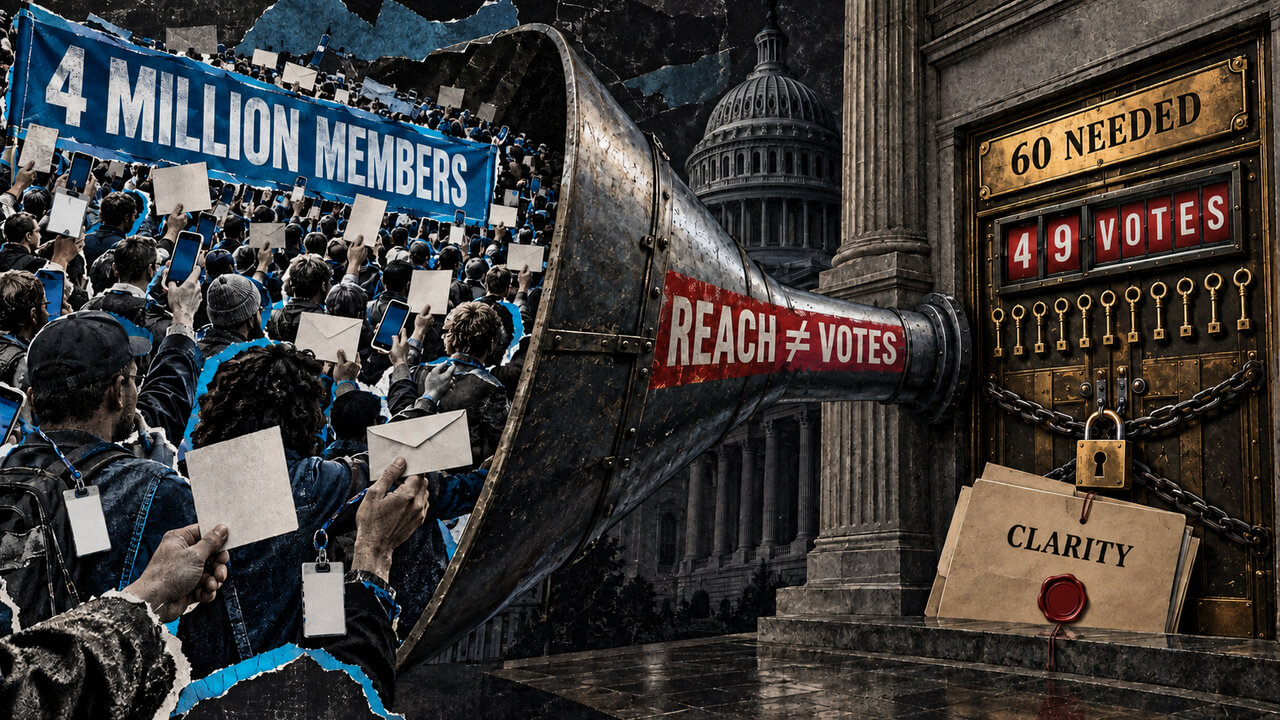
The US Senate rejected the CLARITY Act in a 49-50 vote during the 2026 legislative session, primarily because the industry's mobilization efforts failed to secure key swing votes needed for a bipartisan majority. Despite Stand With Crypto reaching a milestone of 4 million registered advocates and facilitating over a million contacts to lawmakers, the bill was unable to overcome entrenched concerns regarding market oversight and consumer protection mandates. The defeat highlights a significant gap between public digital asset advocacy and the political realities of a deeply divided Senate.
The mobilization led by Stand With Crypto was unprecedented in scale, showing that the digital asset sector can command significant voter attention across the United States. However, the narrow defeat suggests that while the quantity of reach is high, the strategic influence required to sway specific committee leaders remains elusive. Analysts point out that the opposition successfully framed certain provisions of the CLARITY Act as being too lenient on institutional transparency, which deterred the handful of moderate senators needed to pass the threshold.
This legislative setback arrives at a critical time in 2026, as US-based crypto firms continue to seek jurisdictional certainty against a backdrop of global regulatory competition. The failure to pass the act means that the industry will likely remain under a 'regulation by enforcement' model for the foreseeable future, rather than transitioning to a codified statutory framework. For market participants, this adds a layer of persistent risk premium to US-domiciled operations and digital asset listings.
Moving forward, investors and advocates should watch for a potential 'CLARITY 2.0' or alternative bipartisan compromises that might emerge in the next session. The focus is expected to shift toward smaller, more targeted bills regarding stablecoins or specific disclosure requirements rather than a comprehensive market structure overhaul. Until then, the market remains sensitive to further SEC enforcement actions that fill the void left by this legislative stalemate.