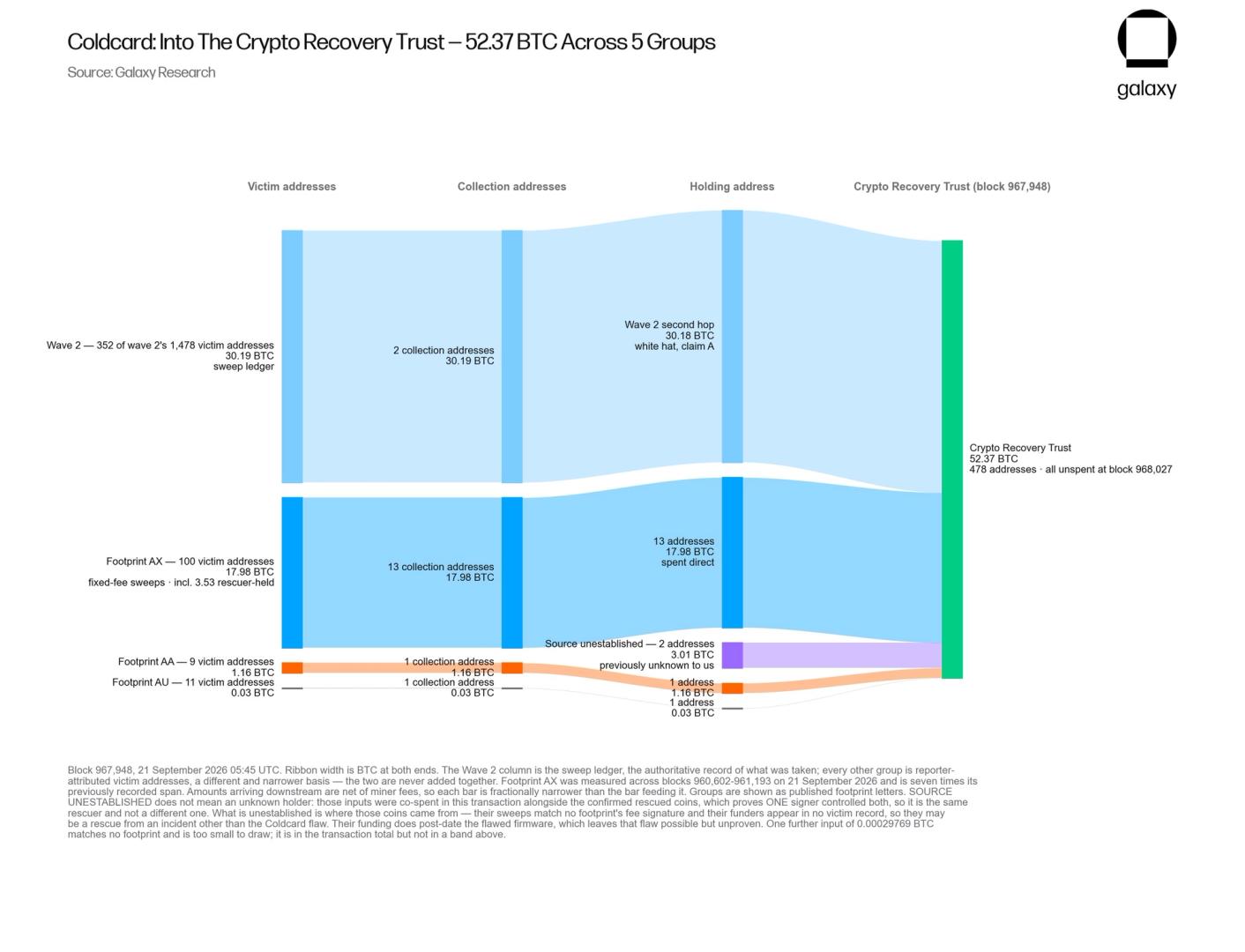
Victims of the 2026 Coldcard breach can now begin the process of reclaiming their assets following the successful movement of 52 BTC to a dedicated recovery trust. According to intelligence from Galaxy Digital, ethical hackers secured the funds and embedded a specific OP_RETURN message in the transaction that directs users to "claim:cryptorecoverytrust dot com" for formal restitution. This move marks the first major successful recovery of funds since the hardware wallet exploit was identified earlier this year.
The recovery operation utilized the Bitcoin protocol's OP_RETURN field to provide a transparent, on-chain signal to the public. By moving the 52 BTC—a significant portion of the assets lost during the breach—into a centralized trust, the whitehat group aims to bypass the complexities of individual wallet recovery and provide a unified claims portal. Galaxy Digital’s monitoring confirms that the funds are currently sitting in a secure, multi-signature address awaiting the verification of affected US users.
This incident highlights a shift in the 2026 cybersecurity landscape, where private recovery trusts are increasingly stepping in to manage the aftermath of DeFi and hardware exploits. The Coldcard hack had previously raised concerns about the long-term viability of self-custody solutions; however, the intervention by whitehats provides a temporary reprieve for the market. US regulators are closely watching these private recovery efforts to determine if they meet consumer protection standards without violating anti-money laundering (AML) statutes.
For the broader crypto market, the successful retrieval of these assets is a bullish signal for Bitcoin's transparency. While the initial hack caused a dip in confidence regarding hardware security, the ability to track and recover funds via blockchain forensics demonstrates the inherent strengths of the network. Investors are now looking to see if other stolen tranches from the exploit will be recovered using similar ethical hacking methods.
Moving forward, affected individuals should exercise caution and only interact with verified recovery addresses. The next step in the process involves a formal claim period where users must provide cryptographic proof of their lost holdings. Readers should watch for further announcements from Galaxy Digital or official security bulletins to ensure they do not fall victim to secondary phishing attempts during the recovery phase.