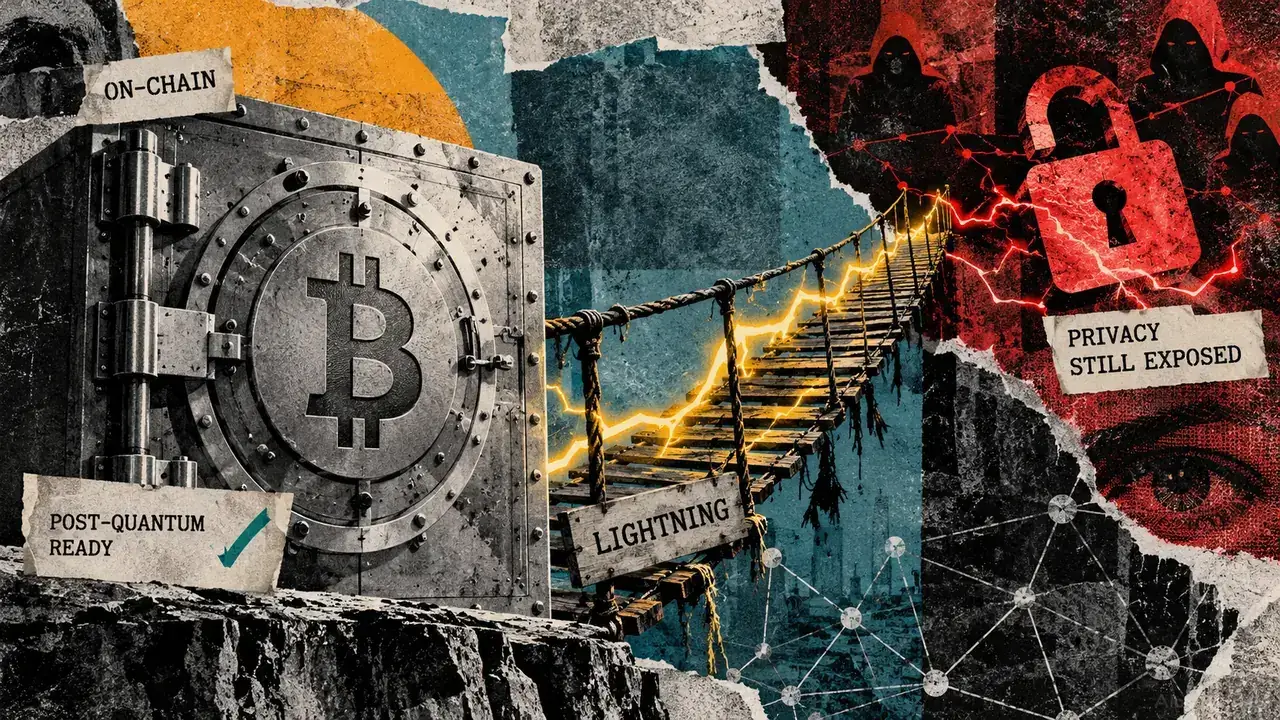
The PQLN upgrade aims to make the Bitcoin Lightning Network resilient against quantum computing attacks by securing five distinct off-chain communication surfaces. However, while the cryptographic operations are efficient—operating in sub-millisecond timeframes—the transition creates a massive data overhead, increasing the bandwidth required for gossip downloads by 10.2 times. Furthermore, the current iteration of PQLN focuses on encryption rather than anonymity, leaving existing Lightning privacy concerns largely unresolved despite the improved security layer.
The introduction of PQLN represents a proactive step by the Bitcoin development community in 2026 to stay ahead of the "Q-Day" threat, where future quantum computers could theoretically break traditional cryptographic signatures. By integrating post-quantum algorithms into the transport layer of the Lightning Network, developers are preventing the interception and decryption of payment channel data. This move reflects a broader industry trend toward quantum-safe infrastructure, though the heavy trade-off in network traffic suggests that node operators will require significantly more storage and high-speed internet to remain synchronized.
Despite the robust security upgrades, privacy advocates are raising alarms about the lopsided nature of this development. The 10.2x increase in gossip traffic not only slows down synchronization for mobile or light clients but also fails to mitigate "probing attacks" or balance discovery techniques used to de-anonymize user transactions. This indicates that while Bitcoin's Layer 2 is becoming more resistant to sophisticated state-level decryption, the day-to-day privacy of individual Lightning users remains a secondary priority in the current 2026 development roadmap.
Looking ahead, the market will likely focus on whether future iterations of PQLN can compress the heavy gossip payloads to reduce the hardware burden on network participants. Investors should monitor for any regulatory shifts regarding the "exposed" privacy aspects, as US authorities continue to scrutinize off-chain scaling solutions for compliance. The success of this transition will determine if the Lightning Network remains the dominant Layer 2 for Bitcoin or if more privacy-centric, lightweight alternatives gain traction in the latter half of 2026.