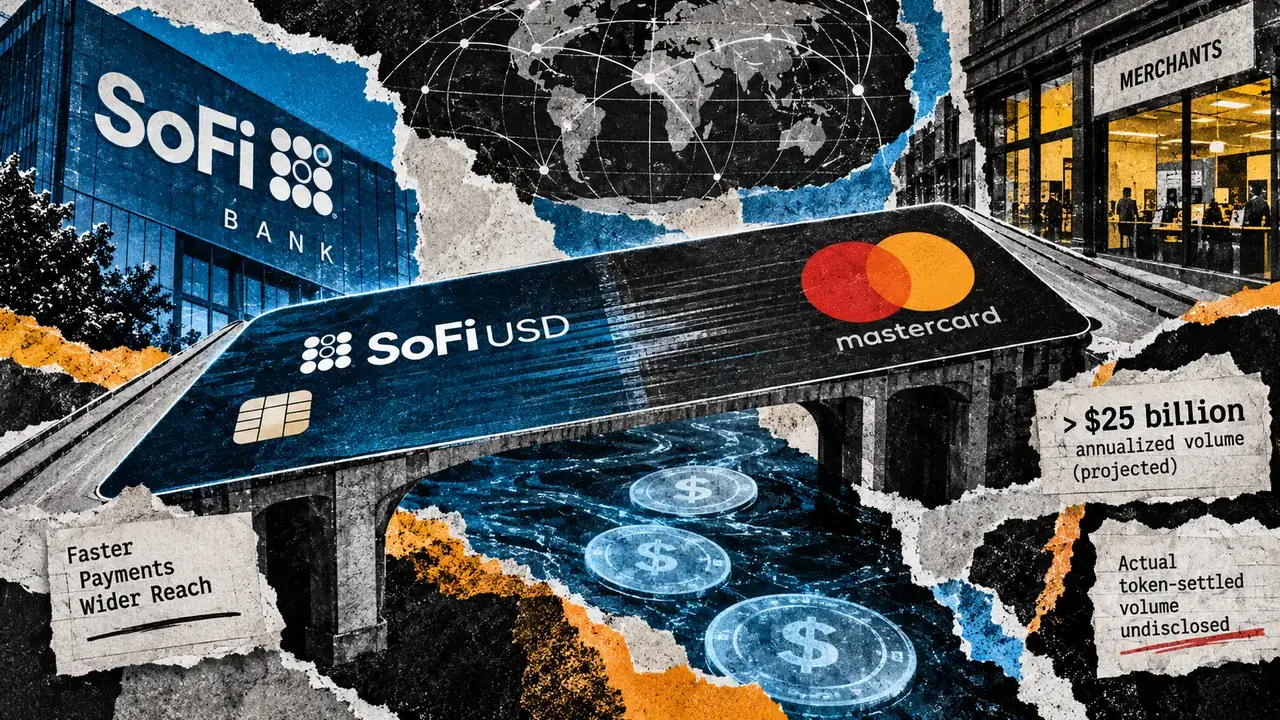
SoFi’s migration of its card program to SoFiUSD serves as the primary driver behind Mastercard’s widely reported $25 billion crypto expansion in early 2026. Rather than a broad retail investment in Bitcoin or Ethereum, this expansion represents a technical infrastructure shift where SoFi uses its own tokenized asset for card transaction settlements within the Mastercard network. While the $25 billion figure reflects the potential volume of the partnership, the specific amount of liquidity currently settled in SoFiUSD remains undisclosed, suggesting the "expansion" is currently more about institutional plumbing than open-market buy pressure.
The context of this move is rooted in the 2026 fintech landscape, where major US players are seeking to bypass traditional interbank settlement delays. By migrating to SoFiUSD, SoFi can facilitate near-instant settlement for its cardholders, leveraging Mastercard’s network as a gateway. This strategy aligns with Mastercard’s broader goal of becoming a multi-token network provider, though the private nature of the SoFiUSD ledger means this specific expansion does not immediately increase the circulating supply or demand for public cryptocurrencies.
From a regulatory standpoint, the US SEC and the Federal Reserve are closely monitoring these proprietary stablecoin migrations. The primary concern for 2026 regulators is the transparency of the reserves backing SoFiUSD and whether these internal settlement systems create systemic risks that are obscured from public view. As Mastercard pushes deeper into these partnerships, the industry is watching to see if this model will be adopted by other fintech giants like PayPal or Block, which would further compartmentalize crypto liquidity within private ecosystems.
For market participants, this news is a signal that the "mass adoption" of crypto is currently occurring at the settlement layer rather than the retail trading layer. While the headline figures are bullish for the long-term legitimacy of blockchain technology, the immediate impact on major token prices is limited. Investors should watch for SoFi’s next quarterly filing for clues on the total settlement volume and any potential plans to bridge SoFiUSD to public DeFi protocols, which could provide a more direct link to the broader crypto market.