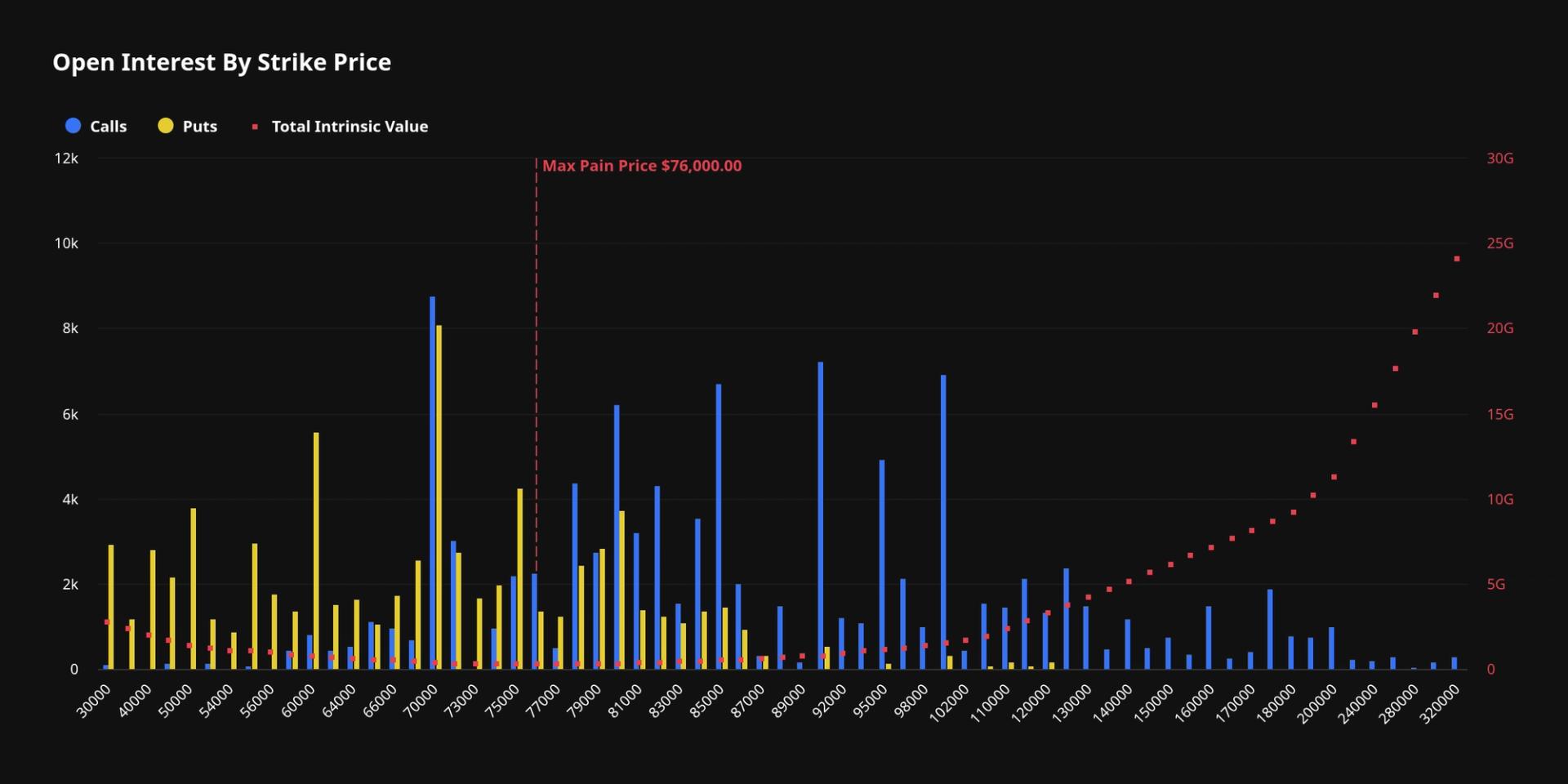
The $18 billion Bitcoin and Ether quarterly options expiry scheduled for Friday will likely increase market volatility as liquidity providers and dealers rebalance their portfolios. Because the options book is currently "call-heavy"—meaning a majority of traders have bet on price increases leading into March 2026—the market is sensitive to sudden dealer hedging flows. As these contracts approach expiration, market makers who sold these options must adjust their delta positions, often leading to rapid buying or selling of the underlying spot assets to stay market-neutral.
This massive settlement involves approximately $16 billion in Bitcoin contracts and nearly $2 billion in Ether contracts. The concentration of open interest at specific strike prices creates a gamma effect, where price moves are amplified as dealers chase the market to cover their exposure. In a call-heavy environment, if Bitcoin's price approaches major strike levels, dealer buying can propel the price higher; conversely, if the price fails to hold these levels, the unwinding of hedges can lead to quick pullbacks as dealers sell off their protection.
Beyond the immediate technical flows, this expiry occurs against a backdrop of evolving US market structure in 2026. Investors are closely watching how institutional participants, who now dominate the ETF and derivatives landscape, handle this quarterly roll. The "max pain" point—the price at which the greatest number of option holders lose money—will be a primary focus for traders looking to predict where the price might settle by the Friday deadline.
Looking ahead, market participants should monitor the hourly volume on major derivatives exchanges like Deribit and the Chicago Mercantile Exchange (CME) as the settlement time approaches. A successful settlement without a major crash would likely be viewed as a bullish consolidation phase, while high-velocity swings could trigger cascading liquidations in the perpetual futures market, requiring traders to exercise caution with leverage.