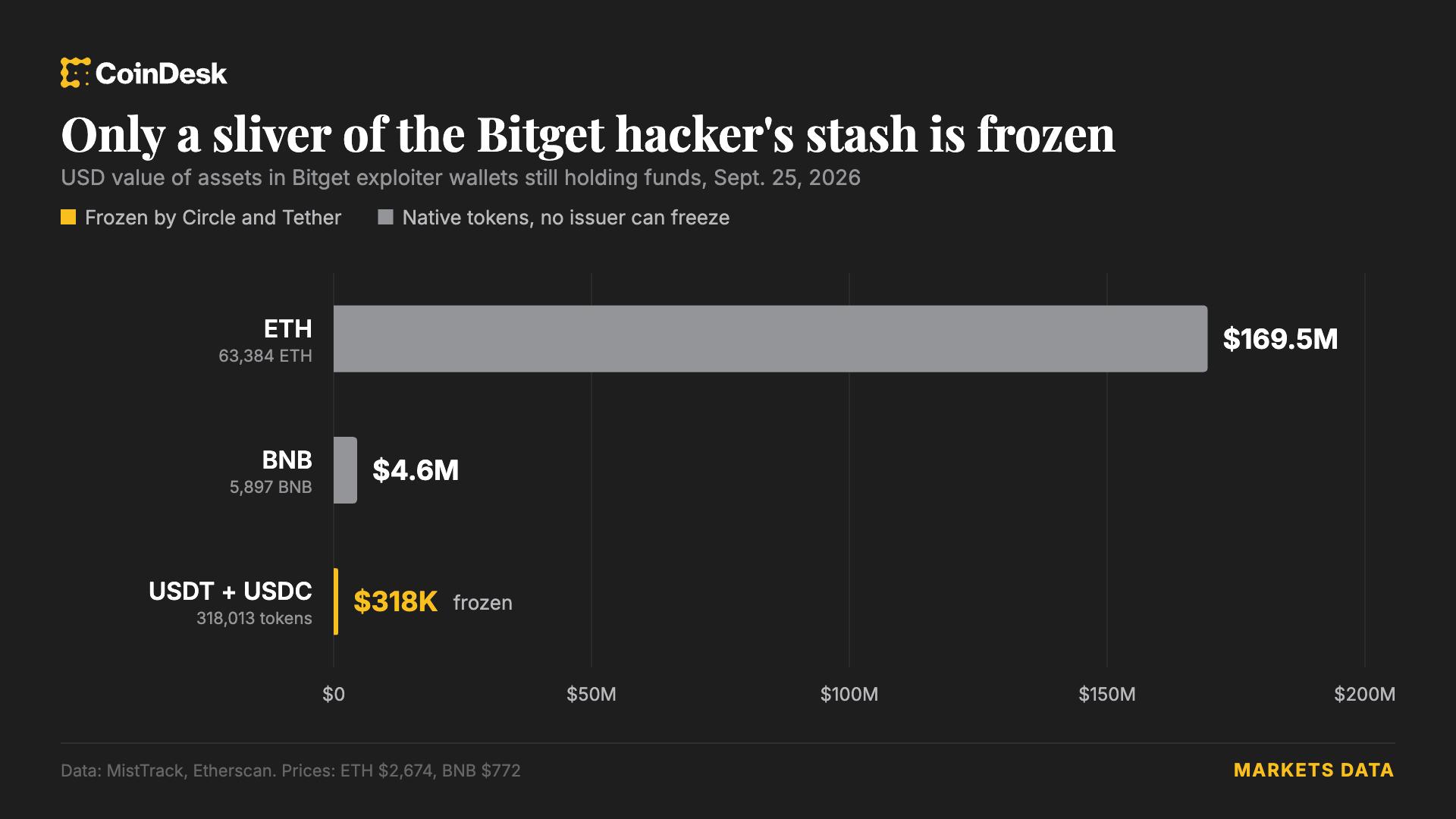
Circle and Tether acted swiftly to freeze approximately $318,000 worth of USDC and USDT held in a wallet linked to the recent 2026 Bitget crypto heist. By blacklisting the specific wallet address, the issuers effectively prevented the attacker from off-ramping these specific stablecoins into fiat currency or other digital assets. However, the intervention was strictly limited to these centralized tokens; the bulk of the stolen loot remains stored in Ether (ETH), which cannot be frozen by any single corporate entity due to its decentralized nature.
The Bitget exploit, which occurred earlier this year, has renewed concerns over centralized exchange (CEX) security and the speed at which attackers move funds. Security analysts observed that while Bitget’s coordination with stablecoin providers was successful for a portion of the funds, the hacker had already transitioned the majority of the haul into non-freezable assets. This incident serves as a stark reminder of the technical hurdles exchanges face when attempting to claw back assets after a hot wallet compromise.
From a regulatory perspective, this event reinforces the narrative in Washington that centralized stablecoin issuers like Circle are vital partners for law enforcement. US regulators have grown increasingly vocal in 2026 about the necessity of "kill switches" and blacklisting capabilities to combat illicit finance. The contrast between the frozen stablecoins and the liquid Ether is likely to fuel further legislative debate regarding whether decentralized protocols should be forced to adopt similar compliance features, a move that remains highly controversial in the DeFi community.
Market sentiment currently remains cautious as Bitget works to audit its security protocols and reimburse affected users. The hacker's reliance on Ether for the majority of the stolen funds suggests a strategic pivot toward assets that reside outside the reach of corporate governance. Investors should closely monitor the identified hacker wallet addresses for movement toward mixers or privacy protocols, as well as any upcoming statements from the SEC regarding stablecoin issuer responsibilities in the wake of exchange-related thefts.