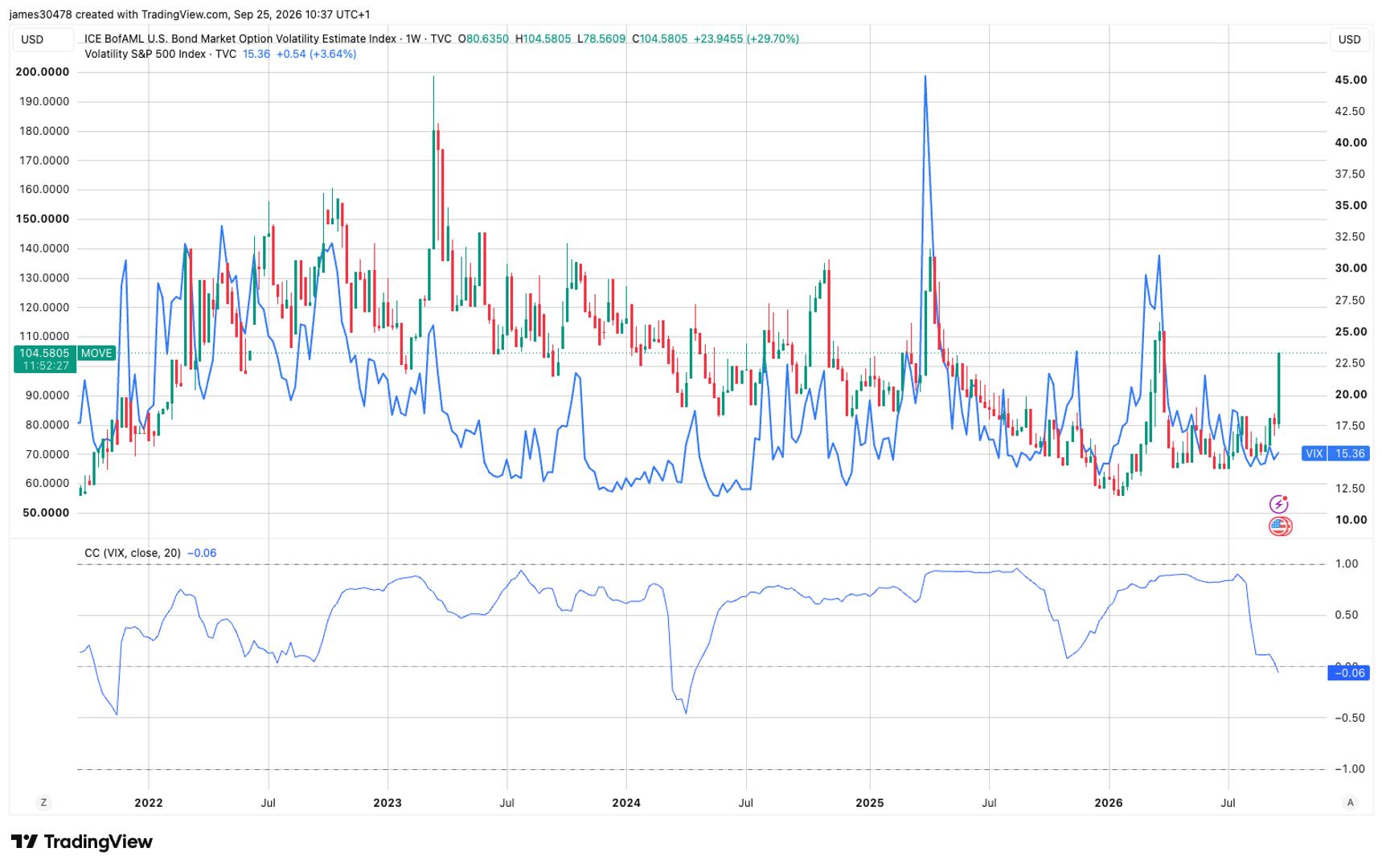
Bitcoin's BVIV and the S&P 500's VIX are staying calm because the current spike in bond volatility is largely contained within the US Treasury market, reflecting specific anxieties over interest rate paths and government debt levels in 2026. Unlike previous cycles where bond stress immediately triggered a flight from crypto, the current market structure shows that digital asset investors are not yet pricing in a systemic liquidity crisis. This stability allows Bitcoin to trade within a tightened range even as bond traders grapple with the highest levels of uncertainty seen since the first quarter of the year.
The divergence between the bond MOVE index and the crypto BVIV highlights a maturing market where Bitcoin is increasingly viewed as a distinct asset class. In the first half of 2026, institutional adoption and clearer regulatory frameworks in the US have helped dampen the 'panic' reflex that once linked crypto prices directly to every tick in the 10-year Treasury yield. Consequently, while the bond market signals distress, the crypto ecosystem is currently benefiting from a period of relative consolidation and lower speculative churn.
However, this period of calm may be precarious for crypto holders. Persistent bond volatility often serves as a leading indicator for broader financial tightening; if yields continue to swing wildly, the cost of capital could rise, eventually pressuring the liquidity that supports Bitcoin’s current price floor. Traders should closely monitor the 2026 Federal Reserve commentary for any shifts that might bridge the gap between bond stress and equity/crypto stability.
Looking ahead, market participants should watch for a potential breakout in Bitcoin if the BVIV remains suppressed for an extended period. Historically, periods of exceptionally low volatility in the crypto market are followed by significant price expansions. The key metric to observe is whether Bitcoin can maintain its yearly lows in volatility if bond market stress spills over into a wider correction for Wall Street equities, which could force a re-correlation of all risk assets.